Meaning
Orientation is the way a part sits in the build against the machine’s X, Y and Z axes, Z being the direction the layers stack. It decides which features carry the bond between layers, how many parts fit in a chamber and where supports land. ISO/ASTM 52900 holds the vocabulary for positioning, coordinates and orientation in its clause 3.5. ISO/ASTM 52921 gives the detailed treatment of coordinate systems. HP’s glass bead sheet defines its orientations by ASTM F2971.Effect on Properties
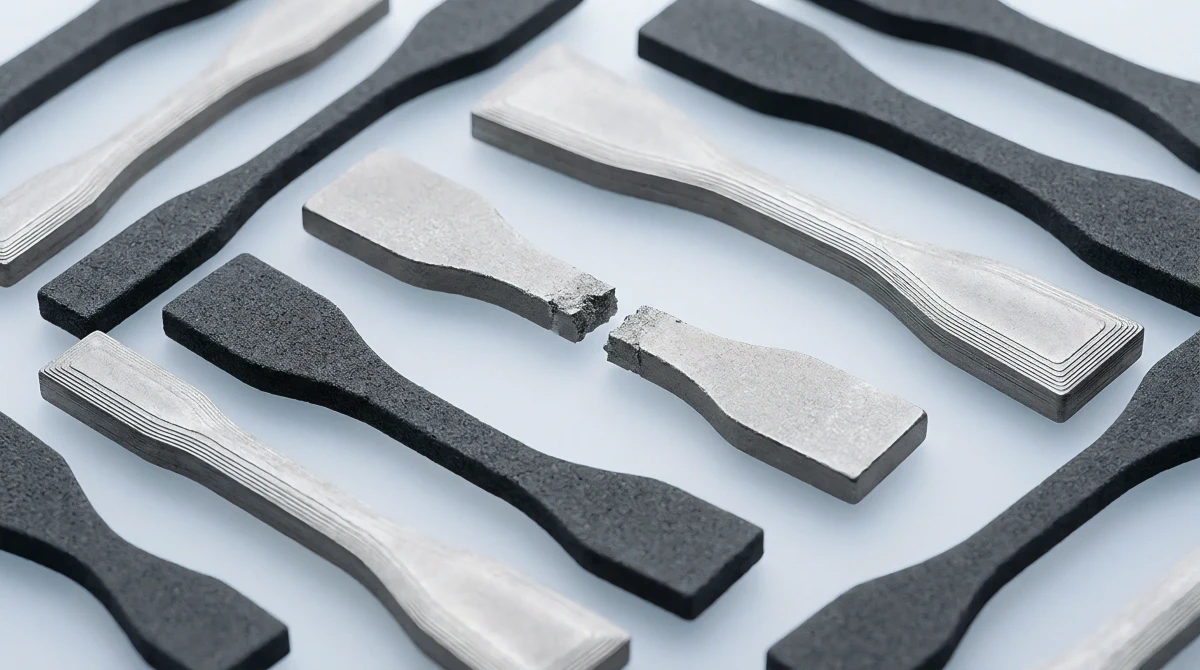
On powder-bed nylon, elongation moves far more with orientation than strength does. PA 2200 stretches 18 % in X and Y and 4 % in Z, a Z figure of 22 % of the in-plane value. HP High Reusability PA 12 gives 15 % in Z against 20 % in XY, which is 75 %. Both makers hold Z strength within 13 % of the XY figure. A specimen pulled along Z loads the interfaces between layers in tension, and a flaw in one interface can start a crack along the layer. Printed 316L runs the other way, with the vertical bar 40 to 60 MPa (5.8 to 8.7 ksi) weaker and more ductile.Read More
Dimensional Scatter
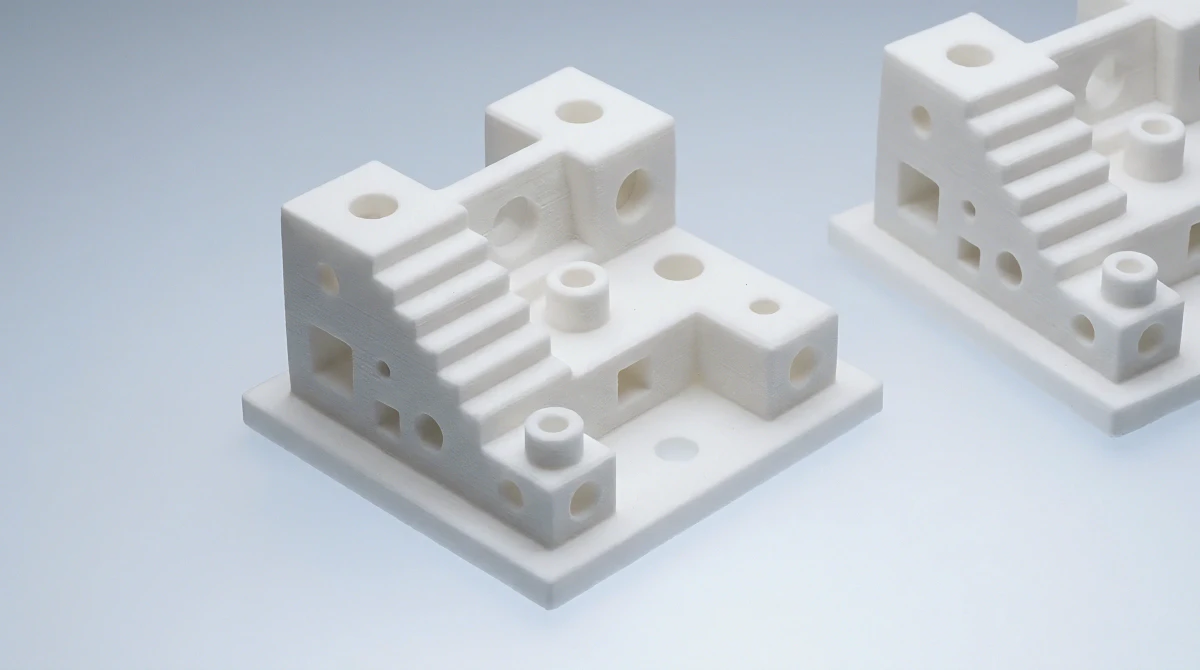
On laser-sintered nylon the Z axis is the one that scatters. A Formlabs study measured 100 mm (3.94 in) nylon blocks over 5 builds. The X spread was 0.226 mm (0.0089 in), and the Z spread was 1.255 mm (0.0494 in). That is about 5 times as much on a feature of the same size. A drawing therefore places critical dimensions in the XY plane where the part allows it. In a 316L thin-wall study, walls rotated in the plane of the plate changed their error by at most 33.2 µm (0.0013 in). Analysis of variance found that in-plane orientation was not significant there, and the study did not test tilting the part.Warp and Supports
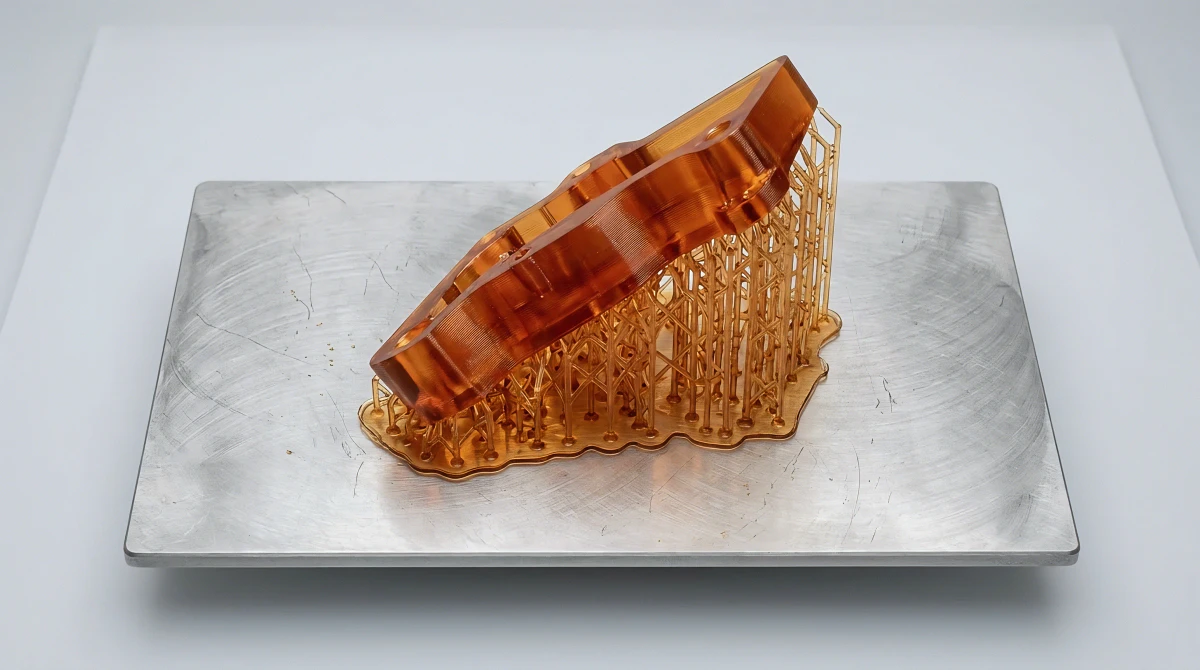
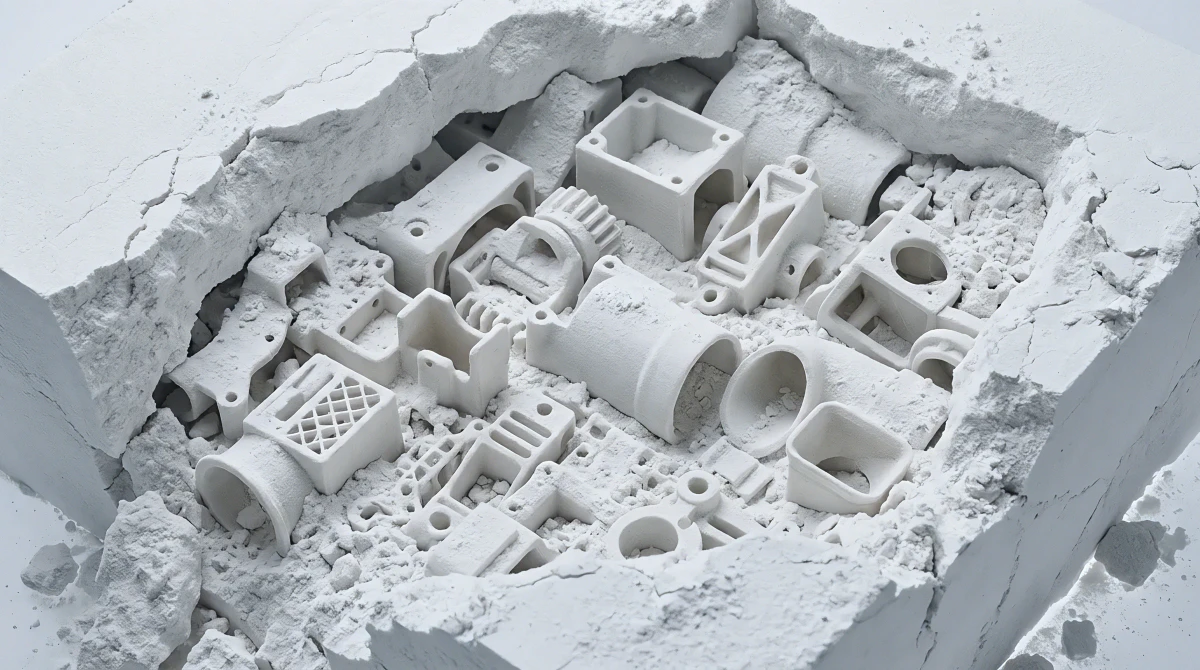
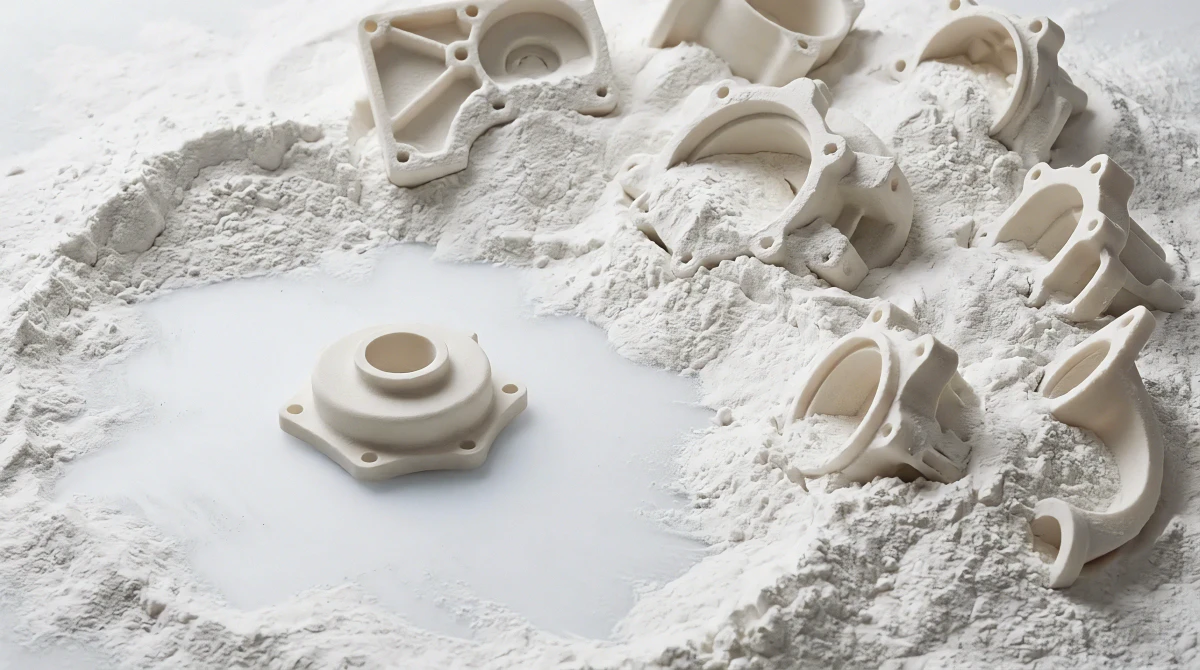
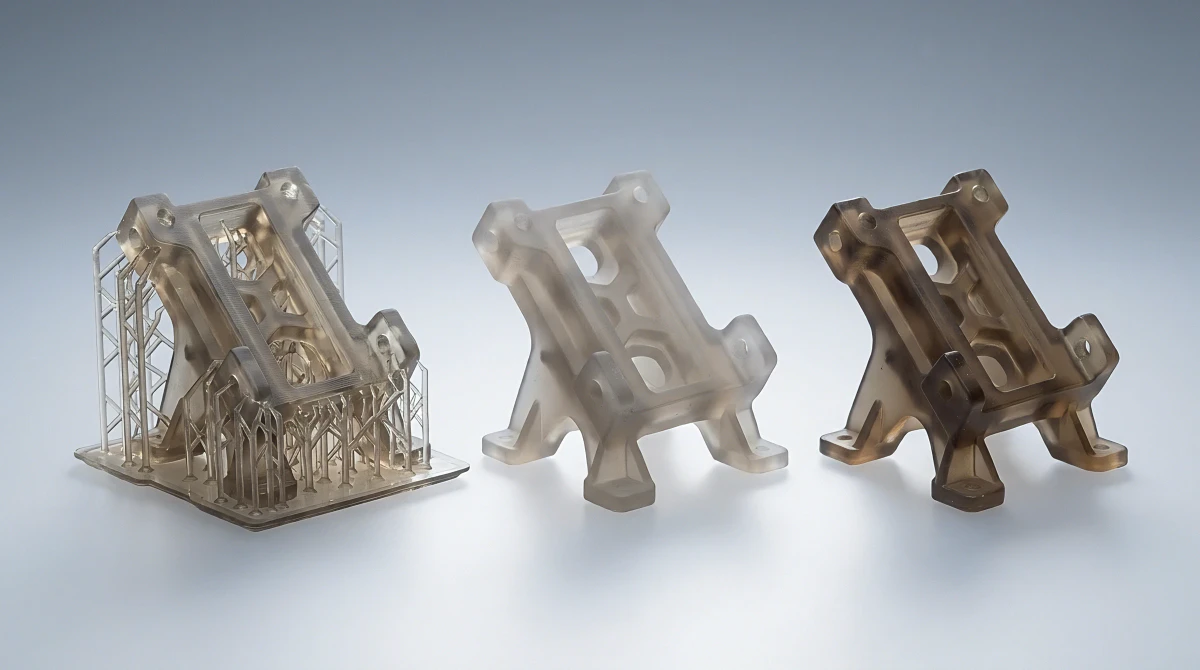
Orientation also sets how a part reacts to the end of the build. Formlabs found that long, thin parts printed with their longest dimension in Z warped the most when a nylon chamber was unpacked hot. For those parts it advises leaving the chamber in the printer until it reaches 50 °C (122 °F). Laying such a part flat uses more of the footprint and less of the height. Standing it up fits more parts and makes each one more sensitive to the cooldown. On resin parts, orientation decides where the support marks fall.Build Count
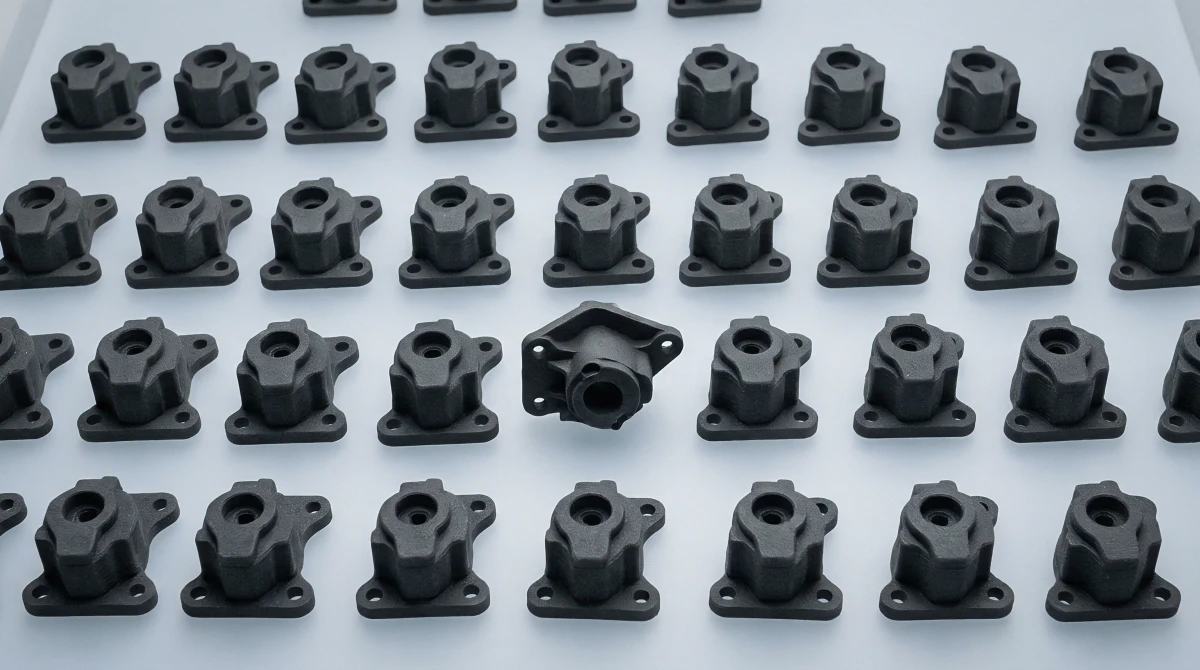
The number of parts in one build depends on orientation as much as on chamber size. A supplier who orients for packing density and cost fills the chamber well. That choice can still place the highest strain of a snap hook across the weakest bond. On a resin platform the count is set by platform area and support spacing, so orientation changes it there too. A change of orientation between two orders, made to lower the warp on a long part, changes the footprint and so the count.Axis Naming
The axis letters only help when buyer and supplier read them the same way. ISO/ASTM 52900 advises using its words for orientation when a drawing asks for a build direction, so that Z has one meaning on both sides. Test speeds can differ by axis as well. On that sheet, HP pulls its Z specimens at 1 mm/min (0.04 in/min) and its XY specimens at 10 mm/min (0.39 in/min). Its Z and XY figures are therefore not taken at the same strain rate.Orientation Callout
The order states the orientation of the critical features and the axis that carries the load. For a snap fit or a hinge in PA12, the long axis lies in the XY plane. Test figures are asked for with their specimen orientation, in the maker’s form, such as ISO 527 in X, Y or Z. The Formlabs Tough 2000 Resin V2 page states that properties vary with geometry, orientation, print settings and temperature. A resin part therefore carries the same line. Where specimens are printed with the part, the order says where in the chamber they sit.