Thermal Expansion

Thermal expansion is the growth of a material with temperature, given as a coefficient per degree over a stated temperature range.

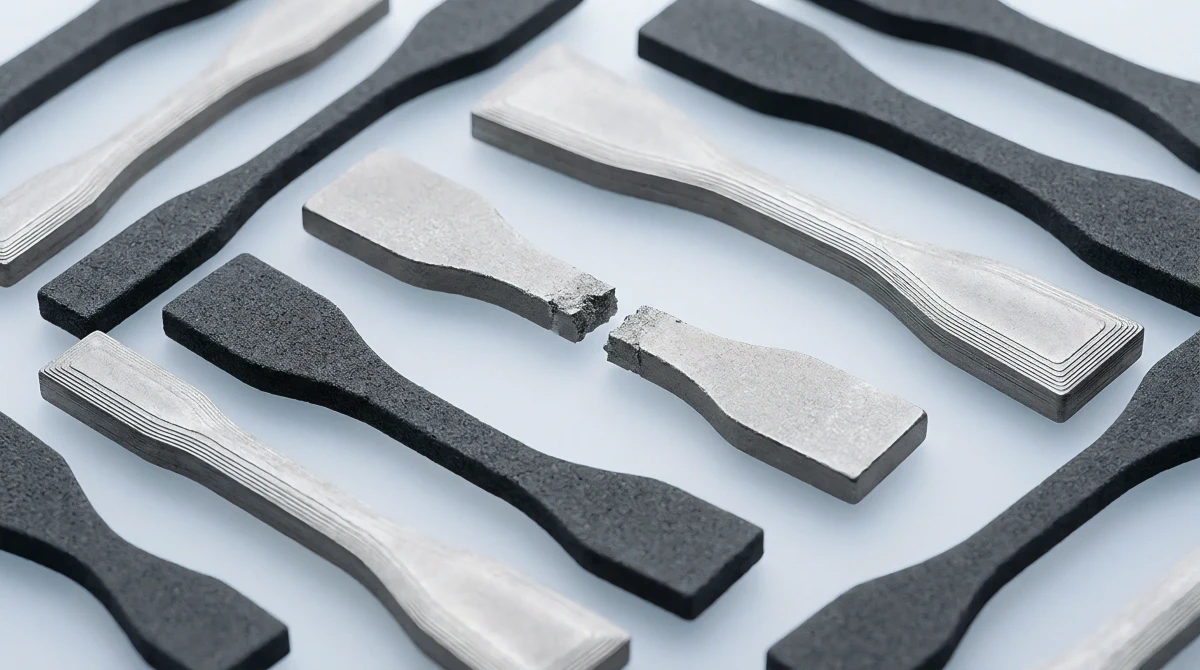
Every Thermal Expansion article of the 3D Printing Resources, newest first, each written from published standards, research and makers’ data.

Meaning

Thermal expansion is the growth of a material with temperature, given as a coefficient per degree over a stated temperature range. It matters for any part that runs hot, mates with another material or is heat-treated after machining. Datasheets state it over named ranges, and the coefficient often climbs with temperature. EOS measures it under ASTM E228, and 3D Systems under ASTM E831.

Printed 316L

EOS gives a mean coefficient of 15.72 × 10⁻⁶ per K (8.73 × 10⁻⁶ per °F) from 25 to 100 °C (77 to 212 °F). It rises to 16.75 × 10⁻⁶ per K to 200 °C (392 °F) and 17.70 × 10⁻⁶ per K to 400 °C (752 °F). A 100 mm (3.94 in) dimension heated from 25 to 200 °C grows by about 0.29 mm (0.012 in).
Read More

Resins

Somos EvoLVe 128 gives 56.5 µm/m·°C from −40 to 0 °C (−40 to 32 °F). From 0 to 50 °C (32 to 122 °F) it gives 76.5. From 50 to 100 °C (122 to 212 °F) it gives 163, and 174 from 100 to 150 °C (212 to 302 °F). A 100 mm dimension heated from 50 to 100 °C grows by about 0.8 mm (0.03 in). Accura 25 gives 107 × 10⁻⁶ per °C below its glass transition. From 75 to 140 °C (167 to 284 °F) it gives 151 × 10⁻⁶ per °C. Tough 2000 Resin V2 gives 134.2 µm/m·°C.

Scale

By plain arithmetic, the 134.2 µm/m·°C of Tough 2000 Resin V2 is about 8.5 times the 316L coefficient from 25 to 100 °C. A resin part that is dimensionally fine at room temperature can move past its tolerance once it passes 50 °C. Its loaded heat deflection, between 49.6 and 57 °C (121 and 135 °F) on the tough grades, arrives in the same range.

Range Request

An order states the temperature range the part sees in service and asks for the coefficient over that range, with its test method.
AlSi10Mg Aluminum Properties in Laser Powder Bed Fusion

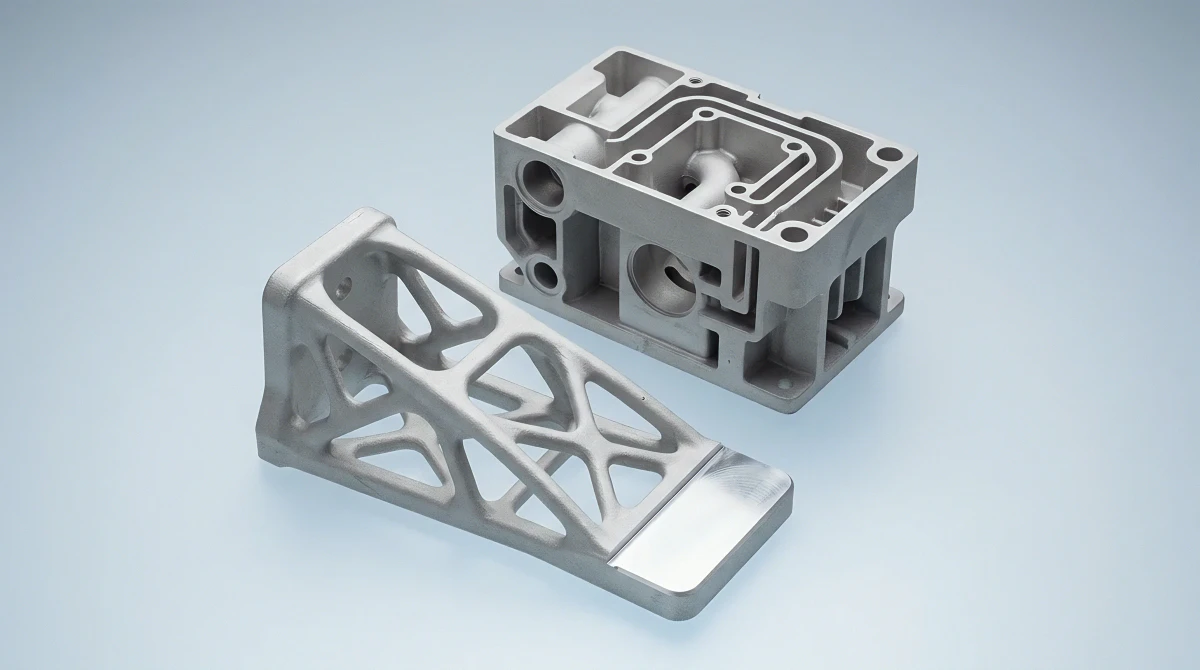
Printed AlSi10Mg is stronger than the cast alloy as built, and the heat treatment named on the order decides how much strength is traded for ductility or conductivity.

AlSi10Mg Tensile and Yield Strength by Heat TreatmentThe first answer a buyer needs is the strength in each state the material is delivered in. Two makers publish it for their own systems and parameters, and their numbers are close enough to read together and different enough to show why the state and the source both travel with a figure.

ISO/ASTM 52927 Main Characteristics and Test Methods for AM Parts

The test methods standard links the characteristics of additive feedstock and parts to test procedures, and a buyer fixes the method, specimen, orientation and statistical basis in the order.

What ISO/ASTM 52927 Covers and Who It Is ForThe scope states that the document specifies the principal requirements applied to the testing of parts produced by additive manufacturing processes. It does three things.

Tough SLA Resins as Stand-Ins for ABS and Polypropylene

Tough SLA resins match ABS on stiffness and strength but not on fracture energy or heat, so a part needs the row that governs its duty.

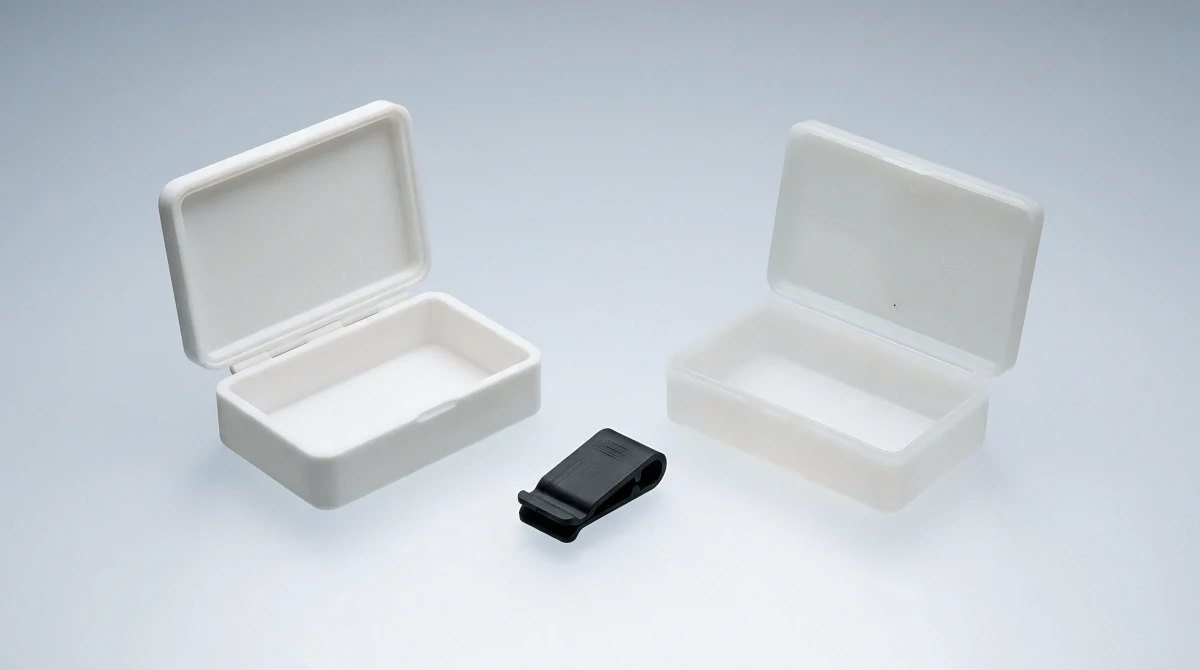
What a Tough SLA Resin Is Meant to ReplaceA tough SLA resin is a photopolymer that cures under ultraviolet light into a solid that bends before it breaks. Its makers aim it at the parts where earlier SLA resins cracked: snap fits, hinges, housings that are dropped and jigs that get clamped.

316L Stainless Steel Properties in Laser Powder Bed Fusion

Printed stainless steel is stronger along the layers and more ductile across them, and its size and finish depend on the parameter set and the heat treatment you name.

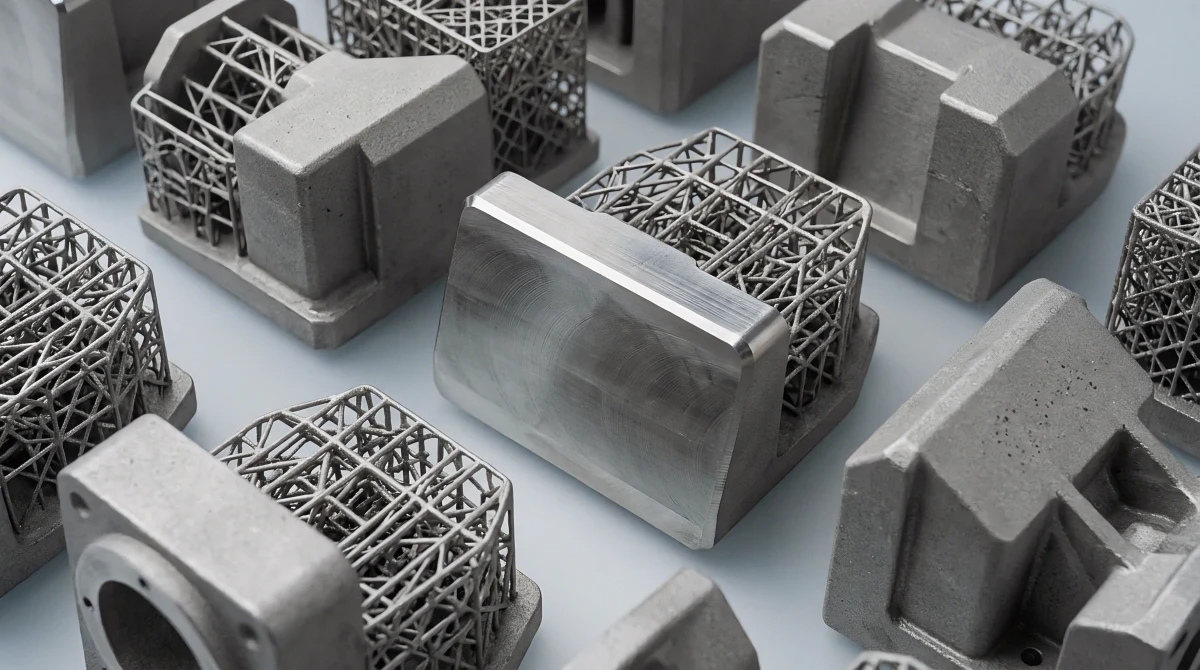
What 316L Is in a Laser Powder Bed Machine316L is a molybdenum-alloyed austenitic stainless steel. EOS markets its powder as a marine-grade steel with enhanced corrosion resistance in chloride environments, and it lists high ductility, high strength and high corrosion resistance as the main characteristics.

Send the 3D File of Your Printed Part

Send the 2D drawing and the 3D file, with the quantity and the stage of the project. An engineer replies within 1 working day.

The quote form, the mutual NDA and the private folder for your files are on Protolis Atelier, with 3D Printing chosen.

Request a Quote