Meaning
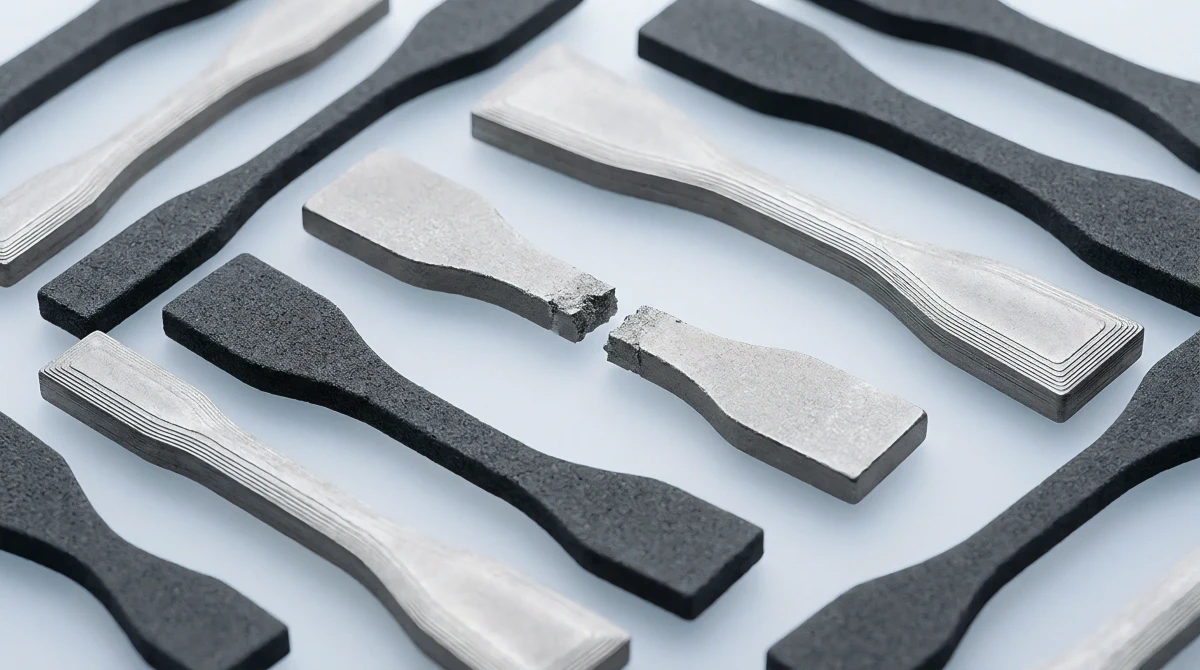
Elongation at break is how far a tensile specimen stretches before it breaks, given as a percentage of its starting length. In printed polymers it is the property that moves most with build direction, and the one a snap fit or hinge relies on. A datasheet column under that name can hold two quantities. EOS notes that it reports strain at break for brittle behavior and nominal strain at break for ductile behavior.Build Direction
In powder-bed nylon the loss along Z sits in elongation more than in strength. The PA 2200 figure is 18 % in X and Y and 4 % in Z. HP High Reusability PA 12 gives 20 % in XY and 15 % in Z. Printed 316L reverses the pattern. On the EOS 20 µm set, the vertical bar stretches 49 % against 38 % for the horizontal bar, or 29 % further.Read More
Resin Grades
Tough stereolithography (SLA) resins spread widely on elongation. Formlabs Tough 2000 Resin V2 stretches 79 %, while Accura Xtreme gives 14 to 22 % and Somos EvoLVe 128 gives 11 %. Extruded ABS sheet stretches 8 % on the Formlabs comparison table, so the resin labeled ABS-like stretches about 10 times as far. Accura 25 gives a range of 13 to 20 %, which reflects machines and cure practice. Formlabs measures Tough 2000 Resin V2 after 12 minutes at 70 °C (158 °F), and a part cured otherwise is a different part.Design Margin
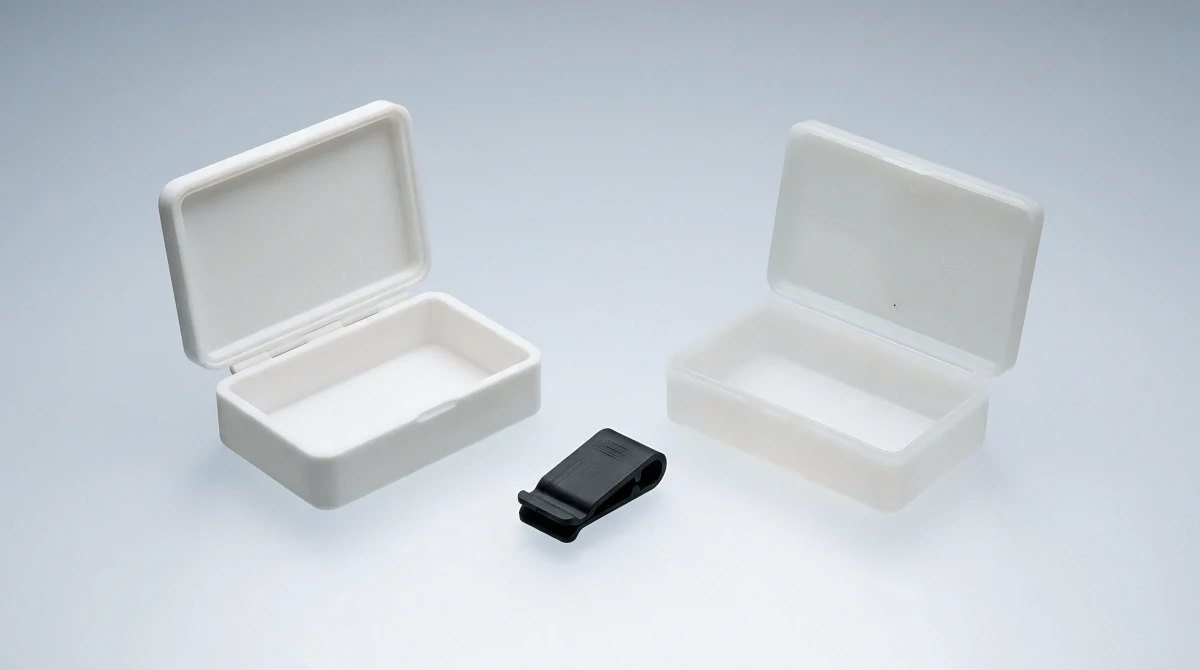
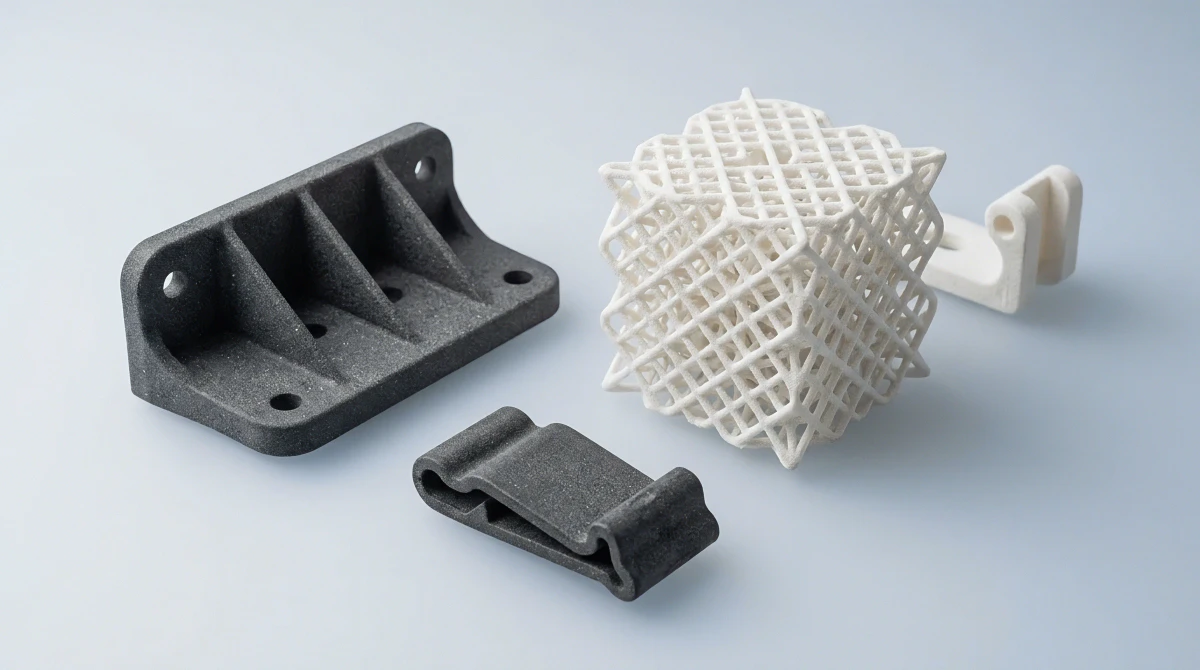
Consider a snap hook assumed to strain 2.5 % at assembly. Against the PA 2200 typical break strains, it keeps a ratio of about 7 to 1 in XY and 1.6 to 1 in Z. The sheet quotes typical values and no lower bound, so the real margin along Z is thinner than 1.6. Glass-bead-filled PA12 gives 10 % in both XY and Z, half the 20 % of the plain HP grade in XY. It holds a fixture’s shape under a clamp and breaks at a lower strain.Elongation and Impact
High elongation does not mean high impact strength. Accura Xtreme has about a quarter of the stretch of Tough 2000 Resin V2. It records a notched Izod of 35 to 52 J/m (0.7 to 1.0 ft-lb/in). Tough 2000 Resin V2 records 25 J/m (0.47 ft-lb/in). That resin absorbs 305 J/m² before fracture, 15 % of the 2,060 J/m² of the ABS it is compared with. A hinge relies on elongation, and a sharp inside corner relies on notched impact.