Post-Cure

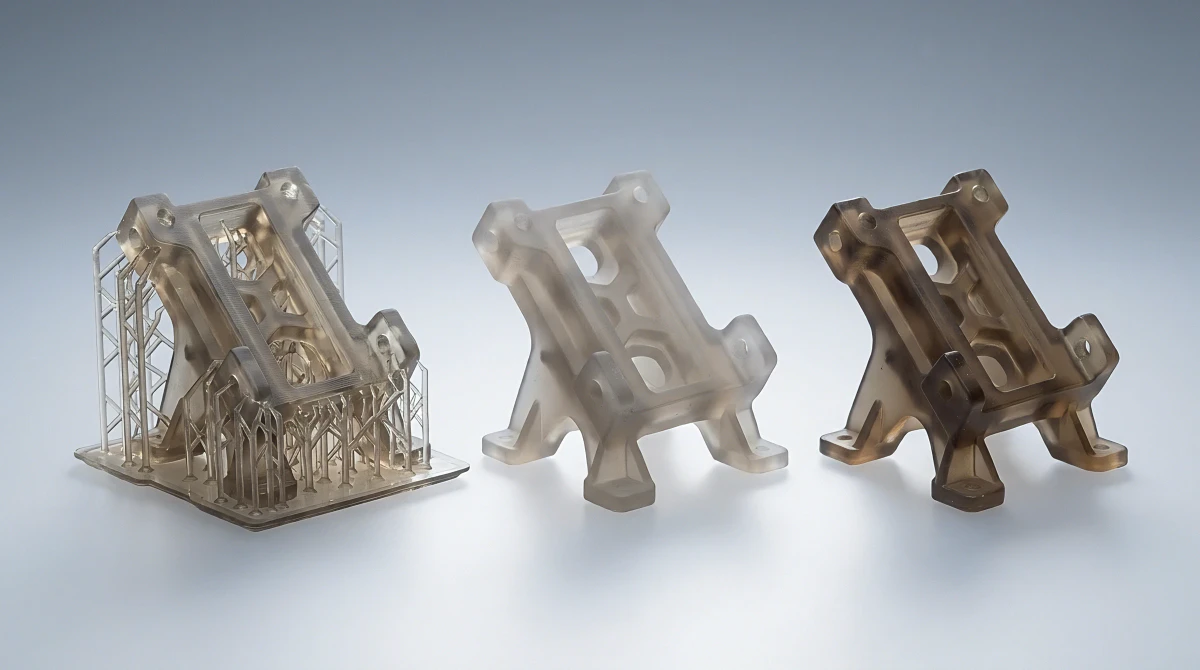
Post-cure is the step after printing and washing in which light and heat complete the curing of a resin part.

Every Post-Cure article of the 3D Printing Resources, newest first, each written from published standards, research and makers’ data.

Meaning

Post-cure is the step after printing and washing in which light and heat complete the curing of a resin part. Formlabs calls it essential for its engineering and specialty resins to reach full strength and function, and optional for its standard resins. It takes the part from its green state to its finished properties. Every cured property on a resin datasheet holds only for the cure the sheet names.

Schedules

Formlabs cures Tough 2000 Resin V2 for 12 minutes at 70 °C (158 °F) in a Form Cure V2. After that cure the resin gives 40.4 MPa (5,860 psi) in tension and 79 % elongation. For its Accura resins, 3D Systems states values after thermal post-cure. Stratasys heads the Somos EvoLVe 128 values as ultraviolet (UV) post-cure and warns that they vary with post-curing practice.
Read More

Cure Shrinkage

Post-curing causes shrinkage, which the Formlabs tolerance guide calls normal for any stereolithography (SLA) or digital light processing (DLP) part. Print preparation software compensates for it automatically, so post-cured prints match the computer-aided design (CAD). The tolerance on a resin drawing therefore applies to the post-cured part, and a part measured green answers a different question.

Order of Steps

Parts are fully dry before the cure, at least 30 minutes after an isopropyl alcohol wash. Supports come off after the cure, because parts can warp under light and heat if the supports are not holding them. The measurement follows the cure.

Failure Mode

A part softer or lower in heat resistance than its datasheet points to a cure shorter or cooler than the published settings. Formlabs notes that Clear Cast and Flexible 80A V1 can stay waxy after washing until they are post-cured. A different oven in a second batch changes the part without changing the drawing.

Cure Record

An order names the post-cure time, temperature and unit, asks for the cure record and states that dimensions apply after cure.
SLA Wash and Post-Cure Step by Step From Green Part to Finished Resin Part

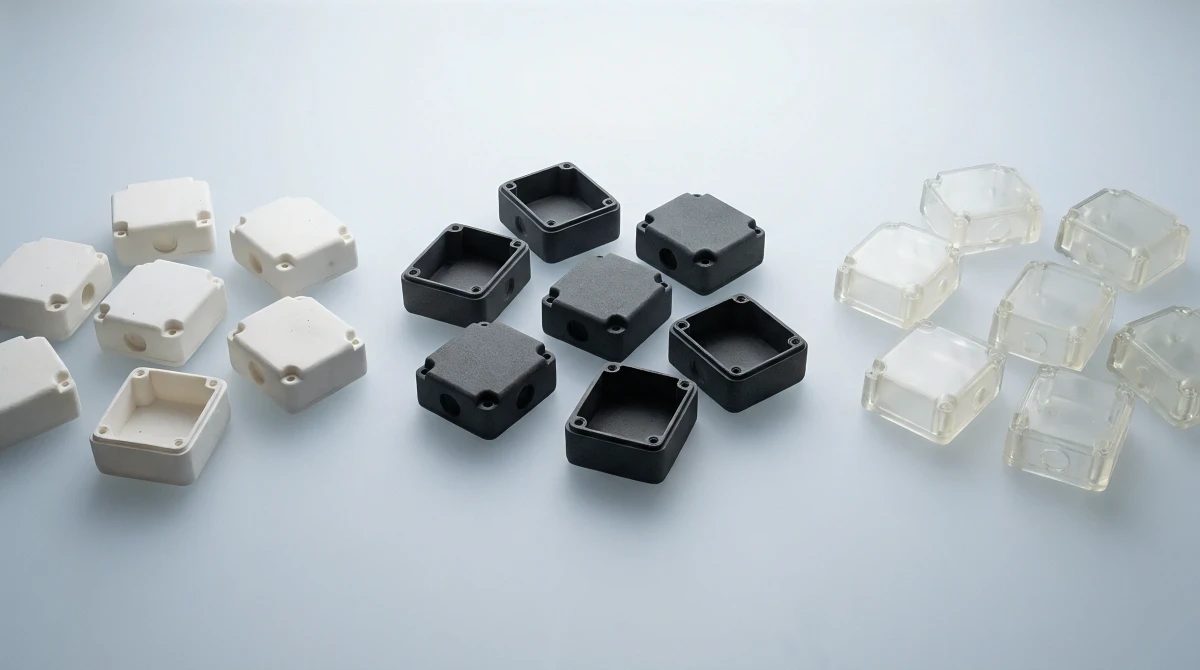
Wash each resin for its own time, dry it fully, cure to the datasheet condition, then remove supports and measure.

SLA Wash, Dry, Cure and Support Removal in OrderThe part leaves the printer in a green state: polymerized enough to keep its shape, but with its reaction unfinished and a film of liquid resin over it. The order in which the finishing steps run is set by what each one needs from the one before.

SLA Dimensional Tolerance by Feature Size

SLA tolerance is published as a percentage of feature size with a small floor, so a drawing writes bands and a post-cure condition and not one general figure.

SLA Tolerance Values Published by Two MakersTable 1 states the two specifications as their makers print them. Neither is a guarantee for a delivered part, and the Formlabs guide notes that the best way to judge a printer is to inspect real parts.

Tough SLA Resins as Stand-Ins for ABS and Polypropylene

Tough SLA resins match ABS on stiffness and strength but not on fracture energy or heat, so a part needs the row that governs its duty.

What a Tough SLA Resin Is Meant to ReplaceA tough SLA resin is a photopolymer that cures under ultraviolet light into a solid that bends before it breaks. Its makers aim it at the parts where earlier SLA resins cracked: snap fits, hinges, housings that are dropped and jigs that get clamped.

Send the 3D File of Your Printed Part

Send the 2D drawing and the 3D file, with the quantity and the stage of the project. An engineer replies within 1 working day.

The quote form, the mutual NDA and the private folder for your files are on Protolis Atelier, with 3D Printing chosen.

Request a Quote