Meaning
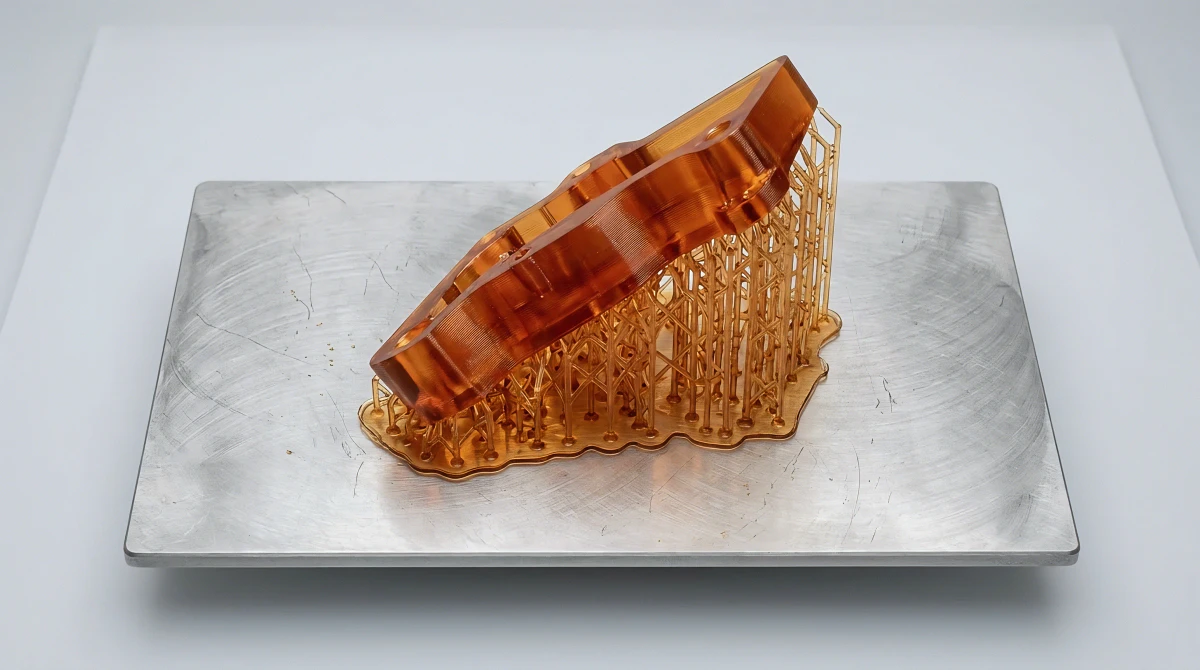
A photopolymer is a liquid resin that cures into a solid when exposed to ultraviolet light, the feedstock of stereolithography and the other vat photopolymerization processes. Cured, it becomes a thermoset whose formulation imitates a thermoplastic, which is why resin makers describe grades as ABS-like or polypropylene-like.Curing and Overcure
Carbon explains that resin is not completely opaque to ultraviolet light, so some light passes beyond the edges of thin features and cures a little extra resin: overcure across the build plane and cure-thru along Z. Critical features hold better accuracy in the build plane, and a vertical round feature comes out marginally oblong. Stratasys warns that overcure can partly fill a small hole.Read More
Properties Over Time
An Arizona State University study of Accura ClearVue, also sold as VisiJet SL Clear, on a ProJet 6000 HD measured 51.9 MPa (7,530 psi) tensile strength, 2,481 MPa modulus and 4.8 % elongation, close to the supplier’s values, with no significant effect of build orientation. Strength of flat bars rose from 24 to 54 MPa (3,480 to 7,830 psi) between one week and six months of age, so the age at test belongs beside any figure.Handling in the Print
Liquid photopolymer behaves as a fluid during the build. Unvented cavities trap it under low pressure, and resin trapped in the part can leave too little in the reservoir to finish, Carbon notes. Viscous resins such as elastomers are harder to clean out than rigid ones, Stratasys adds, and every enclosed volume needs a drain hole.Finishing
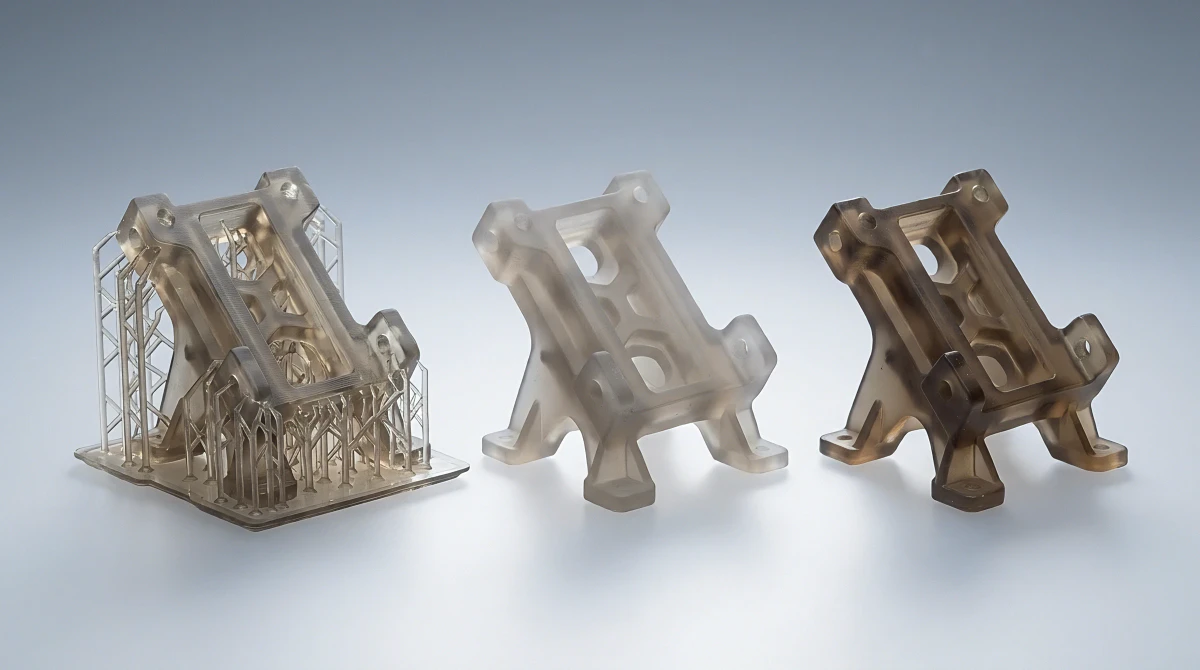
After printing, photopolymer parts are cleaned of liquid resin and post-cured. A study of masked SLA found post-curing lowered surface roughness by 8 to 11 % in every group it tested, with layer thickness the largest factor in roughness and print angle the second.