Overhang

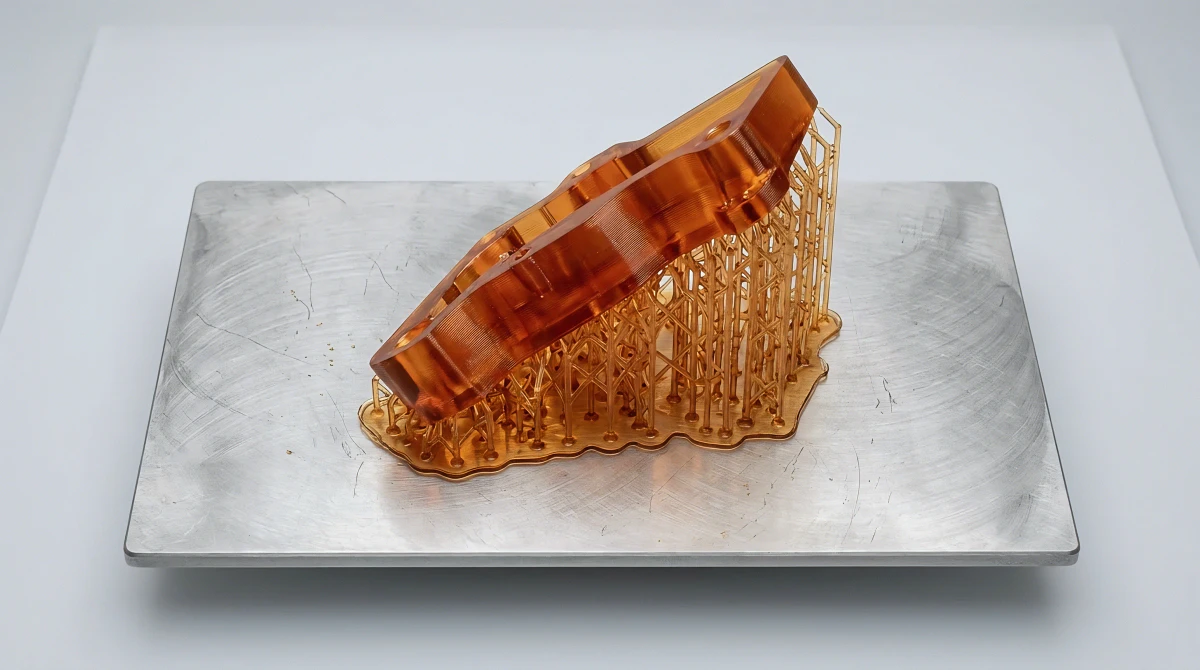
An overhang is a feature that projects out over empty space as a part is built, horizontally or at a shallow angle from the build plane.

Every Overhang article of the 3D Printing Resources, newest first, each written from published standards, research and makers’ data.

Meaning

An overhang is a feature that projects out over empty space as a part is built, horizontally or at a shallow angle from the build plane. Whether it prints without support depends on the process, the material and the angle.

Self-Supporting Angle

In resin printing, Stratasys gives about 30° as the angle steeper than which faces usually support themselves on its Origin One, and horizontal overhangs over about 3 mm (0.12 in) as needing support, with 1 to 2 mm usually safe. Carbon gives 40° or more from horizontal as the most common self-supporting angle across its resins and 2 mm (0.079 in) as the overhang guide for most of them. Both say the figure depends on the material; for elastomers Stratasys gives a shorter critical length and a steeper angle.
Read More

Failure Mode

Below the angle, Stratasys warns, layers do not adhere and the face peels. Carbon shows reorientation turning an overhang into a self-supporting face and, in one example, removing every support and shortening the print.

Roughness

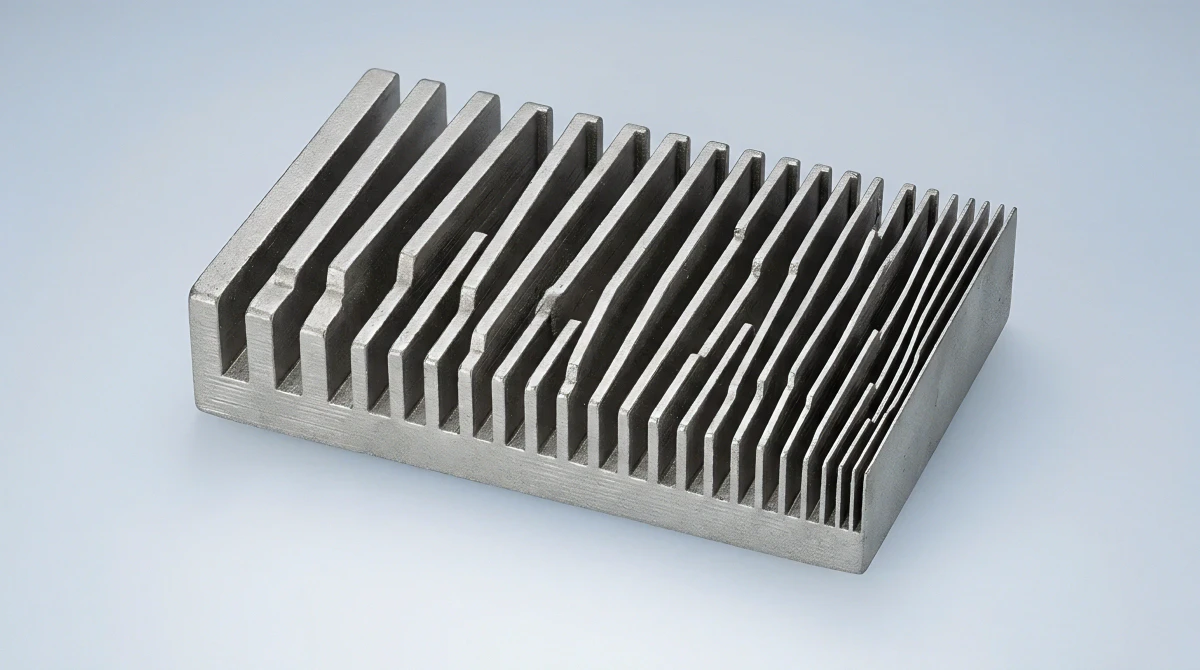
On metal parts the down-facing side of an overhang is melted over loose powder and picks up partly fused particles, while the up-facing side shows the layer steps. Colibrium Additive publishes 316L roughness for 60° upskins and downskins on its M2 Series 5, both at a mean Ra of 8 µm (315 µin) in a 16-position platform build, and offers a dedicated surface parameter for overhangs.

Powder Bed Polymers

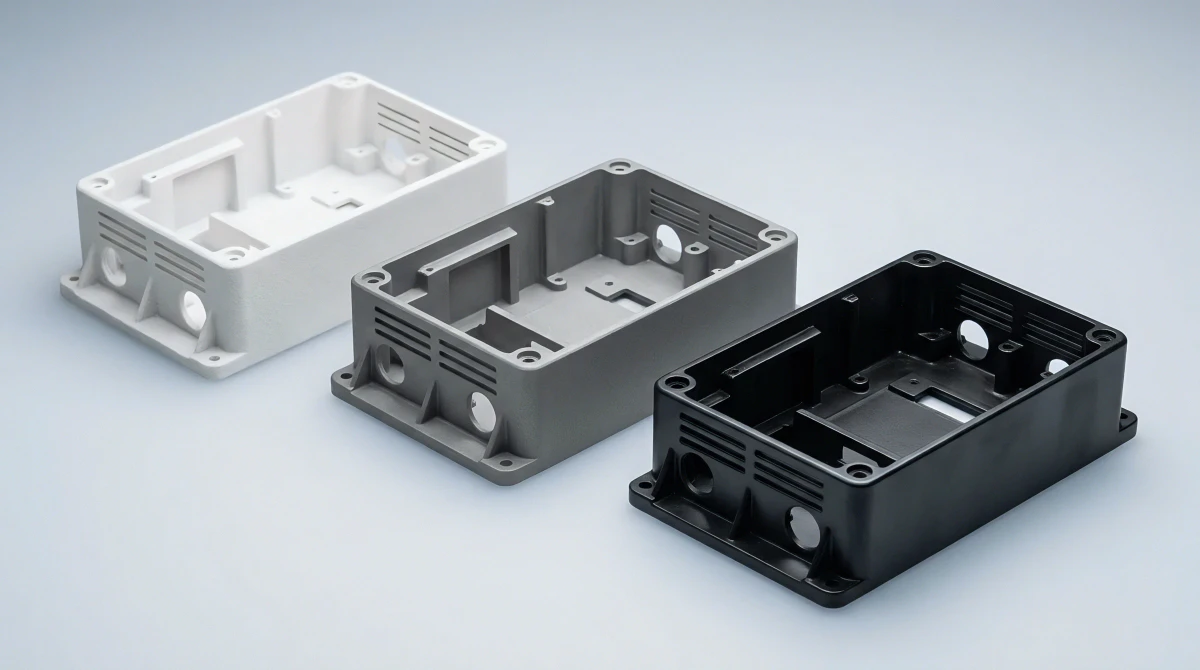
Laser sintering and HP Multi Jet Fusion print overhangs without supports, because the unfused powder holds the part. In finishing, overhangs shade the powder beneath them from the blast, and powder left there is a risk before vapor smoothing.
Vapor Smoothing and Bead Blasting SLS Nylon Parts

Powder bed nylon is always bead blasted clean, then optionally shot surfaced for feel and color or vapor smoothed for a sealed glossy skin, and the order names the steps and the faces.

The Finishing Sequence for Powder Bed NylonThe DyeMansion test that opens this piece ran every part through the same steps, and its table of settings is the clearest published version of the sequence.

Orienting and Supporting a Part for SLA Printing

SLA orientation is set for the critical and cosmetic faces first, then checked for overhangs, cross section, trapped resin and support marks before anything is printed.

The Orientation Step in OrderThe order below follows Carbon's published assessment criteria for orientation and supports, with Stratasys's design guide filling in thresholds.

Surface Roughness of 3D Printed Parts by Process and Orientation

Process sets the floor of roughness and orientation moves it face by face, so a printed part's roughness note names the parameter, the face, its build direction and the finish.

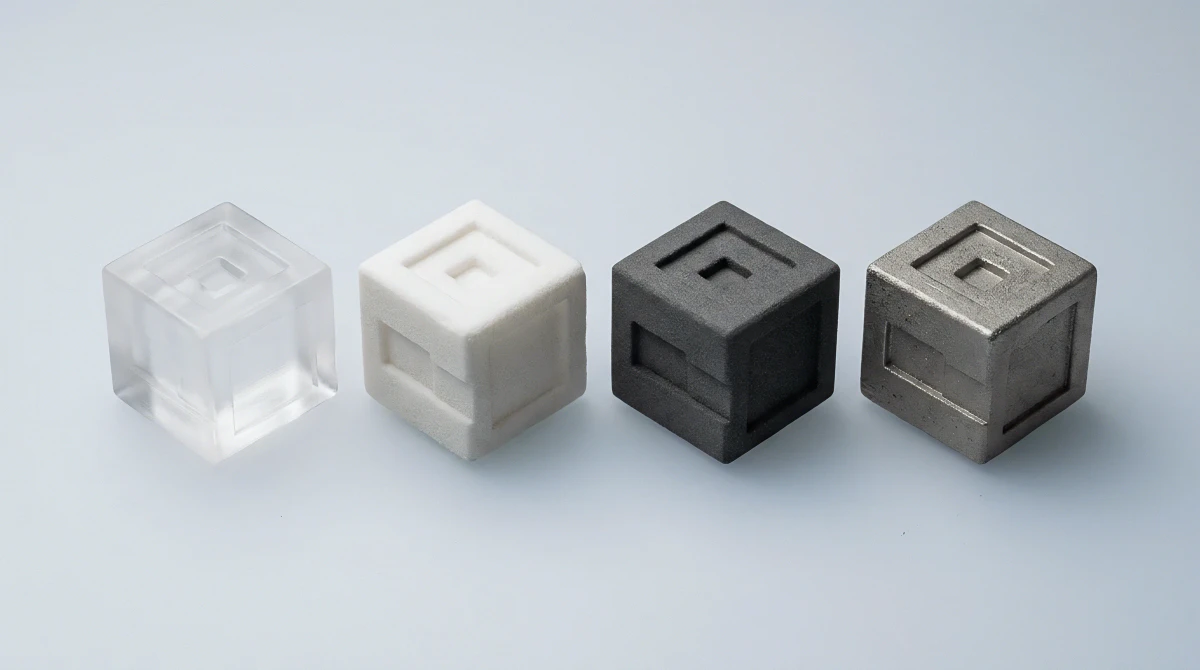
Typical Ra and Sa of SLA, SLS, MJF and Metal SurfacesA review of as-printed polymer roughness in the International Journal of Advanced Manufacturing Technology collects dozens of studies by process. Another study printed one test artifact on four processes and measured them all the same way.

316L Thin Wall and Gap Dimensional Error in Laser Powder Bed Fusion

Printed metal walls and gaps land off the drawing by an amount the laser settings control, so a requirement names the parameter set, the gap needed and the finished size.

Thin Wall and Gap Error in 316L Laser Powder Bed FusionThe machine maker states accuracy as a band. EOS's sheet for 316L, dated May 2014, gives a typical achievable part accuracy of about ±20 to 50 µm (±0.0008 to 0.002 in) for small parts and about 0.2 % for large parts, and a minimum wall thickness of about 0.3 to 0.4 mm (0.012 to 0.016 in).

Send the 3D File of Your Printed Part

Send the 2D drawing and the 3D file, with the quantity and the stage of the project. An engineer replies within 1 working day.

The quote form, the mutual NDA and the private folder for your files are on Protolis Atelier, with 3D Printing chosen.

Request a Quote