Purchase Order

A purchase order for printed parts is the buyer's written order that fixes the part, process, material and acceptance terms.

Every Purchase Order article of the 3D Printing Resources, newest first, each written from published standards, research and makers’ data.

Meaning

A purchase order for printed parts is the buyer’s written order that fixes the part, process, material and acceptance terms. ISO/ASTM 52901 reads like its paragraph headings, and its informative Annex A gives the typical content of one. The standard sets the headings and leaves every value to the buyer. Typical content is a starting point, and a part with a regulated use or a safety function needs more.

Citing Standards

An order cites each standard by edition. “ISO/ASTM 52900:2021” is clear everywhere, while “ISO 52900” could point to the 2015 edition. ISO/ASTM 52901:2017 is cited with the clauses that apply. The process is named by category in the words of ISO/ASTM 52900, with the brand beside it.
Read More

Core Lines

The order gives each tolerance as a percentage with a floor, by size band, and each surface requirement as a roughness value with its measure. It names the feedstock and the parameter set, with the refresh or lot rule where the maker gives one. It states the post-processing steps and whether dimensions apply before or after each. It asks for qualification parts, first production part approval and a retained reference part, each on its own line.

Material Lines

For a PA12 part, the order names the powder by maker and grade, such as EOS PA 2200, and not “nylon”. It states the build orientation of critical features and the axis that carries the load. It asks for each figure with its test method and specimen orientation, and for any rating as a written claim of the part’s maker.

Supplementary Lines

The standard allows stricter requirements as supplementary lines. A fixed refresh ratio, a named parameter set or a retained specimen from every build is written as its own line. The supplier can then answer yes or no to each.
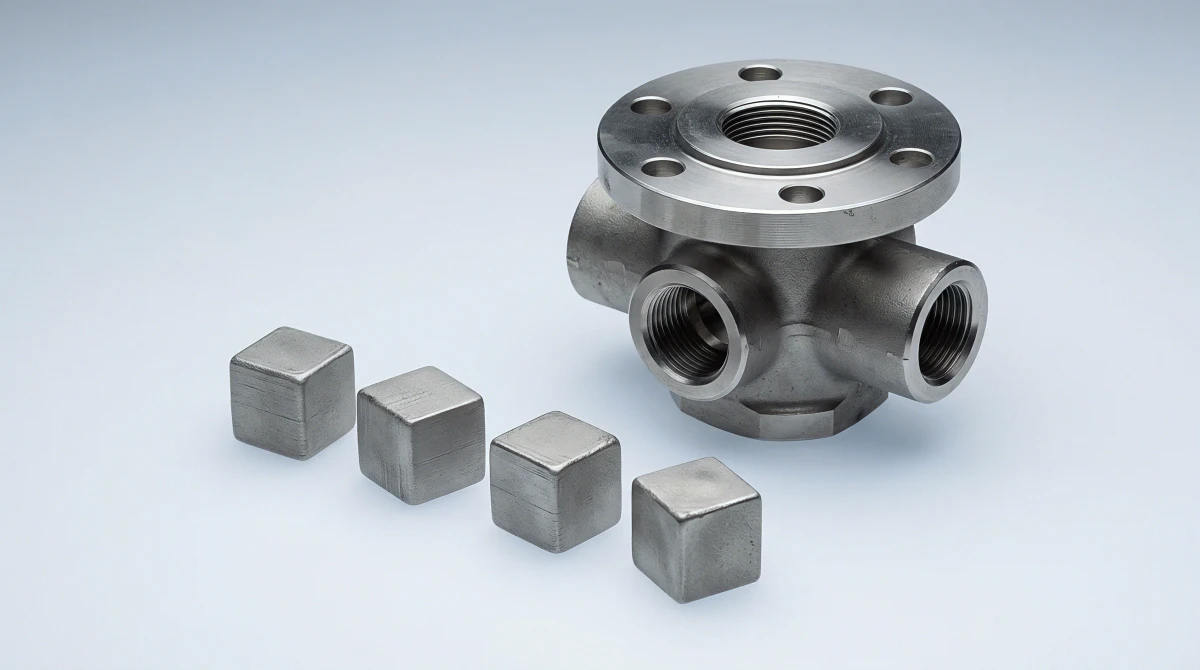
ASTM F3184 Specification for Powder Bed Fusion 316L Stainless Steel

ASTM F3184 fixes the chemistry, the thermal condition and the headings of a 316L order, and leaves the real property, density and inspection requirements for the buyer to write.

What ASTM F3184 Covers and Who It BindsASTM F3184, Standard Specification for Additive Manufacturing Stainless Steel Alloy (UNS S31603) with Powder Bed Fusion, is held by ASTM Committee F42 on additive manufacturing and printed in volume 10.04 of the Annual Book of ASTM Standards. The current edition is F3184-16, reapproved in 2023.

AlSi10Mg Aluminum Properties in Laser Powder Bed Fusion

Printed AlSi10Mg is stronger than the cast alloy as built, and the heat treatment named on the order decides how much strength is traded for ductility or conductivity.

AlSi10Mg Tensile and Yield Strength by Heat TreatmentThe first answer a buyer needs is the strength in each state the material is delivered in. Two makers publish it for their own systems and parameters, and their numbers are close enough to read together and different enough to show why the state and the source both travel with a figure.

ISO/ASTM 52901 Requirements for Purchased Additive Manufactured Parts

The purchased parts standard lists what an additive parts order carries, from tolerances and feedstock to three acceptance stages, and leaves every value to the buyer.

What ISO/ASTM 52901 Asks a Buyer and a Supplier to ExchangeThe scope has three sentences and each one shapes how the standard is used. The first says the document defines and specifies requirements for purchased parts made by additive manufacturing.

ISO/ASTM 52900 Additive Manufacturing Terms and the Seven Process Categories

The vocabulary standard fixes the words an additive order is written in, so name the process category beside the brand and let other standards set quality.

What ISO/ASTM 52900 Covers and What It Leaves OutISO/ASTM 52900 establishes and defines the terms used in additive manufacturing (AM), the technology that applies an additive shaping principle and builds physical three-dimensional geometries by successive addition of material. Its scope sentence also states that the terms are classified into specific fields of application.

PA12 Nylon Properties for SLS and MJF Parts

Powder-bed nylon parts stretch far less along the build axis than in the layer plane, so a drawing needs a build direction, a grade and the test method.

What PA12 Powder Gives a Printed PartPolyamide 12 is the base polymer of the most common powders for laser sintering and for HP Multi Jet Fusion. EOS describes PA 2200, its PA12 powder, as a balanced property profile and "the most proven material on the market" for its machines.

Send the 3D File of Your Printed Part

Send the 2D drawing and the 3D file, with the quantity and the stage of the project. An engineer replies within 1 working day.

The quote form, the mutual NDA and the private folder for your files are on Protolis Atelier, with 3D Printing chosen.

Request a Quote