Specimen

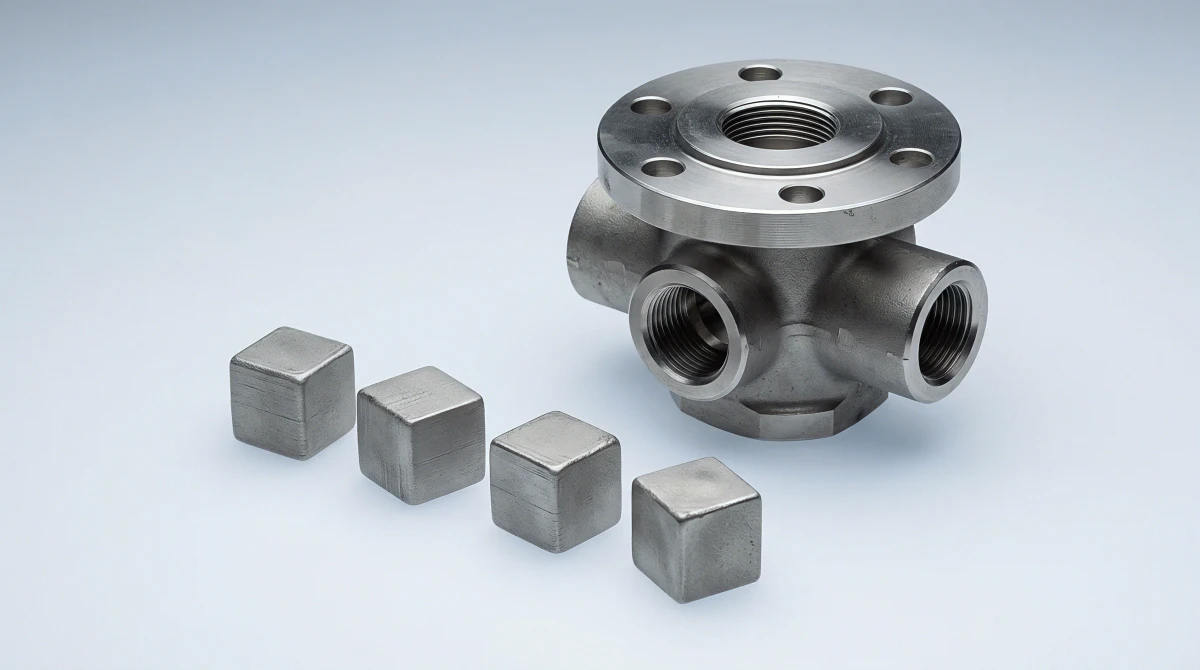
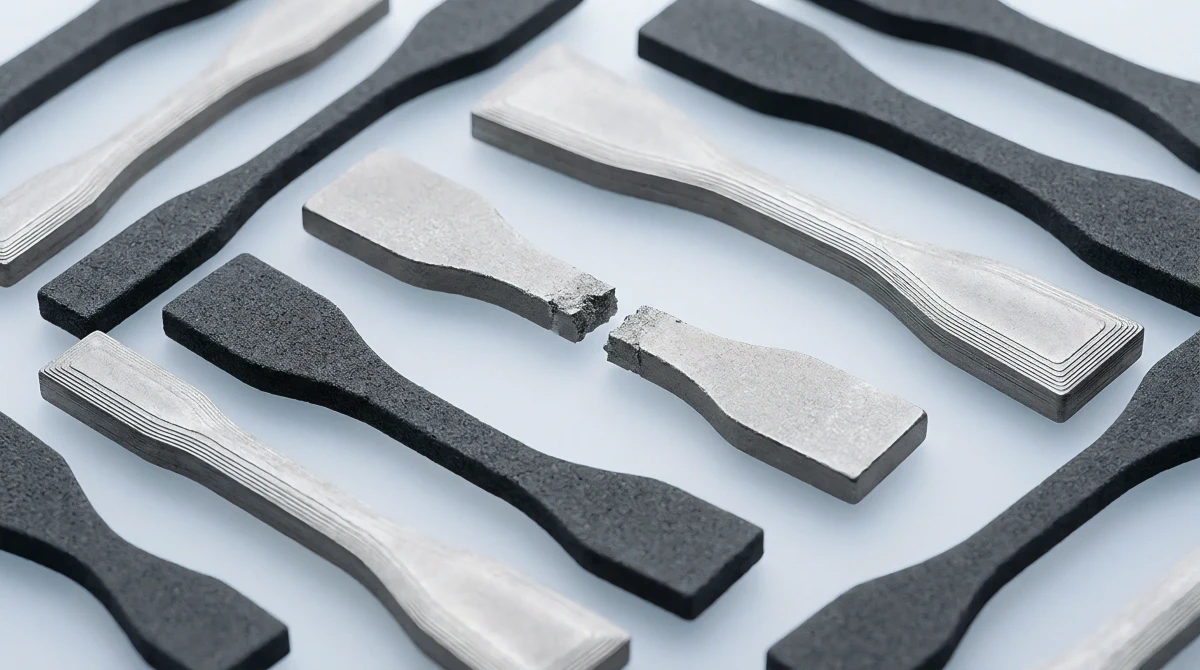
A specimen is a test piece printed to a standard shape, so that a property can be measured where the part itself cannot be tested.

Every Specimen article of the 3D Printing Resources, newest first, each written from published standards, research and makers’ data.

Meaning

A specimen is a test piece printed to a standard shape, so that a property can be measured where the part itself cannot be tested. Datasheet figures come from specimens built in a stated orientation and tested to a named method. Witness specimens are printed in the same build as the parts they stand for. ISO/ASTM 52927 provides procedures for building specimens by an additive process.

Shapes and Methods

EOS tests its polymer specimens to ISO 527 and its 316L specimens to ISO 6892-1. HP tests type V specimens to ASTM D638. The two polymer procedures differ in specimen size and test speed, so their results are not interchangeable. ASTM F2971 gives a common format for reporting data on additive specimens, including their preparation, processing and post-processing history.
Read More

Orientation and Position

A specimen’s orientation sets its result. On its glass bead sheet, HP tests its Z specimens at 1 mm/min (0.04 in/min), a tenth of the speed it uses for XY specimens. One corner of a chamber does not speak for another. An order therefore names the number of specimens per build and where in the chamber they sit.

Counts

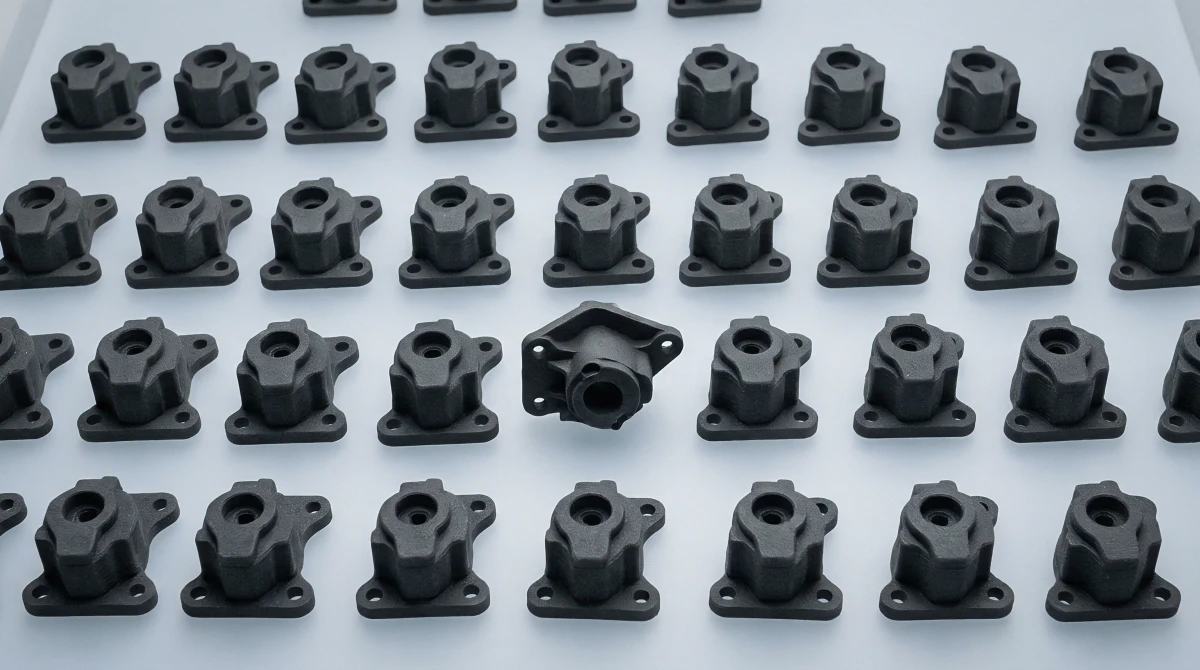
EOS reports its 316L tensile figures from 363 vertical and 246 horizontal specimens on the 20 µm set. The 40 µm set rests on 162 and 72 specimens, and the EOS M 400-4 set on 120 and 96. Those counts sit behind tolerance intervals at 3 confidence levels. A datasheet value is a typical value from the maker’s validation and not an acceptance limit. An order therefore states how many witness specimens it wants.

Thin-Wall Specimens

A 316L study printed groups of 3 walls, each 0.20 mm (0.008 in) thick, 3 mm (0.12 in) high and 10 mm (0.39 in) long. Gaps of 0.2, 0.4 and 0.6 mm (0.008, 0.016 and 0.024 in) separated them. Each condition was printed twice and sectioned for measurement. Such pieces rank the effect of settings and do not state the capability of a production machine.

Specimen Count

An order asks for density by ISO 3369 and tensile data by ISO 6892-1 on witness specimens from the same build as the parts. For polymer parts it names ISO 527 or ASTM D638, the orientation and the count. It says who tests the specimens and how the results are reported.
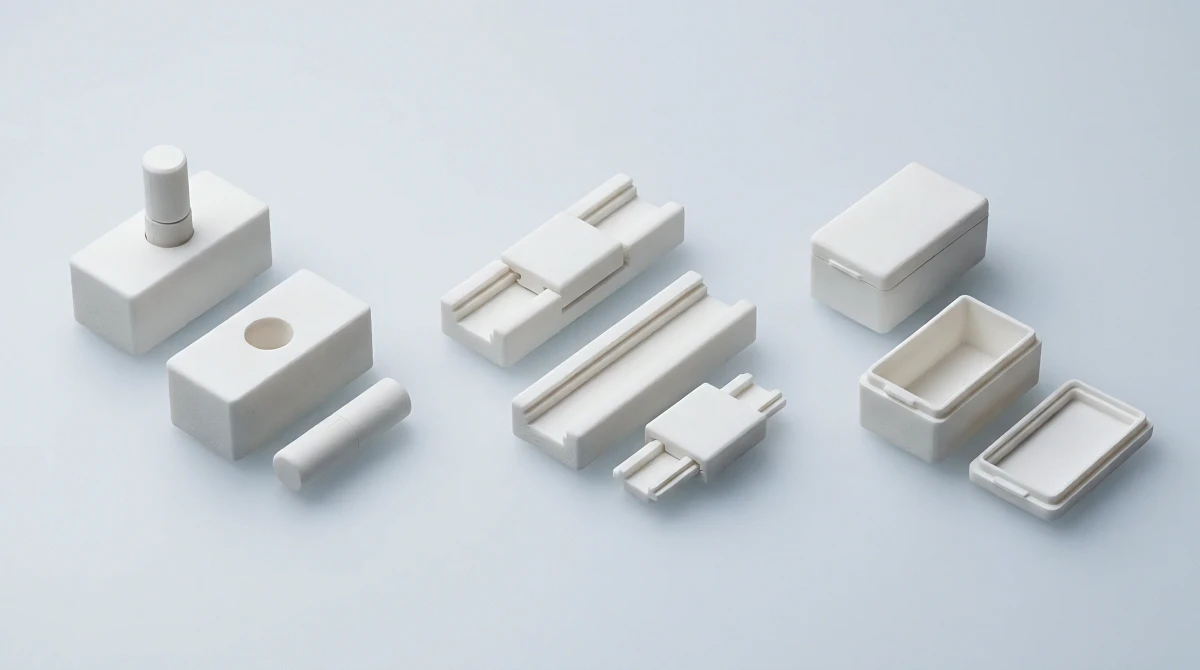
Clearance for Snug and Sliding Fits Between 3D Printed Parts

Printed fits start from a published gap that depends on whether parts are built apart or together, lose clearance to undersized bores, and are settled by a fit coupon.

Starting Clearances for Snug and Sliding Fits in SLS and MJFA snug fit here means two printed parts that assemble with little play and stay together; a sliding fit means two parts that move against each other after assembly. The published values separate them by how the parts were made, more than by how tight the fit is meant to be.

ASTM F3184 Specification for Powder Bed Fusion 316L Stainless Steel

ASTM F3184 fixes the chemistry, the thermal condition and the headings of a 316L order, and leaves the real property, density and inspection requirements for the buyer to write.

What ASTM F3184 Covers and Who It BindsASTM F3184, Standard Specification for Additive Manufacturing Stainless Steel Alloy (UNS S31603) with Powder Bed Fusion, is held by ASTM Committee F42 on additive manufacturing and printed in volume 10.04 of the Annual Book of ASTM Standards. The current edition is F3184-16, reapproved in 2023.

TPU Flexible Powder for SLS and MJF Parts

TPU from a powder bed is equally soft in every direction but stretches far less across its layers, so grade, machine, build direction and test method all belong in the order.

TPU Powder Grades and Their Tensile Properties in XY and ZFour makers' sheets give enough to compare. Forward AM, the additive business of BASF, publishes four Ultrasint TPU powders side by side in one brochure, which makes it the cleanest set: the same company, the same tests, four grades.

AlSi10Mg Aluminum Properties in Laser Powder Bed Fusion

Printed AlSi10Mg is stronger than the cast alloy as built, and the heat treatment named on the order decides how much strength is traded for ductility or conductivity.

AlSi10Mg Tensile and Yield Strength by Heat TreatmentThe first answer a buyer needs is the strength in each state the material is delivered in. Two makers publish it for their own systems and parameters, and their numbers are close enough to read together and different enough to show why the state and the source both travel with a figure.

316L Thin Wall and Gap Dimensional Error in Laser Powder Bed Fusion

Printed metal walls and gaps land off the drawing by an amount the laser settings control, so a requirement names the parameter set, the gap needed and the finished size.

Thin Wall and Gap Error in 316L Laser Powder Bed FusionThe machine maker states accuracy as a band. EOS's sheet for 316L, dated May 2014, gives a typical achievable part accuracy of about ±20 to 50 µm (±0.0008 to 0.002 in) for small parts and about 0.2 % for large parts, and a minimum wall thickness of about 0.3 to 0.4 mm (0.012 to 0.016 in).

ISO/ASTM 52927 Main Characteristics and Test Methods for AM Parts

The test methods standard links the characteristics of additive feedstock and parts to test procedures, and a buyer fixes the method, specimen, orientation and statistical basis in the order.

What ISO/ASTM 52927 Covers and Who It Is ForThe scope states that the document specifies the principal requirements applied to the testing of parts produced by additive manufacturing processes. It does three things.

ISO/ASTM 52901 Requirements for Purchased Additive Manufactured Parts

The purchased parts standard lists what an additive parts order carries, from tolerances and feedstock to three acceptance stages, and leaves every value to the buyer.

What ISO/ASTM 52901 Asks a Buyer and a Supplier to ExchangeThe scope has three sentences and each one shapes how the standard is used. The first says the document defines and specifies requirements for purchased parts made by additive manufacturing.

PA12 Nylon Properties for SLS and MJF Parts

Powder-bed nylon parts stretch far less along the build axis than in the layer plane, so a drawing needs a build direction, a grade and the test method.

What PA12 Powder Gives a Printed PartPolyamide 12 is the base polymer of the most common powders for laser sintering and for HP Multi Jet Fusion. EOS describes PA 2200, its PA12 powder, as a balanced property profile and "the most proven material on the market" for its machines.

316L Stainless Steel Properties in Laser Powder Bed Fusion

Printed stainless steel is stronger along the layers and more ductile across them, and its size and finish depend on the parameter set and the heat treatment you name.

What 316L Is in a Laser Powder Bed Machine316L is a molybdenum-alloyed austenitic stainless steel. EOS markets its powder as a marine-grade steel with enhanced corrosion resistance in chloride environments, and it lists high ductility, high strength and high corrosion resistance as the main characteristics.

Send the 3D File of Your Printed Part

Send the 2D drawing and the 3D file, with the quantity and the stage of the project. An engineer replies within 1 working day.

The quote form, the mutual NDA and the private folder for your files are on Protolis Atelier, with 3D Printing chosen.

Request a Quote