Meaning
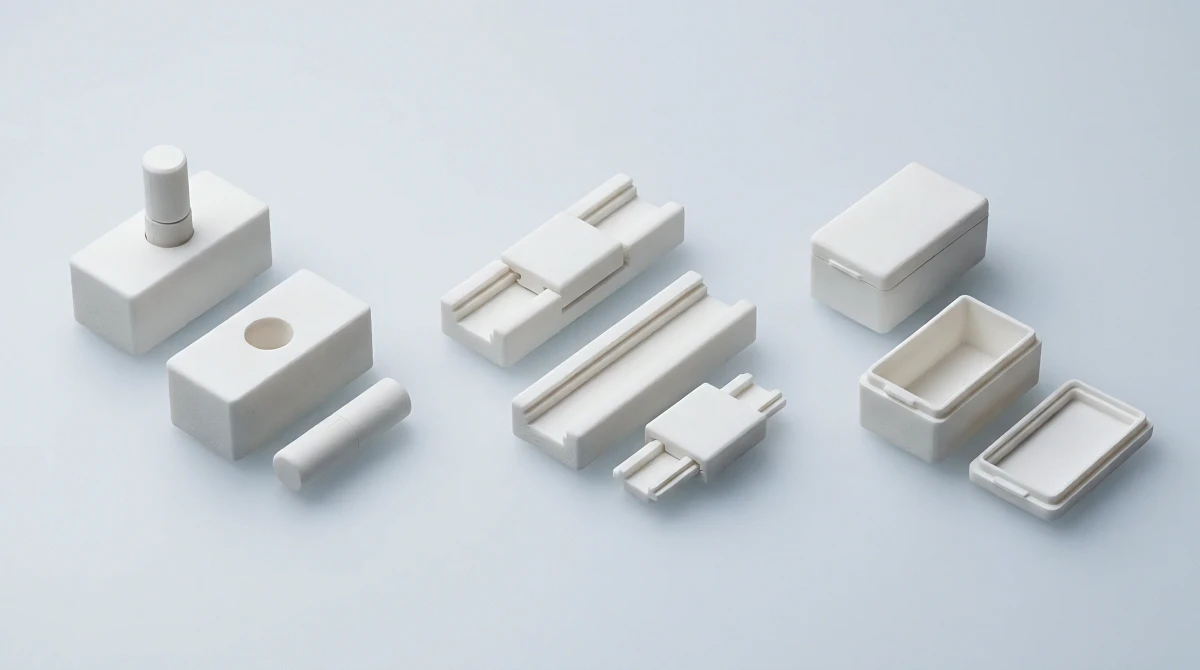
A pin is a slender cylindrical feature, printed as part of a design or used as a gauge, that fits into a hole or bore. In printed parts it appears both as a design feature, such as a hinge pin or locating pin, and as the gauge pin that checks whether a printed bore is clear and to size.Minimum Size
The University of Zurich SLS guideline gives 0.5 mm (0.020 in) as the smallest pin diameter that prints in laser-sintered polyamide and 1.8 mm (0.071 in) for reproducible results and good mechanical properties. It notes that a pin’s strength depends on its length relative to its diameter, so a long, thin pin is fragile, and suggests designing pins of 8 mm (0.31 in) and upward hollow or with internal support.Read More
Fit
A printed pin tends to hold its outer size while a printed bore comes out small. A study of 50 PA12 parts on a 3D Systems ProX SLS 6100 found outer diameters close to nominal and inner diameters undersized by about 0.1 mm (0.004 in). For a pin and bore printed separately in a powder bed, HP’s starting gap of 0.4 mm (0.016 in) on diameter therefore shrinks before the parts meet; worked through with that undersize, a 10 mm pin in a bore drawn at 10.4 mm is left with about 0.3 mm of play.Gauge Pin
Passing a gauge pin through each critical bore is a practical acceptance check on a printed batch, and also shows whether a bore has been cleared of powder. Gauge pins and go and no-go gauges answer whether every bore passes.Finishing Risk
DyeMansion warns that fragile features such as pins on heavy parts can be damaged in its shot surfacing step, and the same caution applies to blasting any thin pin.