First Production Part

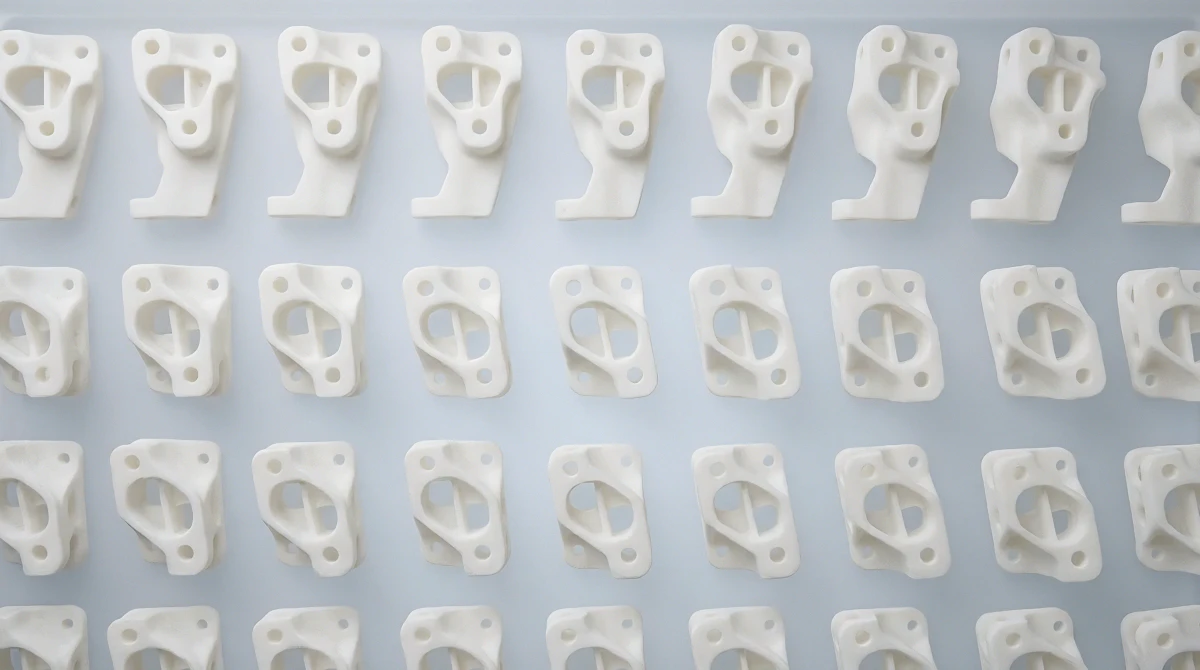
The first production part is the first part of a series, inspected and approved before the rest of the run is built.

Every First Production Part article of the 3D Printing Resources, newest first, each written from published standards, research and makers’ data.

Meaning

The first production part is the first part of a series, inspected and approved before the rest of the run is built. ISO/ASTM 52901 gives its acceptance a clause of its own, 4.5.3, between qualification parts and the final or reference part. It is the part on which a wrong orientation, parameter set or post-processing step costs least to find. Once approved, it carries a documented geometry that later parts are compared against.

Inspection Scope

The first production part is inspected on every drawing feature, by the method named for each. A resin part is measured after post-cure, a nylon part after unpacking at the agreed temperature and a metal part after heat treatment. The inspection report names the measuring method, the build position and the number of parts measured. On laser-sintered nylon, the report also gives any scale factor applied to the file.
Read More

Place in the Series

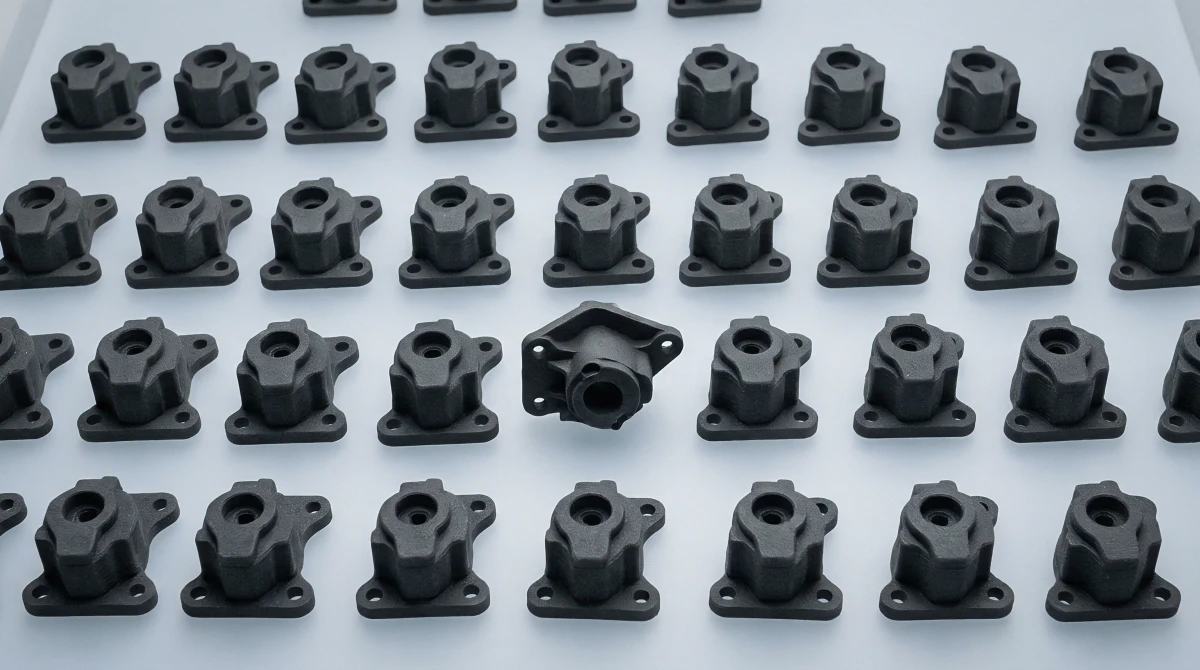
In a worked case with assumed numbers, an order of 600 parts in 6 lots accepts the first production part at lot 1. A reference part from that lot then serves as the comparison for lots 2 to 6. Qualification parts and witness specimens from the chosen parameter set come before it and show the process capable. The documentation of acceptance, clause 4.5.5, records each stage.

Lead Time

A first part approval places a pause between the first build and the rest. ISO/ASTM 52901 lists the first production part among the acceptance points of an order, beside part ordering, process control, post-processing and inspection. A lead time quoted against such an order shows when the first part is due and when the run resumes. On a nylon order, the count per build sits under the process heading and the approval under acceptance.

Handover to a Mold

When a mold takes over a printed run, the approved first production part is the starting file. The move to molding is a change of process family, so the mold receives its own first-part approval. The dimensions that were hard to hold on the printed part are reviewed with the molder first. Features finished by hand are reviewed in the same pass.
Inspecting a 3D Printed Production Run and When a Mold Takes Over

Accept the first printed part against written limits, keep the record, and weigh a mold by identical quantity and design stability.

How a Printed Production Run Is Inspected and AcceptedISO/ASTM 52901:2017, titled requirements for purchased AM parts, gives the frame. Its scope says it covers the elements to be exchanged between customer and part provider at the time of the order: customer order information, part definition data, feedstock requirements, final part characteristics and properties, inspection requirements and part acceptance methods.

How Long a Batch of 3D Printed Parts Takes From Print to Pack-Out

A printed batch runs on four clocks, build, cooldown, finishing and inspection, and a stated lead time should show each.

Lead Time for a 3D Printed Batch Stage by StageThe calendar of a batch has the same skeleton in every process. Files are prepared and nested, the machine builds, the work cools or cures, parts are separated from what held them, and finishing and inspection follow.

Metal 3D Printing Stress Relief and Build Plate Removal Step by Step

Stress relieve metal parts on the plate, then cut, remove supports, anneal if needed and measure after the heat.

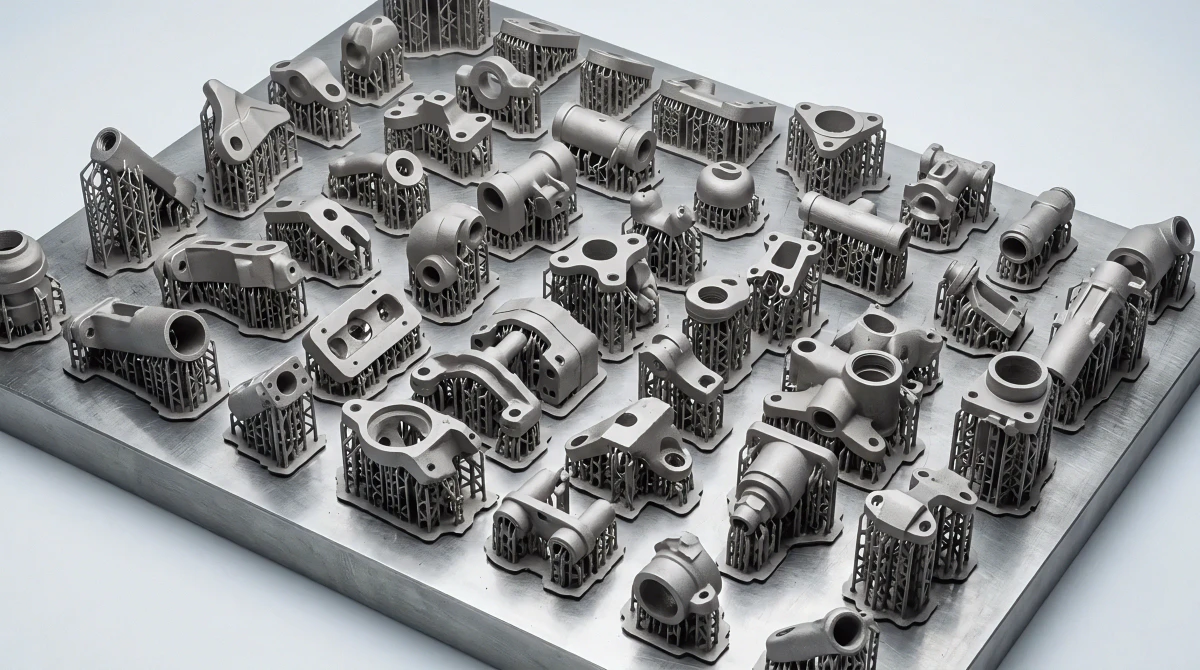
Metal Powder Bed Fusion Post-Build Steps in OrderThe post-build sequence for a part built on a plate has a stable shape across machine makers, because the stresses behave the same way. The sources agree on the order; they differ in how much of the detail they publish.

SLA Dimensional Tolerance by Feature Size

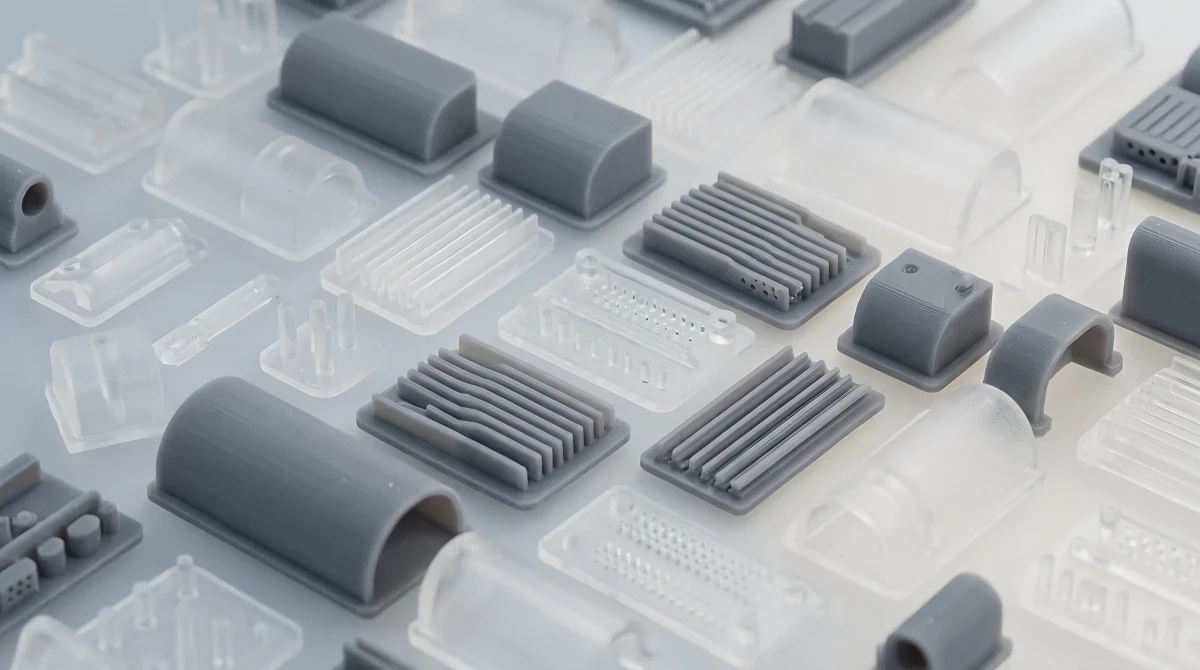
SLA tolerance is published as a percentage of feature size with a small floor, so a drawing writes bands and a post-cure condition and not one general figure.

SLA Tolerance Values Published by Two MakersTable 1 states the two specifications as their makers print them. Neither is a guarantee for a delivered part, and the Formlabs guide notes that the best way to judge a printer is to inspect real parts.

ISO/ASTM 52901 Requirements for Purchased Additive Manufactured Parts

The purchased parts standard lists what an additive parts order carries, from tolerances and feedstock to three acceptance stages, and leaves every value to the buyer.

What ISO/ASTM 52901 Asks a Buyer and a Supplier to ExchangeThe scope has three sentences and each one shapes how the standard is used. The first says the document defines and specifies requirements for purchased parts made by additive manufacturing.

Send the 3D File of Your Printed Part

Send the 2D drawing and the 3D file, with the quantity and the stage of the project. An engineer replies within 1 working day.

The quote form, the mutual NDA and the private folder for your files are on Protolis Atelier, with 3D Printing chosen.

Request a Quote