Meaning
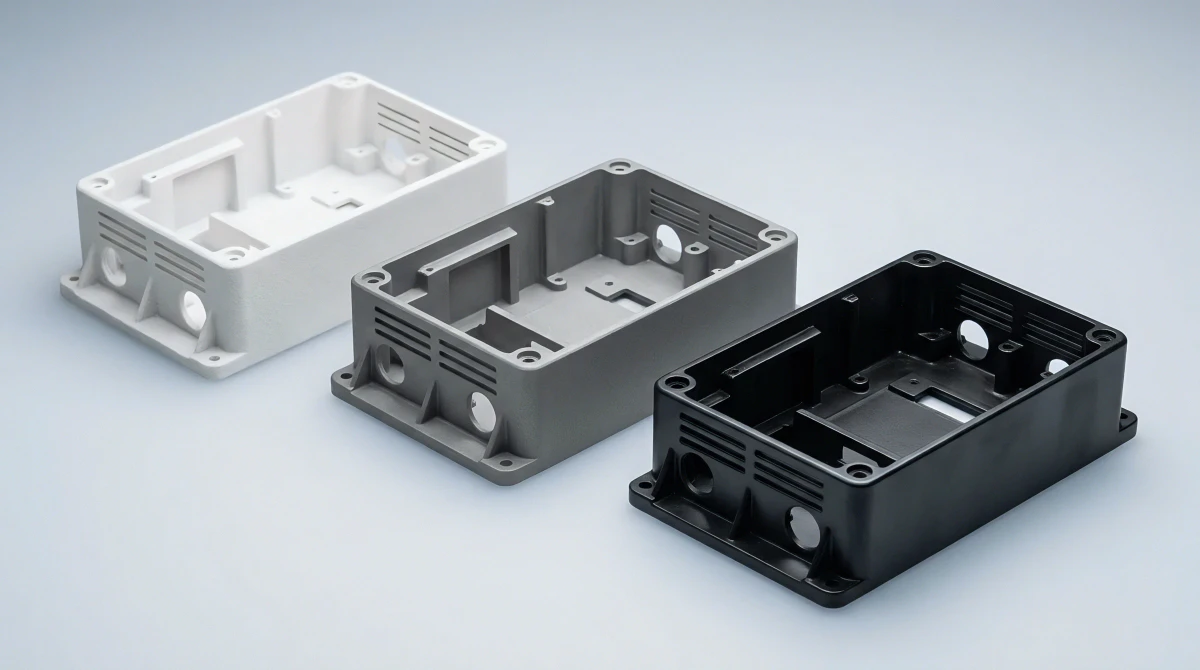
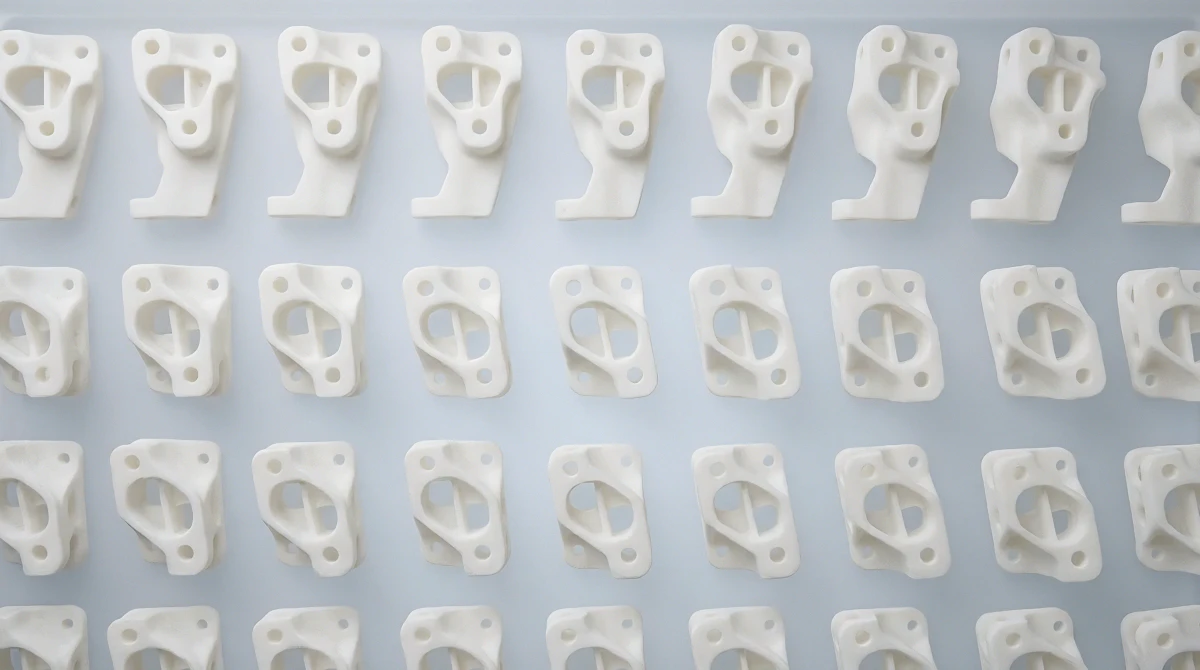
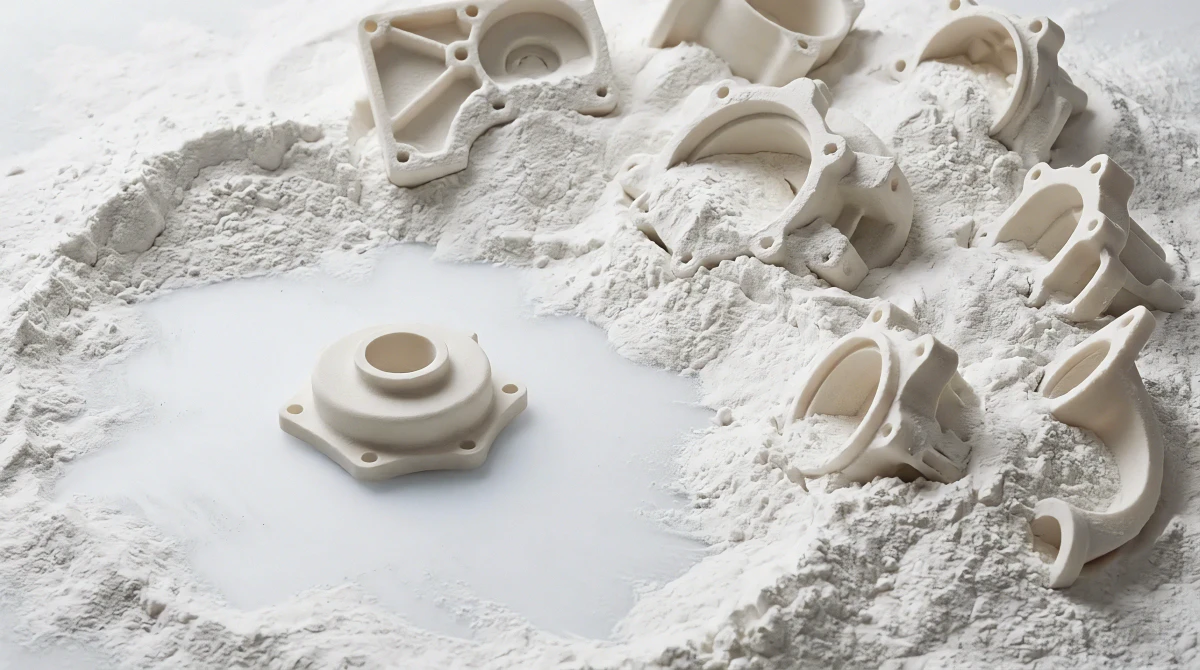
Depowdering is the removal of unfused powder from parts after a powder bed build, from breaking the parts out of the cooled powder cake to blasting the last loose and lightly stuck grains off every face. It is a step every laser-sintered and Multi Jet Fusion part goes through before any finish.Method
A study of laser polishing on HP Multi Jet Fusion parts describes depowdering with compressed air carrying glass or plastic beads as the standard step for powder bed polymer parts, and notes that depending on media, pressure and time it already smooths the surface somewhat; its own plates were blasted by hand with glass beads. DyeMansion’s published sequence cleans parts with glass beads of 200 to 300 µm (0.008 to 0.012 in) at 3 bar (43.5 psi) for 5 minutes. HP offers an automatic unpacking station for its 5200 series.Read More
Time in the Batch
Depowdering follows cool-down, and the tail of the cycle can outlast the print. A study of 50 nylon 12 parts on a 3D Systems ProX SLS 6100 recorded an 11 h 13 min build, including 1 h 58 min of cool-down, and then left the powder cake 24 hours to reach room temperature before the parts came out.Failure Mode
Powder left in blind holes, channels and under overhangs shows as white residue and, if the part goes on to vapor smoothing, is dissolved and melted into its skin. Thin tubes and labyrinths out of the beads’ line of sight clean unevenly, and fragile pins and thin walls can be damaged by the blast. Designs help with escape holes: the University of Zurich SLS guideline asks for at least two, opposite each other, of 4.0 mm (0.157 in).Checking
Weighing parts against the batch average and passing a gauge pin through each critical bore show whether trapped powder remains, since trapped powder adds mass and blocks the bore.