Meaning
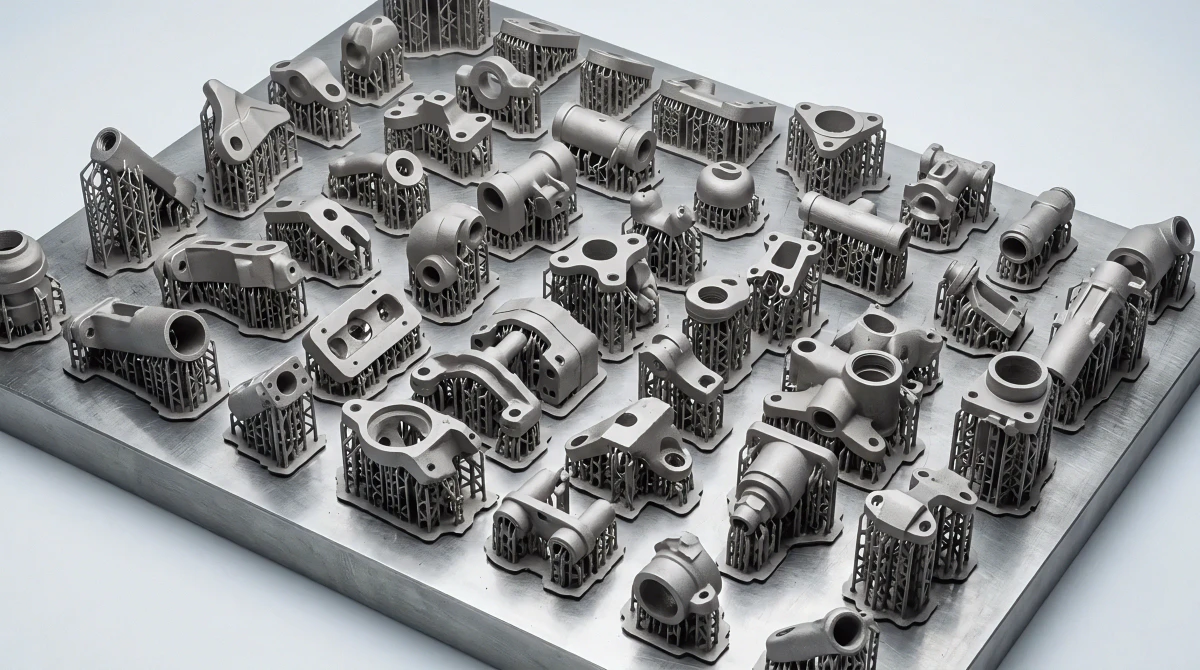
Laser powder bed fusion (L-PBF) melts a thin layer of metal powder with a laser, layer after layer, inside an argon or nitrogen atmosphere. It sits in the powder bed fusion category of ISO/ASTM 52900. EOS sells its version as DMLS, a registered EOS trademark. A buyer who writes the category into a drawing leaves the supplier free to run its own machines. Each melt pool cools against solid metal that is already contracting, which locks stress into the part.Machines and Layers
The EOS M 290 builds in 250 × 250 × 325 mm (9.8 × 9.8 × 12.8 in) with a 400 W fiber laser. EOS runs 316L on it in layers of 20, 40 and 80 µm (0.0008, 0.0016 and 0.0031 in). Its volume rates run from 2.0 to 8.4 mm³/s. A research study used an Aconity MIDI with a laser of up to 1,000 W and 30 µm (0.0012 in) layers. Its scan speed was fixed at 1,466.6 mm/s (57.7 in/s).Read More
Properties by Direction
Across the layers, printed 316L gives lower strength and higher ductility. Every EOS set shows the vertical bar yielding 40 to 60 MPa (5.8 to 8.7 ksi) below the horizontal one. On the 20 µm set the yields are 480 and 540 MPa (69.6 and 78.3 ksi), with elongations of 49 and 38 %. Density reaches at least 7.97 g/cm³ (0.288 lb/in³), with an average defect share near 0.02 %.Accuracy and Thin Features
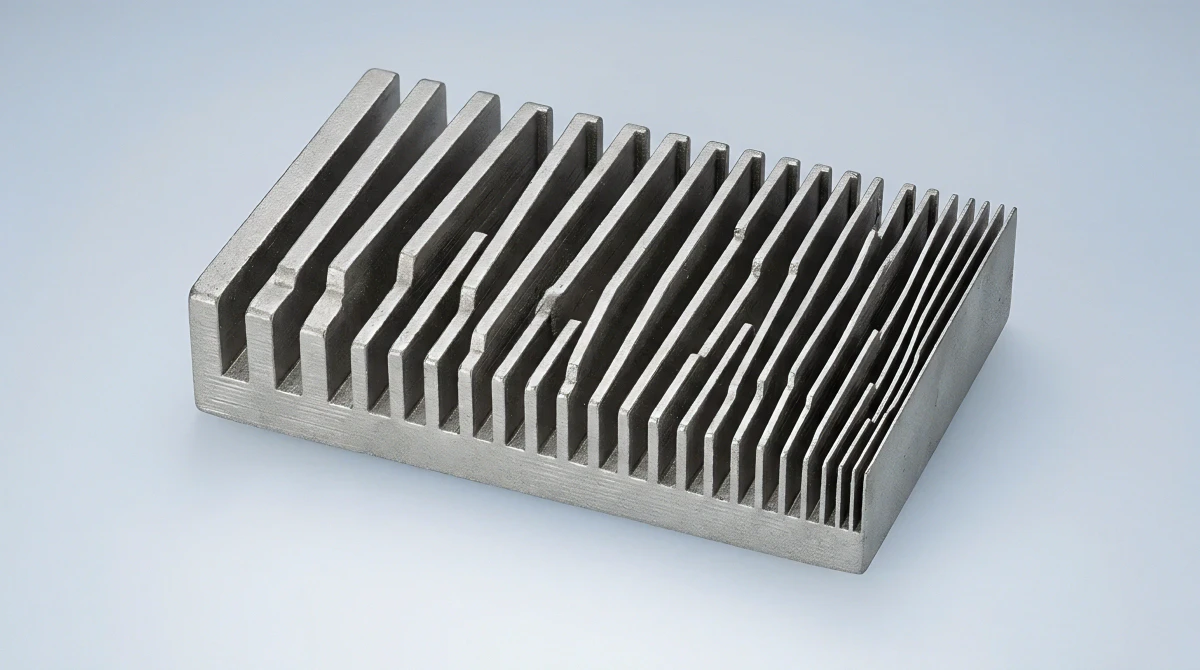
EOS gives about ±20 to 50 µm (±0.0008 to 0.002 in) for small parts and about 0.2 % for large parts. Thin features depend on settings. In one study, a wall drawn 0.20 mm (0.008 in) printed 0.304 to 0.423 mm (0.012 to 0.017 in) thick. The thickness grew as laser power rose from 260 to 620 W, and a gap of the same drawn width closed completely at high power. A contour scan with a 50 µm (0.002 in) inward offset cut the wall error by roughly 40 to 45 %.After the Build
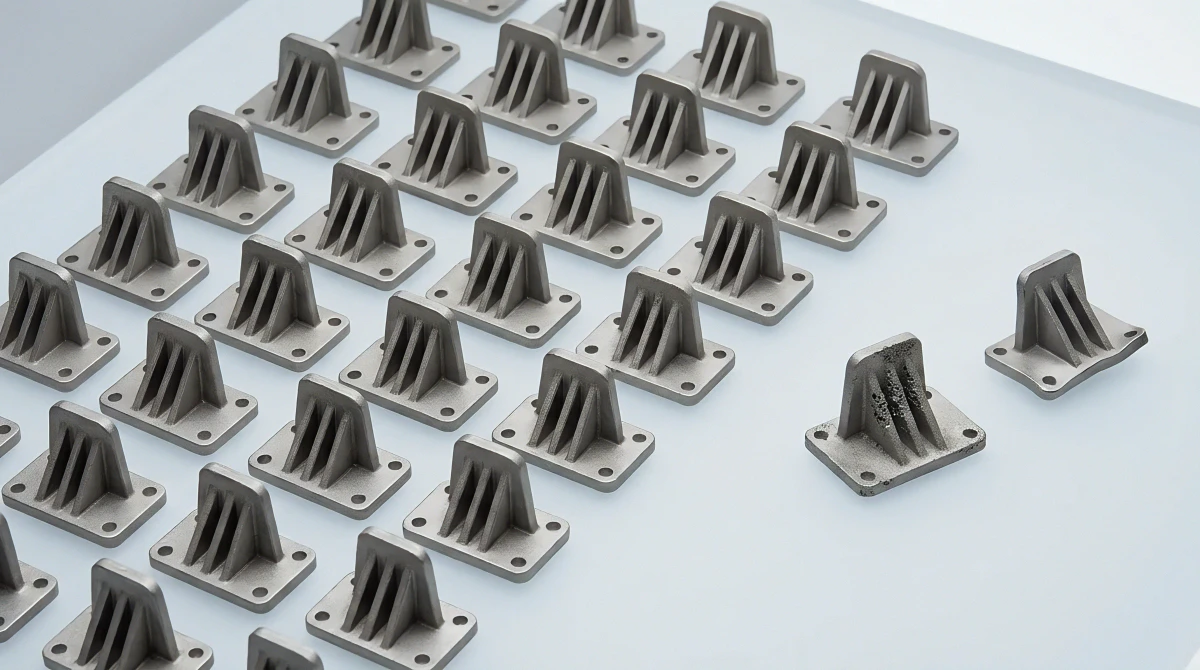
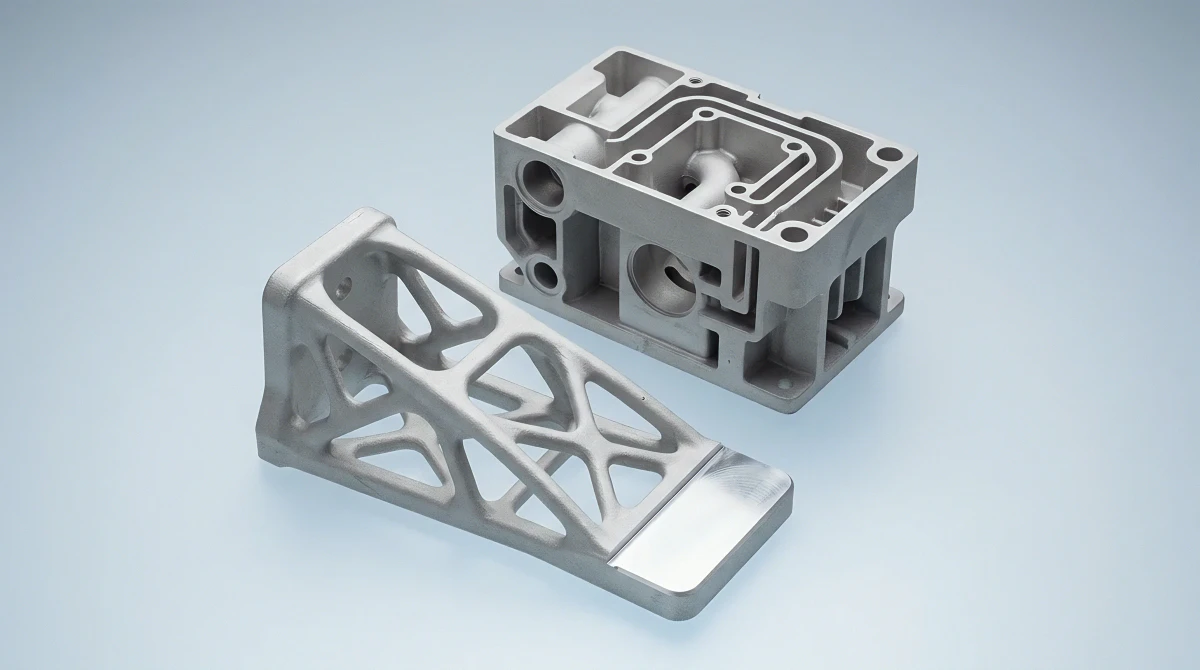
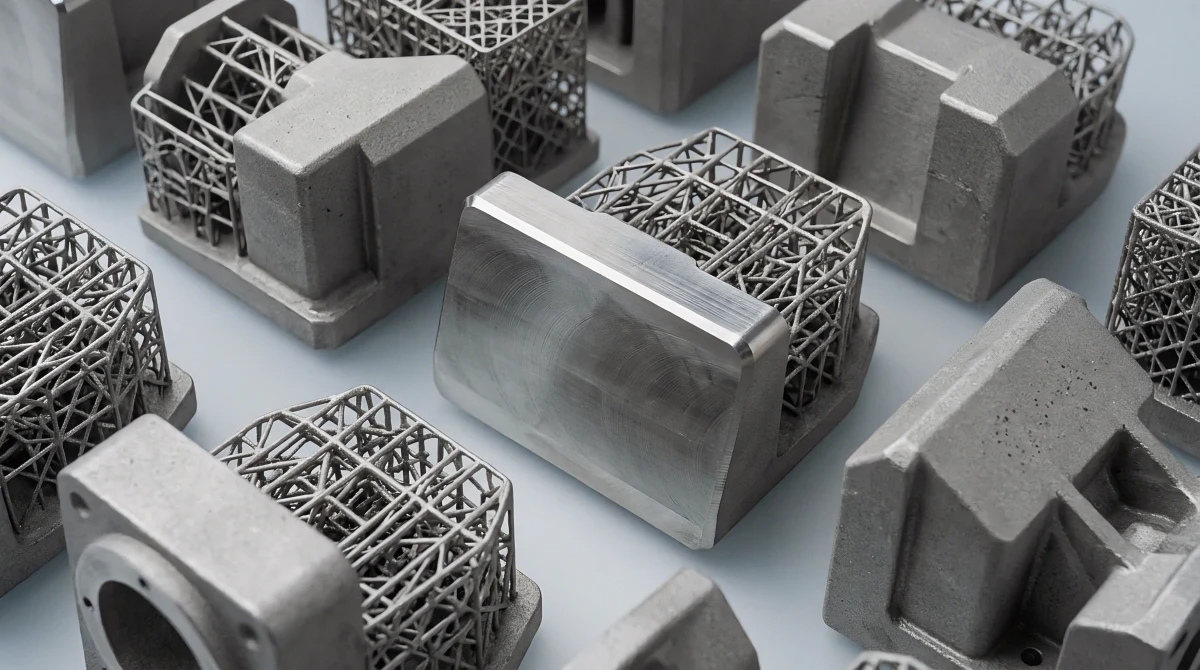
The part leaves the machine fixed to a thick plate that holds its stresses in place. It is typically stress relieved before removal, then cut free by bandsaw or wire erosion. Supports come off by hand, contact faces are ground, and the part is blasted and machined where drawn. Inspection uses optical scan, a coordinate measuring machine (CMM), stylus roughness and computed tomography (CT) for internal flaws.