Warp

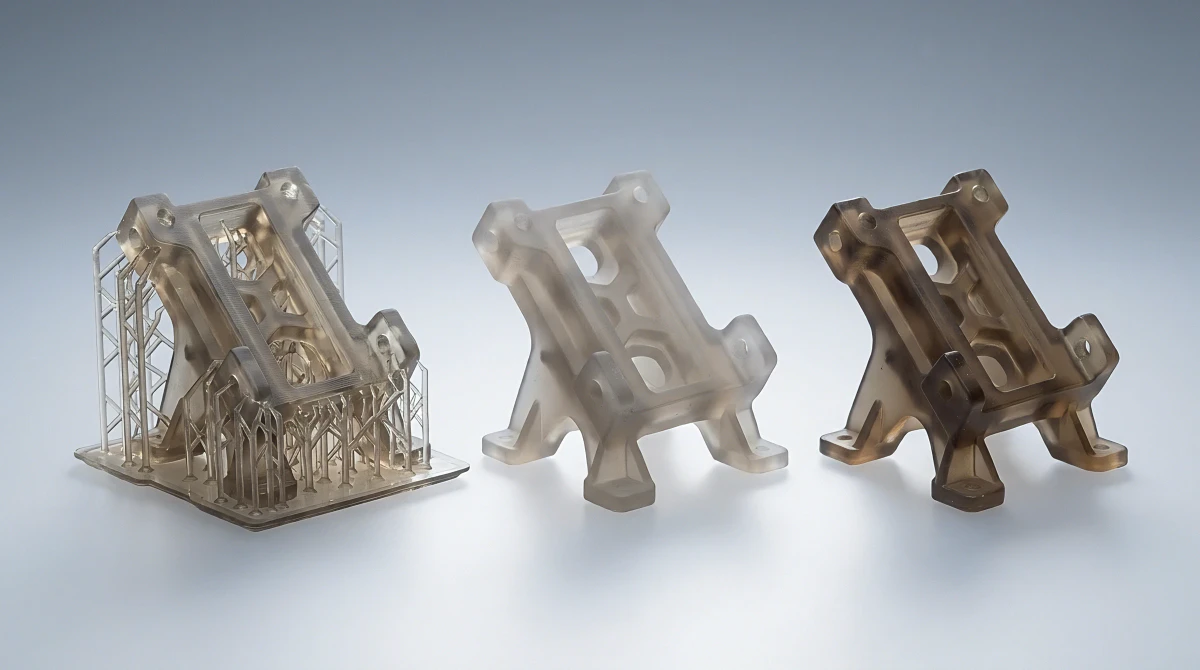
Warp is the bending or twisting of a printed part away from its drawn shape, usually from uneven cooling, curing or stress release.

Every Warp article of the 3D Printing Resources, newest first, each written from published standards, research and makers’ data.

Meaning

Warp is the bending or twisting of a printed part away from its drawn shape, usually from uneven cooling, curing or stress release. It shows as a long face out of flat or a long part bent along its length. It is seen on a measuring machine or a flat table, not in the printer log. The step that causes it differs by process.

Nylon Unpacking

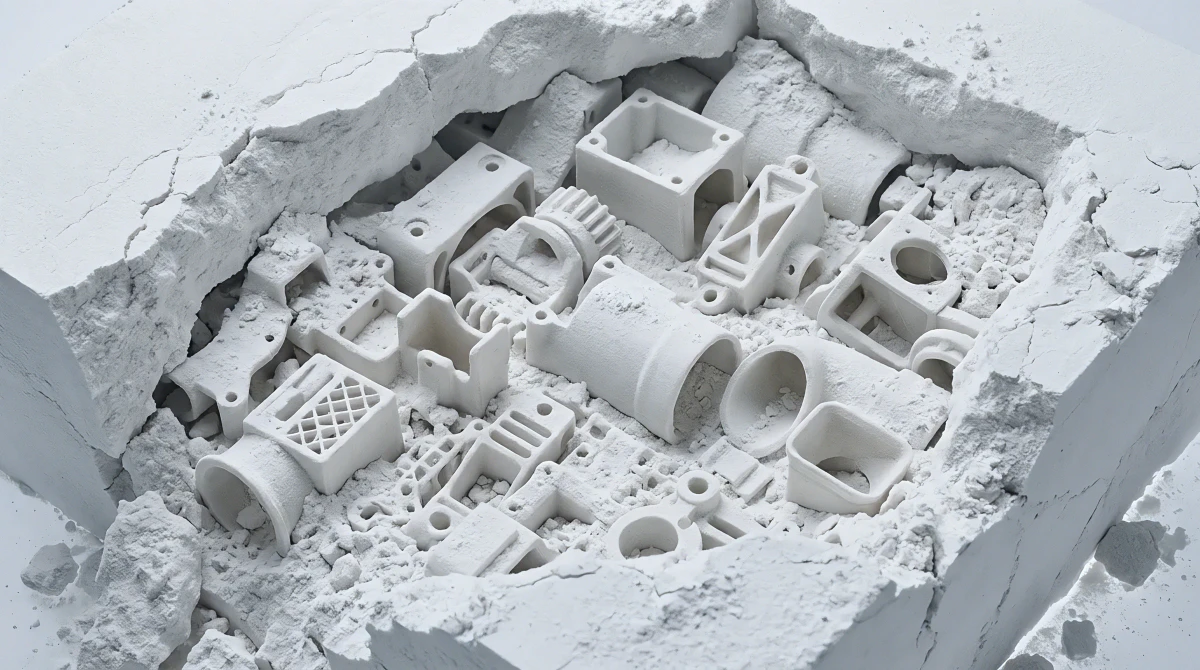
Formlabs measured nylon 12 parts unpacked at temperatures from 100 °C (212 °F) down to 25 °C (77 °F). Parts unpacked at 100 °C warped about twice as much as parts unpacked at room temperature. Parts unpacked above 70 °C (158 °F) warped consistently. Parts at 50 °C (122 °F) were not significantly worse than the room-temperature set. The test used a Fuse 1+ 30W chamber packed to 15 %.
Read More

Shapes at Risk

Warp shows first on outer-corner parts and on long, thin parts printed with their longest dimension along Z. Formlabs advises leaving those in the printer until 50 °C, and finding a shop’s own threshold by test. Long flat faces and thin walls are among the features that earn every-part inspection for the same reason.

Resin and Metal

Resin parts can warp under light and heat if their supports come off before post-cure, so the supports are removed afterward. A metal cantilever cut from its plate without stress relief bends along its length. Tension in the top of the beam and compression in the bottom were locked in during the build.

Control

An order for a part that must stay flat writes the unpacking temperature ceiling as a number in degrees Celsius. It also writes the orientation in the chamber. The record then shows whether the supplier unpacks by temperature or by schedule. The Fuse Sift shows the chamber temperature, so the threshold can be read off the station.

How Many Parts Fit in One SLS or MJF Build

Chamber volume times packing density divided by part volume sets the count, and every term has a published limit.

How Many Parts Fit in a Powder Bed Fusion BuildPowder bed fusion, one of the seven process categories in ISO/ASTM 52900, builds parts inside a bed of powder that supports them, so a chamber can be filled in three dimensions and the parts need no support structures. The count that results is set by three quantities: the usable volume, the share of that volume that holds parts, and the volume of the part itself.
Inspecting a 3D Printed Production Run and When a Mold Takes Over

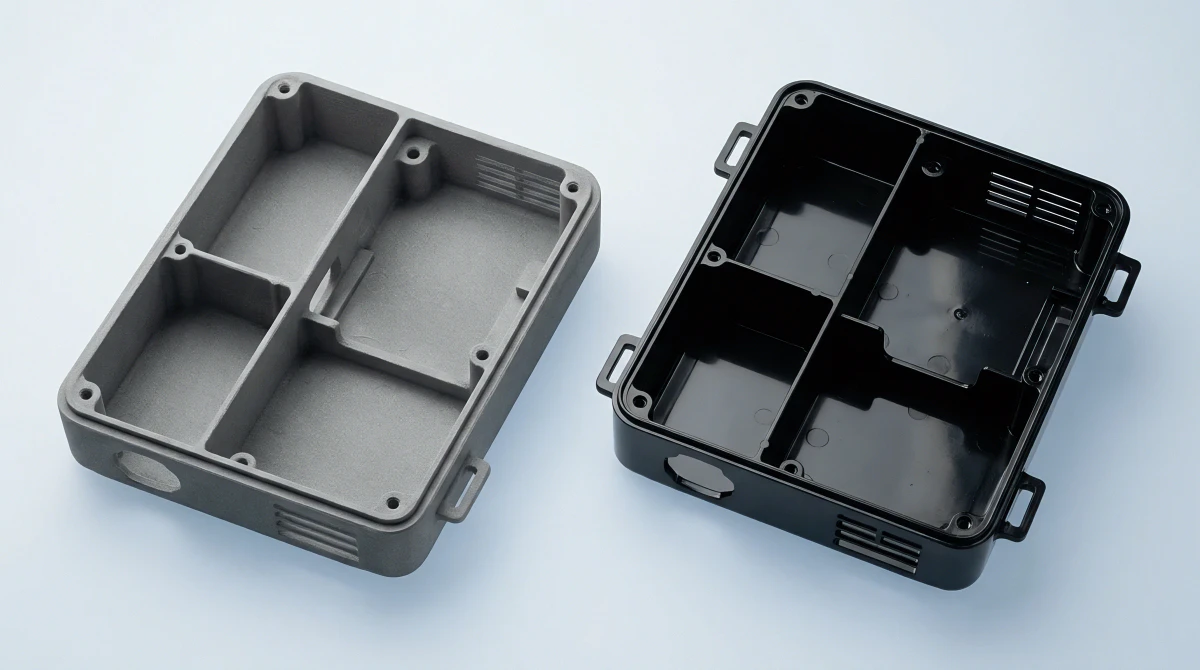
Accept the first printed part against written limits, keep the record, and weigh a mold by identical quantity and design stability.

How a Printed Production Run Is Inspected and AcceptedISO/ASTM 52901:2017, titled requirements for purchased AM parts, gives the frame. Its scope says it covers the elements to be exchanged between customer and part provider at the time of the order: customer order information, part definition data, feedstock requirements, final part characteristics and properties, inspection requirements and part acceptance methods.

SLA Wash and Post-Cure Step by Step From Green Part to Finished Resin Part

Wash each resin for its own time, dry it fully, cure to the datasheet condition, then remove supports and measure.

SLA Wash, Dry, Cure and Support Removal in OrderThe part leaves the printer in a green state: polymerized enough to keep its shape, but with its reaction unfinished and a film of liquid resin over it. The order in which the finishing steps run is set by what each one needs from the one before.

SLS Nylon 12 Dimensional Tolerance in XY and Z

Laser sintered nylon holds far tighter size in the layer plane than across the layers, so a drawing writes the axes apart and states build position, scaling and measured data.

SLS Nylon 12 Tolerance in XY and in ZTable 1 lists the statements, then applies them to sizes a designer uses. The guide gives the XY rule for SLS and MJF as ±0.5 % or 0.3 mm, whichever is larger.

Send the 3D File of Your Printed Part

Send the 2D drawing and the 3D file, with the quantity and the stage of the project. An engineer replies within 1 working day.

The quote form, the mutual NDA and the private folder for your files are on Protolis Atelier, with 3D Printing chosen.

Request a Quote