Meaning
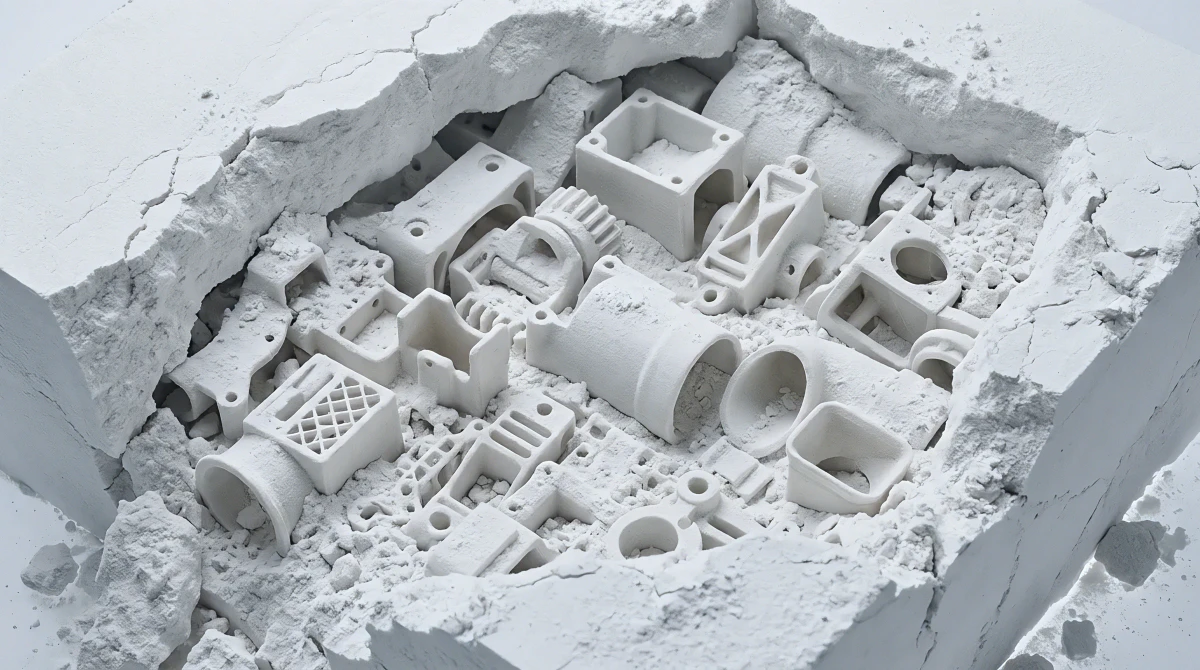
Packing density is the share of a powder bed chamber’s volume taken by parts, as opposed to the powder between them. It is the least certain term in the count of parts per build, because makers publish different figures for different purposes. It can be stated by volume or by mass, and the two differ. A count of parts quoted per build is checked by asking which density it assumes.Published Figures
Formlabs ran its cooldown test at 15 % with mixed parts in a Fuse 1+ 30W. It lists 30 % and above by volume as achievable on the Fuse X1, which is 48 % and above by mass. Formlabs describes 8 to 10 % by volume as the recommended maximum for the HP 5200 series, a competitor’s reading. HP’s own materials page uses 10 % for a cost comparison and applies its powder reuse claim above 20 %.Read More
Volume and Mass
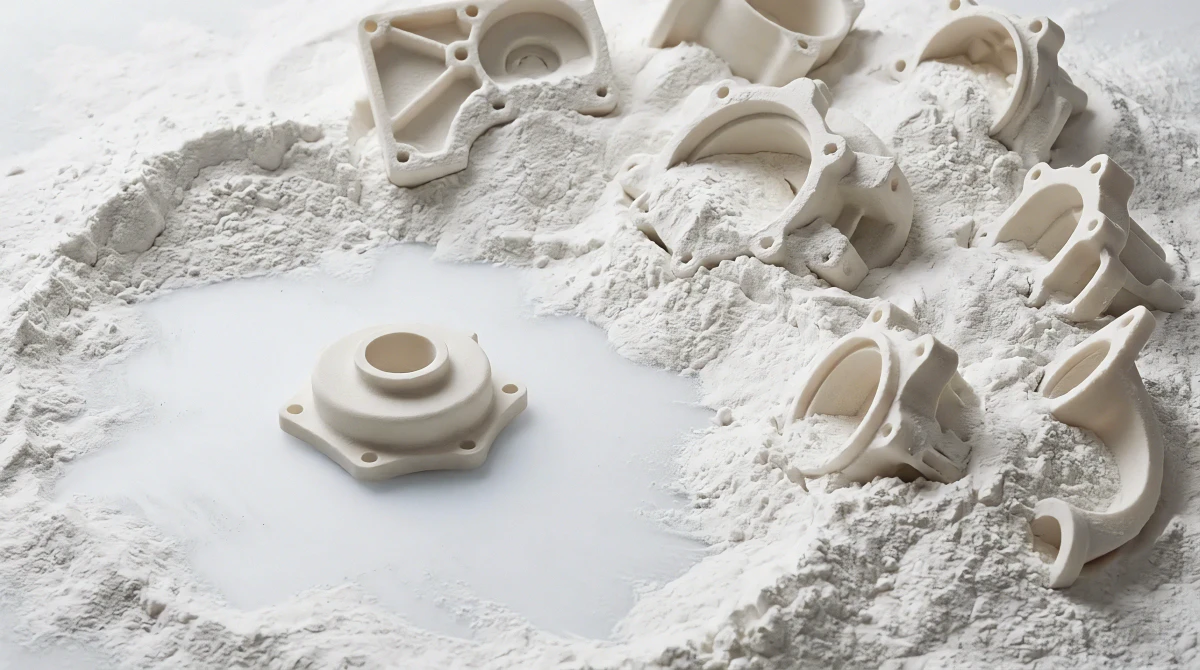
A mass figure always reads higher than a volume figure for the same build. HP gives High Reusability PA 12 a powder bulk density of 0.425 g/cm³ (0.0154 lb/in³) and a part density of 1.01 g/cm³ (0.036 lb/in³). A given volume of part is therefore more than twice the mass of the same volume of loose powder.Parts per Chamber
The count is chamber volume times packing density, divided by the volume of one part. At 15 %, a Fuse X1 holds about 461 parts of 20 cm³ (1.22 in³), and at 30 % about 922. An HP 5200 series chamber at 10 % holds about 205, and a Fuse 1+ 30W at 15 % about 61. Real builds mix sizes and carry test pieces, so these are ceilings.Side Effects
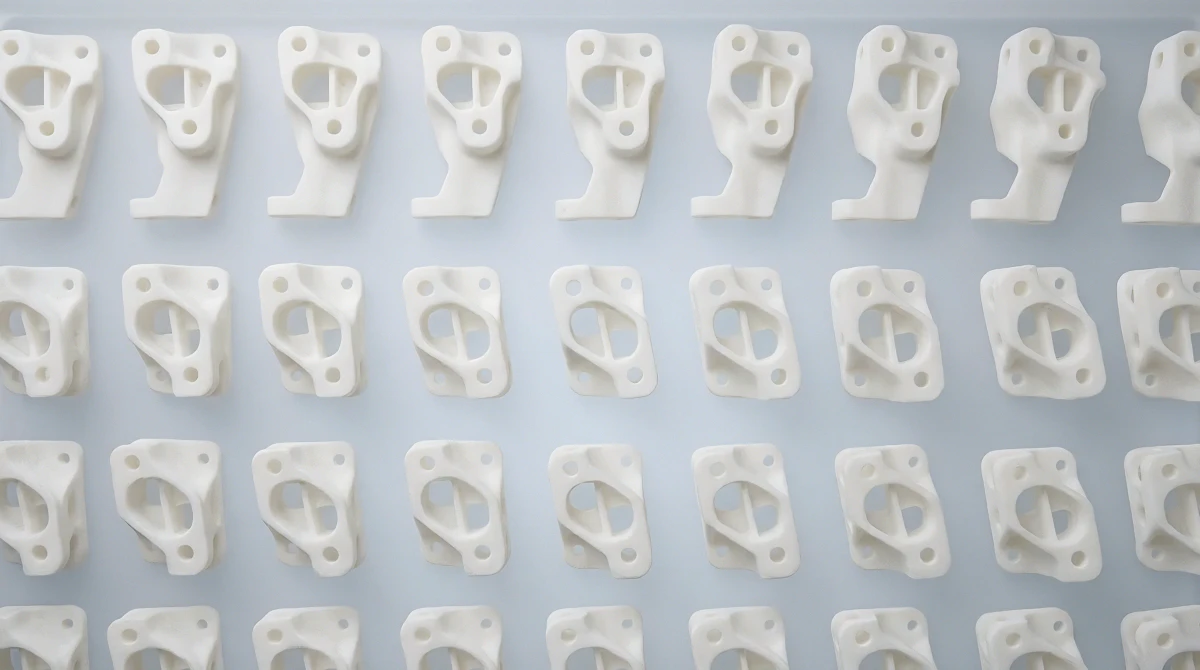
Density is not free of consequences. A supplier who orients parts for packing density and cost can place the highest strain of a snap hook across the weakest bond. A packed chamber also changes the thermal history of the cake. An order names the density by volume, the orientation and any test coupons that share the chamber.