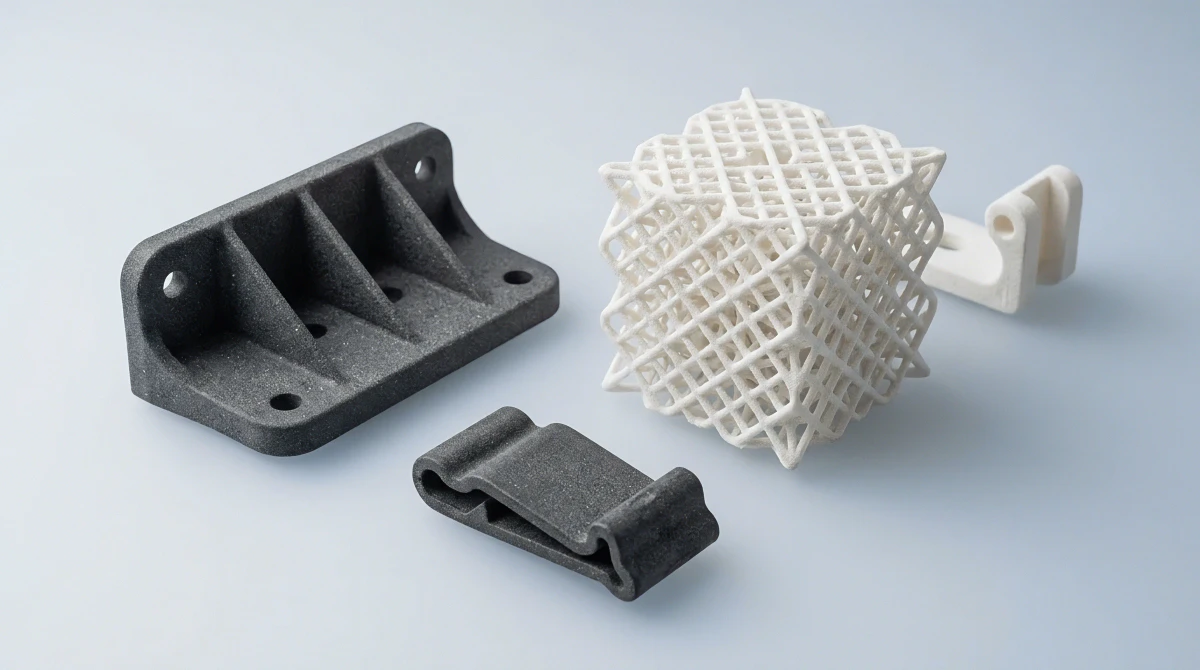
Refresh Ratio

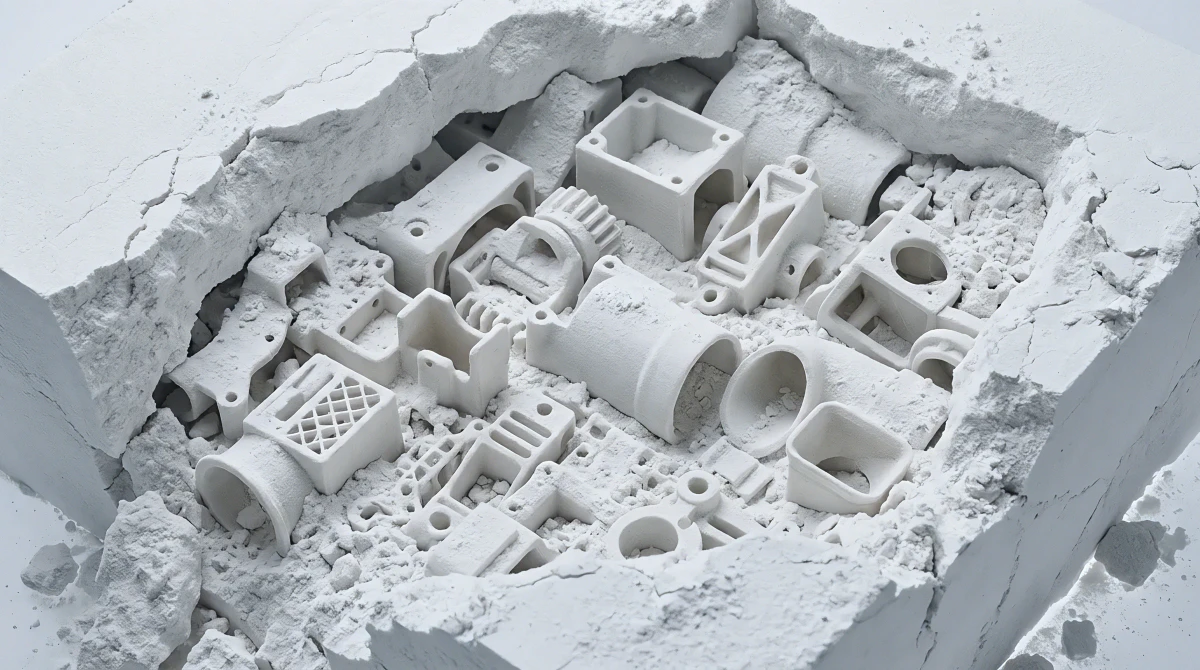
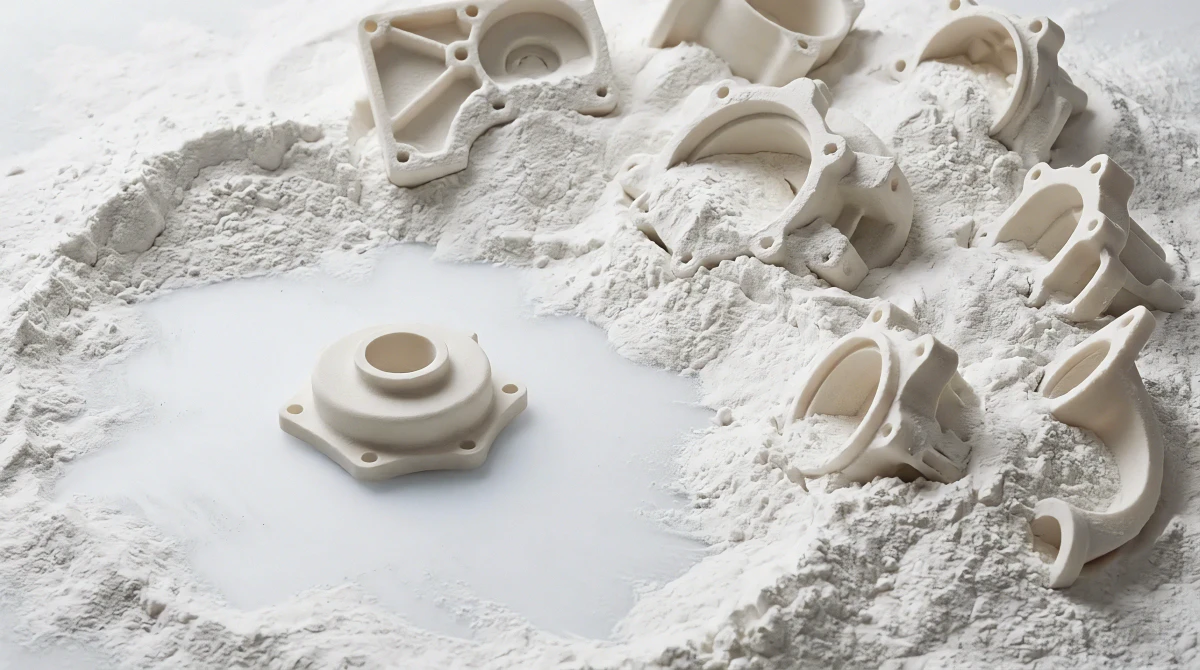
Refresh ratio is the share of fresh powder in the mix loaded for the next powder bed build, the rest being reused unfused powder.

Every Refresh Ratio article of the 3D Printing Resources, newest first, each written from published standards, research and makers’ data.

Meaning

Refresh ratio is the share of fresh powder in the mix loaded for the next powder bed build, the rest being reused unfused powder. A 30 % refresh means that at most 70 % of the mix is surplus powder from earlier builds. Makers state a minimum ratio per grade, because powder ages in the printer. The ratio is a process condition, and it belongs in the record of every build.

Published Ratios

HP states stable performance for High Reusability PA 12 at a 20 % refresh rate, which it expresses as 80 % reusability. Its glass bead grade needs at least 30 %, with up to 70 % reusability. On the Fuse X1, Formlabs uses 30 % for nylon 12. On its SLS 380, 3D Systems describes a material quality center that blends fresh and recycled powder on demand.
Read More

Effect on Consistency

A powder batch is never one material, because surplus powder carries the thermal history of earlier builds. HP’s glass bead sheet tests powder aged in real printing conditions and tracked by generation, the worst case for reuse. A supplier at or above the stated ratio stays inside the sheet. The sheet then describes the least favorable generation tested. HP also gives 50 to 70 % relative humidity for its glass bead powder.

Density Footnote

A footnote on HP’s materials page applies its surplus reuse claim for HR PA 12 to packing densities above 20 %. Its cost comparison on the same page uses 30 g (1.06 oz) parts at 10 % packing density. A refresh ratio is not a count of parts, but it sets how much fresh powder the next build needs.

Feedstock Line

An order can place the refresh rule under feedstock, clause 4.3.6 of ISO/ASTM 52901. An order names the ratio for the grade, or asks which powder generation was used, when a part will be compared with an earlier batch. A fixed refresh ratio is one of the supplementary requirements a buyer can write as its own line.
3D Printing Defects in a Production Batch Traced to Their Cause

A defect in a printed batch is traced by its pattern, every part, one zone, one build or a slow trend across builds, and each pattern points to its own cause and evidence.

Reading a Defect by Its Pattern Across the BatchThe 2022 review sorts the sources of metal powder bed defects into three groups: defects transferred from the feedstock powder, defects formed in the interaction of the beam with powder and metal during melting, and defects created in post-processing such as heat treatment. It adds a fourth set of contributors around them: the equipment, powder handling and dispensing, and build preparation, meaning orientation and supports.

TPU Flexible Powder for SLS and MJF Parts

TPU from a powder bed is equally soft in every direction but stretches far less across its layers, so grade, machine, build direction and test method all belong in the order.

TPU Powder Grades and Their Tensile Properties in XY and ZFour makers' sheets give enough to compare. Forward AM, the additive business of BASF, publishes four Ultrasint TPU powders side by side in one brochure, which makes it the cleanest set: the same company, the same tests, four grades.

How Many Parts Fit in One SLS or MJF Build

Chamber volume times packing density divided by part volume sets the count, and every term has a published limit.

How Many Parts Fit in a Powder Bed Fusion BuildPowder bed fusion, one of the seven process categories in ISO/ASTM 52900, builds parts inside a bed of powder that supports them, so a chamber can be filled in three dimensions and the parts need no support structures. The count that results is set by three quantities: the usable volume, the share of that volume that holds parts, and the volume of the part itself.

PA12 Nylon Properties for SLS and MJF Parts

Powder-bed nylon parts stretch far less along the build axis than in the layer plane, so a drawing needs a build direction, a grade and the test method.

What PA12 Powder Gives a Printed PartPolyamide 12 is the base polymer of the most common powders for laser sintering and for HP Multi Jet Fusion. EOS describes PA 2200, its PA12 powder, as a balanced property profile and "the most proven material on the market" for its machines.

Send the 3D File of Your Printed Part

Send the 2D drawing and the 3D file, with the quantity and the stage of the project. An engineer replies within 1 working day.

The quote form, the mutual NDA and the private folder for your files are on Protolis Atelier, with 3D Printing chosen.

Request a Quote