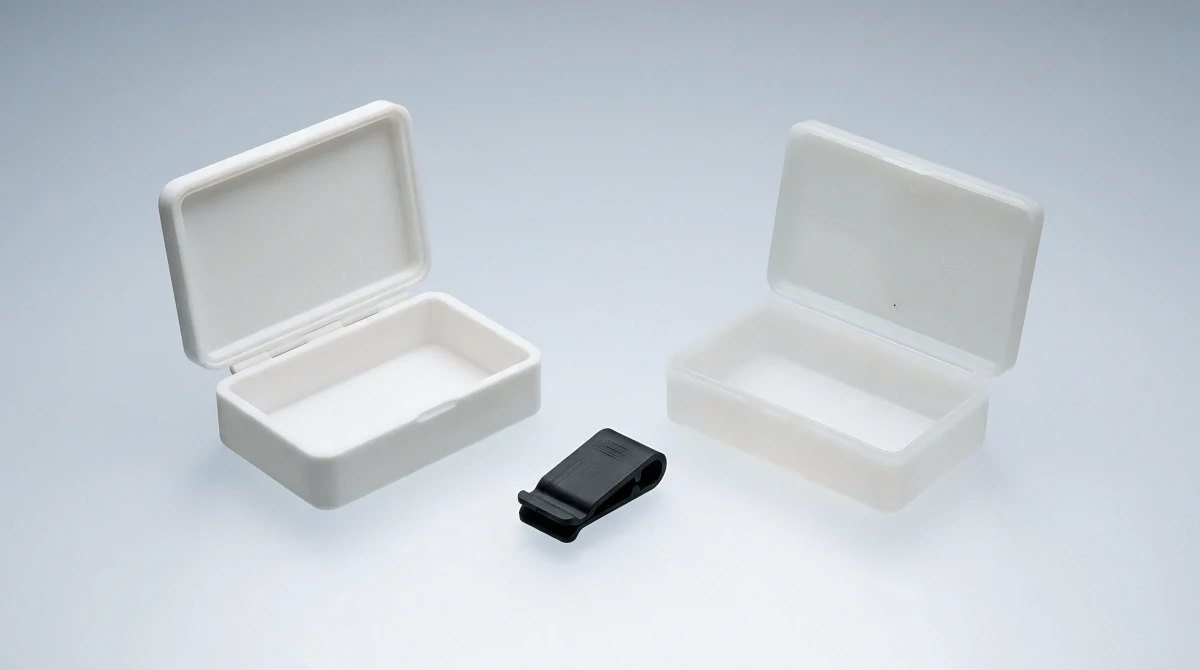
Resin

A resin, in 3D printing, is a liquid photopolymer that a light source cures into thin solid layers.

Every Resin article of the 3D Printing Resources, newest first, each written from published standards, research and makers’ data.

Meaning

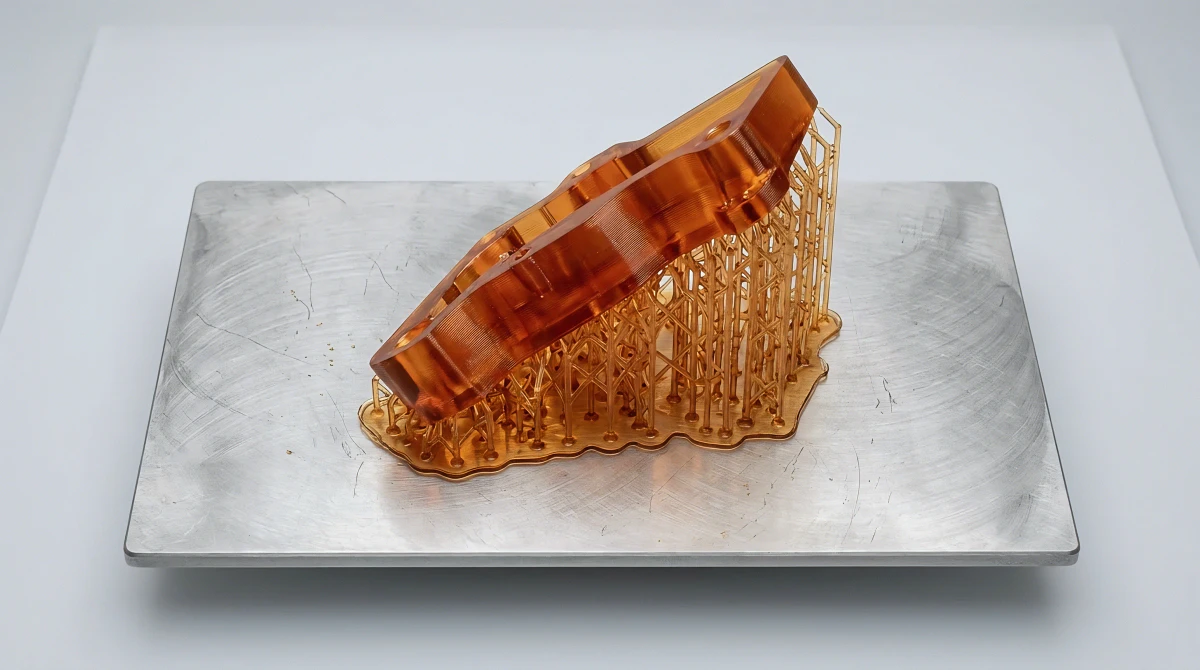
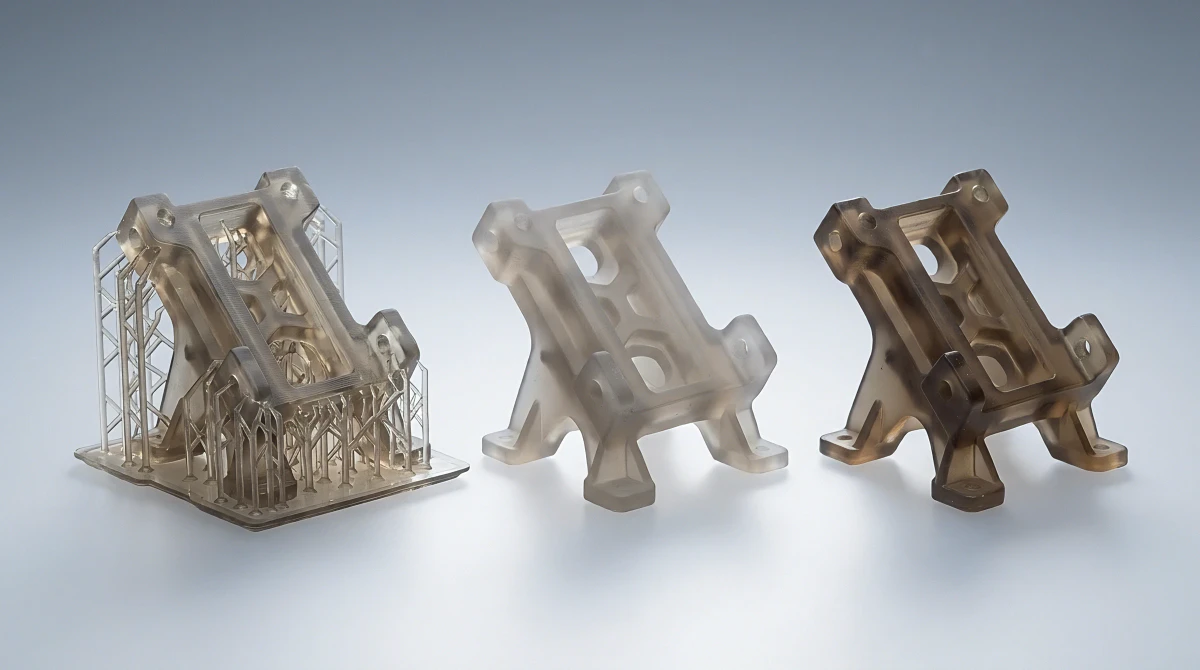
A resin, in 3D printing, is a liquid photopolymer that a light source cures into thin solid layers. It is the feedstock of vat photopolymerization, and each grade has its own wash, cure and property sheet. Its figures hold only after the cure the maker names. A printed resin part leaves the printer in a green state, solid enough to hold its shape and not yet finished.

Liquid Properties

The liquid rows tell the printer operator how a resin cures. Accura Xtreme has a viscosity of 225 cps at 30 °C (86 °F), Accura 25 has 230 cps and Somos EvoLVe 128 about 380 cps. Their penetration depths are about 0.10 to 0.11 mm (4.1 to 4.3 mils). Their critical exposures are 11.7, 10.5 and 9.3 mJ/cm². No row of the cured property table depends on them alone, so a buyer has little use for them. Somos EvoLVe 128 also gives a liquid density of about 1.12 g/cm³ (0.040 lb/in³) at 25 °C (77 °F).
Read More

Wash and Cure

Wash time, solvent and cure are set by the resin, and the maker’s line for it is the instruction. Formlabs gives High Temp Resin a 5-minute wash with total solvent exposure under 6 minutes. Durable Resin V2 washes 20 minutes with a cap of 20. Tough 2000 Resin V2 washes 15 minutes, dries at least 10 minutes and cures 12 minutes at 70 °C (158 °F). PU Rigid washes in propylene glycol diacetate and never in isopropyl alcohol. Several resins take a second bath of fresh solvent. For Silicone 40A, Formlabs warns against switching a bucket from n-butyl acetate to pure isopropyl alcohol (IPA), because the bucket plastic can be damaged.

Solvent Load

A wash bath ages as parts carry resin into it. Formlabs reports tacky parts once Draft Resin passes 5 % of an IPA bath, and Durable Resin V2 passes 10 %. A tacky surface after drying points to the bath, and fresh solvent is the fix. Alumina 4N cracks on contact with water or IPA, so it is washed only in its own ceramic wash. Biocompatible resins call for IPA of 99 % or higher and separate buckets.

Cured Properties

Tough grades differ widely once cured. Tough 2000 Resin V2 stretches 79 % at a modulus of 1,800 MPa (261 ksi). Somos EvoLVe 128 reaches 2,964 MPa (430 ksi) and stretches 11 %. Loaded heat deflection at 1.8 MPa (261 psi) sits between 49.6 and 57 °C (121 and 135 °F) on the 4 tough grades compared. The EvoLVe sheet warns that values vary with machine processing and post-curing practice. Against extruded ABS sheet, Tough 2000 Resin V2 matches strength and modulus but absorbs 15 % of the fracture energy. Its Gardner impact at 0.8 mm (0.03 in) is 70 % of the ABS result. Formlabs gives a creep strain of 1.3 % under 4 MPa (580 psi) after 2 weeks.

Datasheet Ranges

Resin sheets often print ranges, which reflect machines and cure practice. Accura 25 gives 13 to 20 % elongation after thermal post-cure. The Accura guide states that its figures hold for large-frame 3D Systems printers. Accura Xtreme lists a glass transition of 70 to 74 °C (158 to 165 °F) there and 52 °C (126 °F) on ProJet printers. One resin name can therefore cover different cured materials, and an order names the printer family.

Count and Labor

A resin build hangs parts from a platform on supports, so the count is set by platform area and support spacing. The 3D Systems SLA 750 builds in about 309 L (81.6 gal) and is described as allowing more parts per run. Every part carries supports to cut, so a batch of 3,000 resin parts has 3,000 sets of supports at the bench. The sources give no minutes per part for that work. Two Accura grades are also sold as master patterns for vacuum casting and silicone molding. That use depends on surface and size.
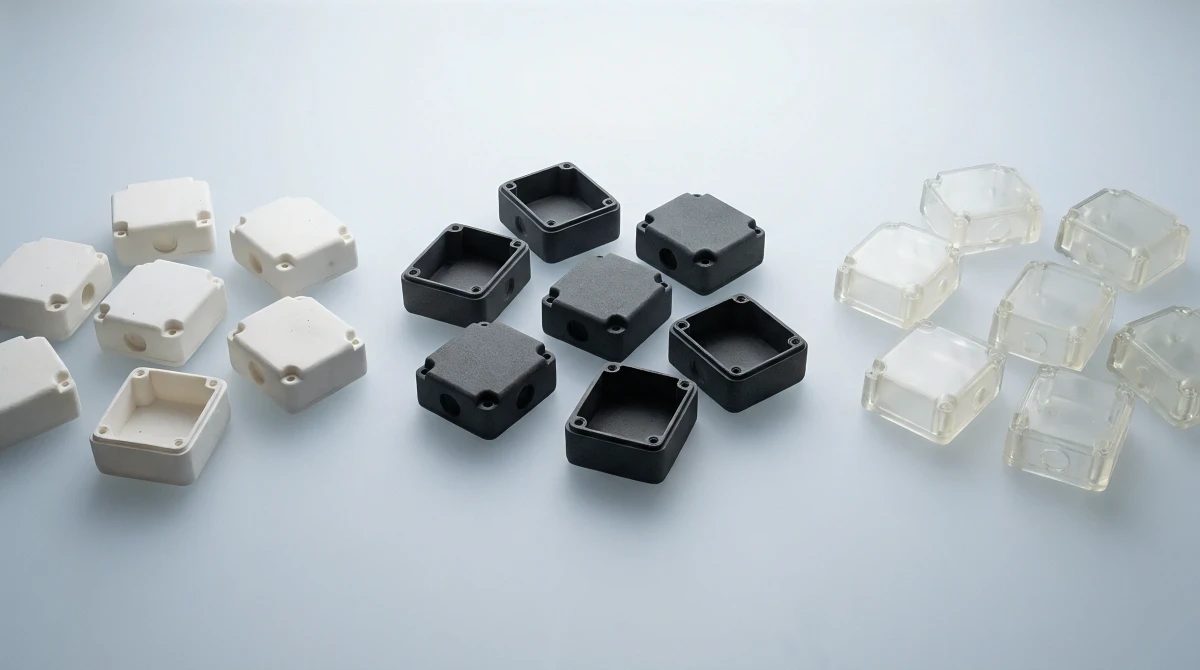
Orienting and Supporting a Part for SLA Printing

SLA orientation is set for the critical and cosmetic faces first, then checked for overhangs, cross section, trapped resin and support marks before anything is printed.

The Orientation Step in OrderThe order below follows Carbon's published assessment criteria for orientation and supports, with Stratasys's design guide filling in thresholds.

Surface Roughness of 3D Printed Parts by Process and Orientation

Process sets the floor of roughness and orientation moves it face by face, so a printed part's roughness note names the parameter, the face, its build direction and the finish.

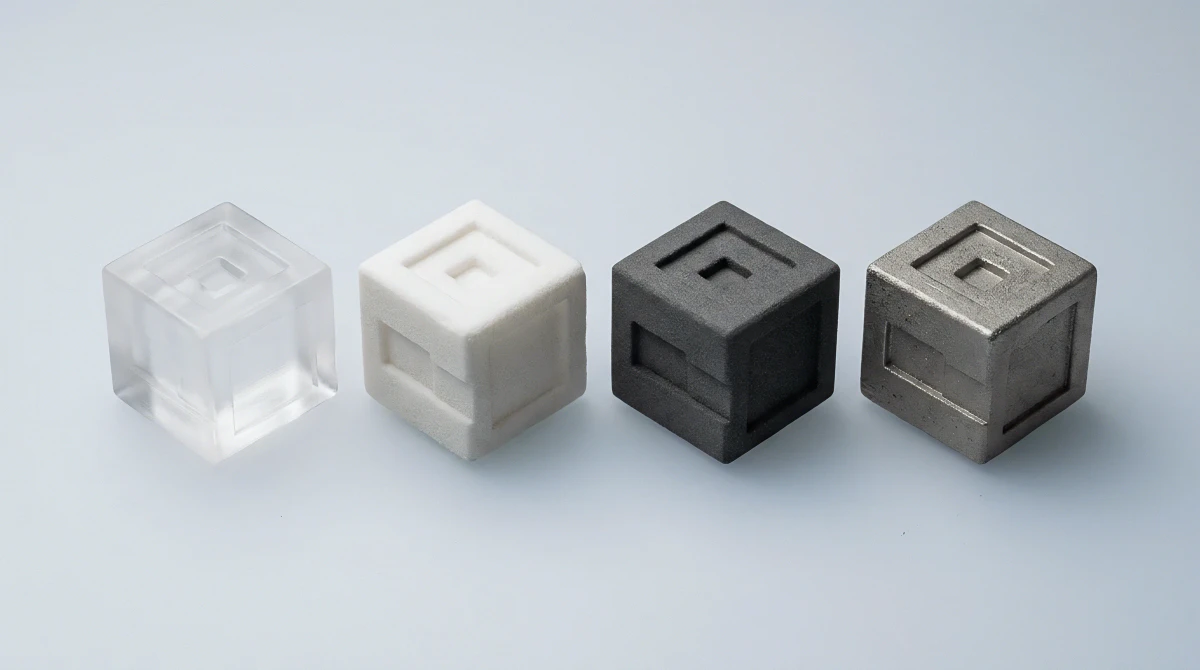
Typical Ra and Sa of SLA, SLS, MJF and Metal SurfacesA review of as-printed polymer roughness in the International Journal of Advanced Manufacturing Technology collects dozens of studies by process. Another study printed one test artifact on four processes and measured them all the same way.

Clearance for Snug and Sliding Fits Between 3D Printed Parts

Printed fits start from a published gap that depends on whether parts are built apart or together, lose clearance to undersized bores, and are settled by a fit coupon.

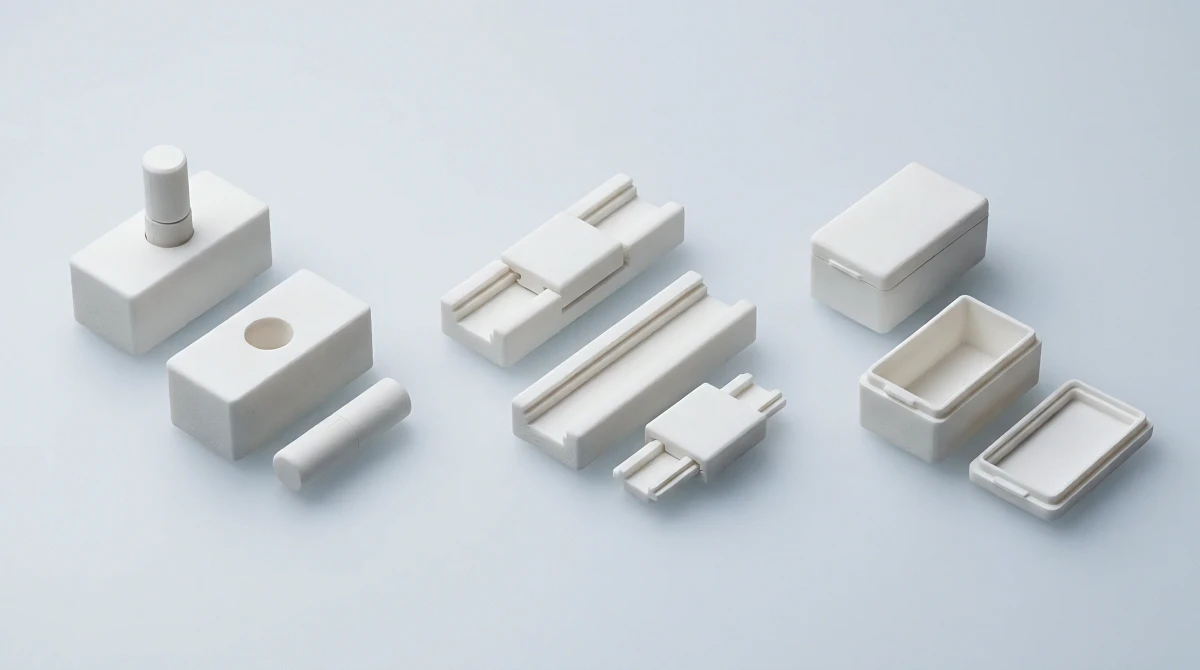
Starting Clearances for Snug and Sliding Fits in SLS and MJFA snug fit here means two printed parts that assemble with little play and stay together; a sliding fit means two parts that move against each other after assembly. The published values separate them by how the parts were made, more than by how tight the fit is meant to be.

How Many Parts Fit in One SLS or MJF Build

Chamber volume times packing density divided by part volume sets the count, and every term has a published limit.

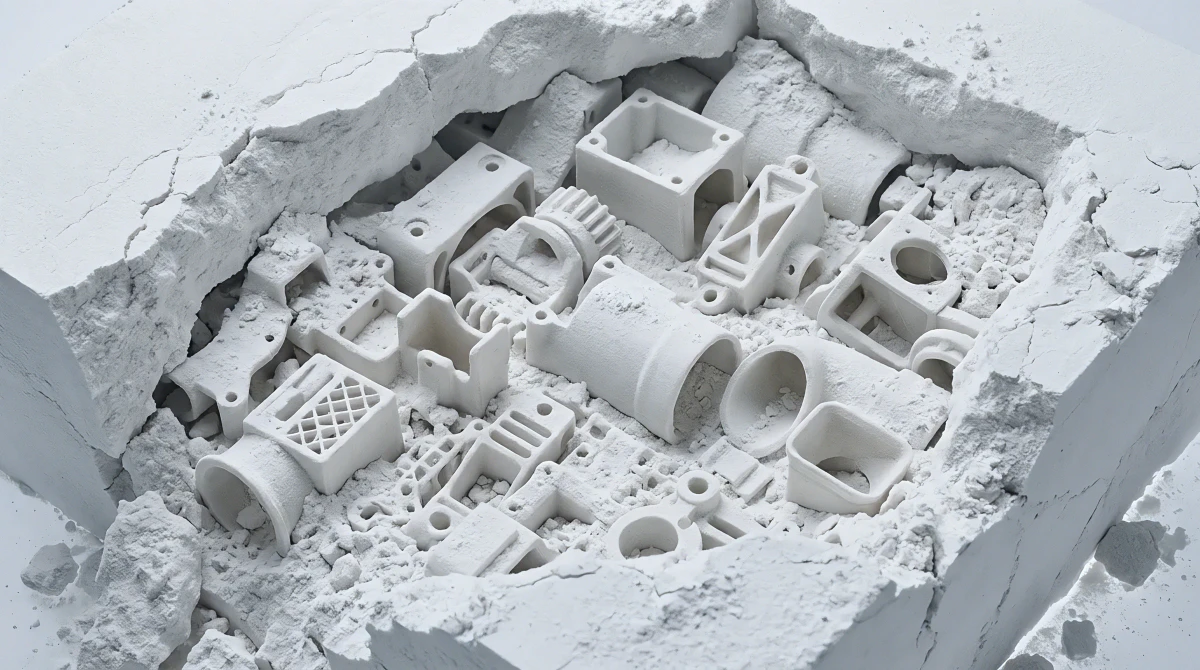
How Many Parts Fit in a Powder Bed Fusion BuildPowder bed fusion, one of the seven process categories in ISO/ASTM 52900, builds parts inside a bed of powder that supports them, so a chamber can be filled in three dimensions and the parts need no support structures. The count that results is set by three quantities: the usable volume, the share of that volume that holds parts, and the volume of the part itself.

How Long a Batch of 3D Printed Parts Takes From Print to Pack-Out

A printed batch runs on four clocks, build, cooldown, finishing and inspection, and a stated lead time should show each.

Lead Time for a 3D Printed Batch Stage by StageThe calendar of a batch has the same skeleton in every process. Files are prepared and nested, the machine builds, the work cools or cures, parts are separated from what held them, and finishing and inspection follow.

SLA Wash and Post-Cure Step by Step From Green Part to Finished Resin Part

Wash each resin for its own time, dry it fully, cure to the datasheet condition, then remove supports and measure.

SLA Wash, Dry, Cure and Support Removal in OrderThe part leaves the printer in a green state: polymerized enough to keep its shape, but with its reaction unfinished and a film of liquid resin over it. The order in which the finishing steps run is set by what each one needs from the one before.

SLA Dimensional Tolerance by Feature Size

SLA tolerance is published as a percentage of feature size with a small floor, so a drawing writes bands and a post-cure condition and not one general figure.

SLA Tolerance Values Published by Two MakersTable 1 states the two specifications as their makers print them. Neither is a guarantee for a delivered part, and the Formlabs guide notes that the best way to judge a printer is to inspect real parts.

ISO/ASTM 52900 Additive Manufacturing Terms and the Seven Process Categories

The vocabulary standard fixes the words an additive order is written in, so name the process category beside the brand and let other standards set quality.

What ISO/ASTM 52900 Covers and What It Leaves OutISO/ASTM 52900 establishes and defines the terms used in additive manufacturing (AM), the technology that applies an additive shaping principle and builds physical three-dimensional geometries by successive addition of material. Its scope sentence also states that the terms are classified into specific fields of application.

Tough SLA Resins as Stand-Ins for ABS and Polypropylene

Tough SLA resins match ABS on stiffness and strength but not on fracture energy or heat, so a part needs the row that governs its duty.

What a Tough SLA Resin Is Meant to ReplaceA tough SLA resin is a photopolymer that cures under ultraviolet light into a solid that bends before it breaks. Its makers aim it at the parts where earlier SLA resins cracked: snap fits, hinges, housings that are dropped and jigs that get clamped.

Send the 3D File of Your Printed Part

Send the 2D drawing and the 3D file, with the quantity and the stage of the project. An engineer replies within 1 working day.

The quote form, the mutual NDA and the private folder for your files are on Protolis Atelier, with 3D Printing chosen.

Request a Quote