Chamber

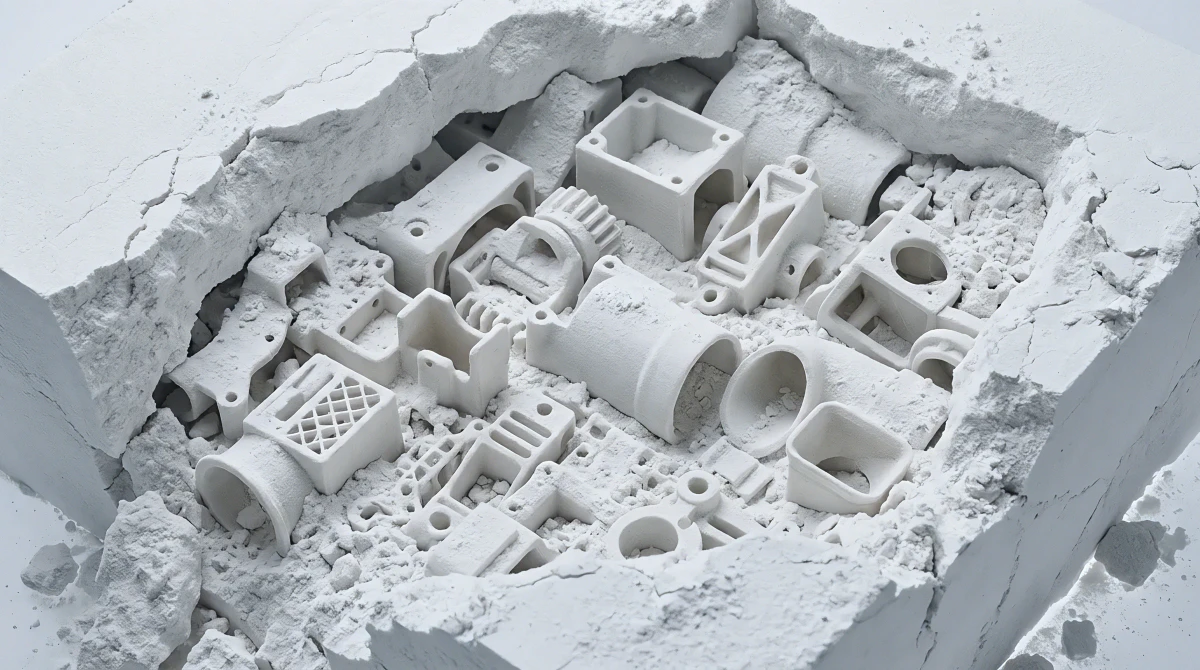
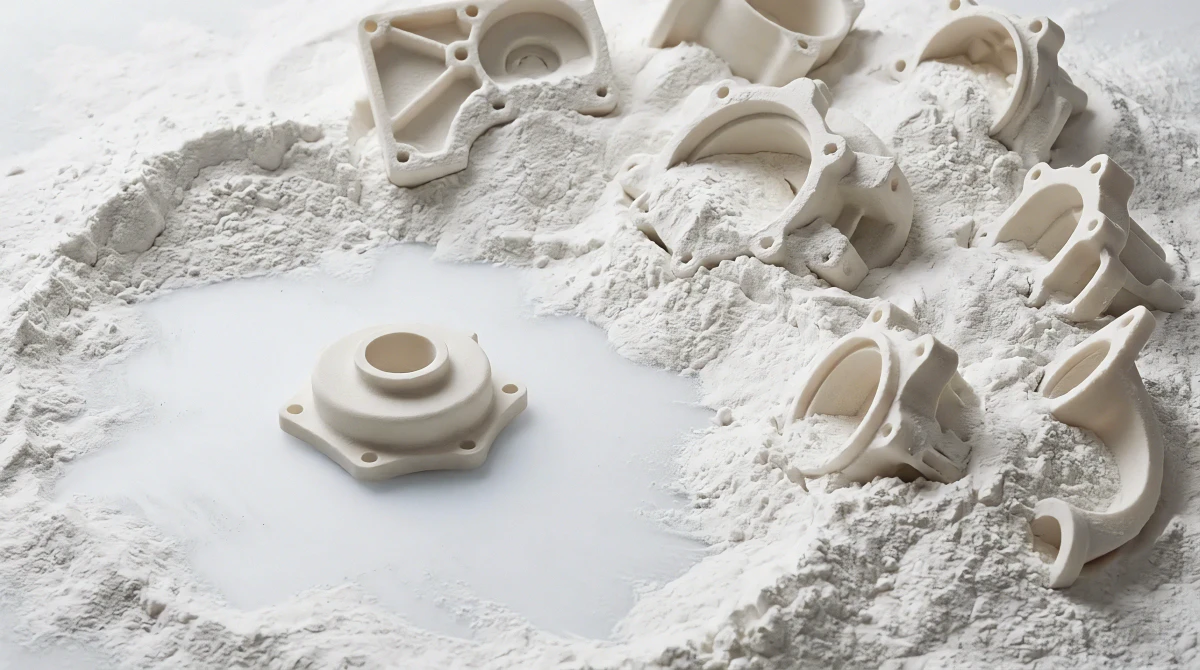
The chamber is the enclosed build space of a powder bed machine, where the powder cake and its parts are built and cooled.

Every Chamber article of the 3D Printing Resources, newest first, each written from published standards, research and makers’ data.

Meaning

The chamber is the enclosed build space of a powder bed machine, where the powder cake and its parts are built and cooled. On the Formlabs Fuse series it is a modular unit that moves between the printer and the Fuse Sift. Its volume, how full it is and where a part sits in it all change the result. A buyer asks which chamber a count, a cooldown or a tolerance refers to.

Volume

The Fuse 1+ 30W chamber holds about 8.2 L (2.2 gal), and the Fuse X1 chamber 61.5 L (16.2 gal), 7.5 times as much. The HP Jet Fusion 5200 series builds in 41 L (10.8 gal). The 3D Systems SLS 380 envelope works out to about 57.8 L (15.3 gal). At the 15 % packing density of the Formlabs cooldown test, the small chamber holds about 1.2 L (0.32 gal) of parts. The large one holds about 9.2 L (2.4 gal).
Read More

Swapping Chambers

A second chamber lets the printer build while the first cools. Take 2 builds of 43 hours printing and 32 hours cooling, figures from one Formlabs example. With one chamber that waits in the printer, the second build is ready at about 150 hours. With a second chamber it is ready at about 118 hours, leaving out loading and unloading. HP offers build unit exchange for 2 consecutive builds and a Natural Cooling Unit for the same purpose.

Position Inside

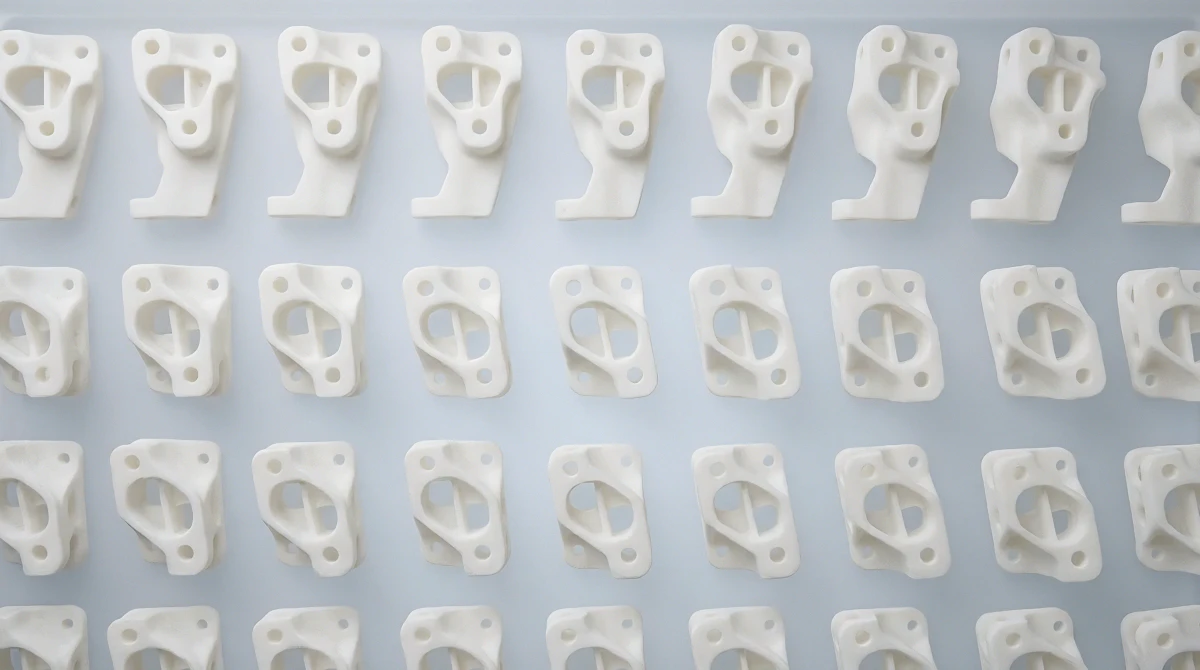
Where a part sits in the chamber changes its size and its warp. In the Formlabs nylon study, Z blocks at the top of a build read 0.58 % tall with little scatter. The paper notes that the sintered material beneath a part influences its thermal behavior. In the cooldown test, warp showed first on parts from the outer corners.

Cake Size

A larger cake keeps its heat longer, and a taller one has a longer path for heat to leave the middle. The 32 hours of cooling in the Fuse X1 example is the only published case of a full chamber. It should not be scaled to the small chamber by ratio. A run that fills only the top of a tall chamber still sits in a cake of full height.
3D Printing Defects in a Production Batch Traced to Their Cause

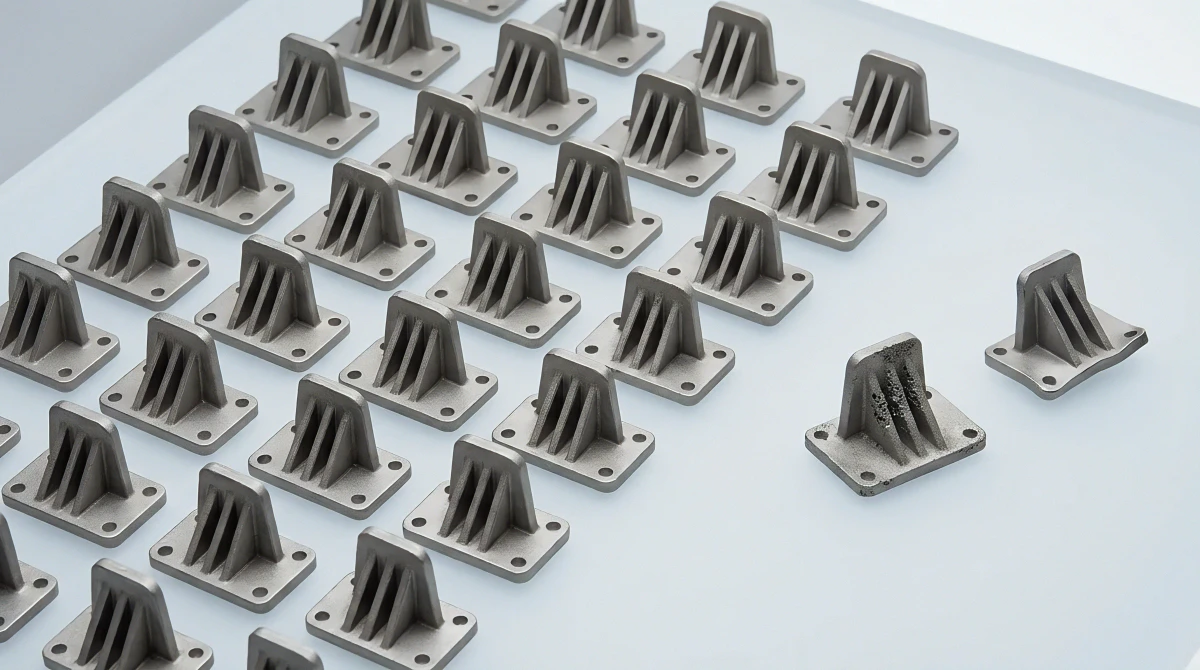
A defect in a printed batch is traced by its pattern, every part, one zone, one build or a slow trend across builds, and each pattern points to its own cause and evidence.

Reading a Defect by Its Pattern Across the BatchThe 2022 review sorts the sources of metal powder bed defects into three groups: defects transferred from the feedstock powder, defects formed in the interaction of the beam with powder and metal during melting, and defects created in post-processing such as heat treatment. It adds a fourth set of contributors around them: the equipment, powder handling and dispensing, and build preparation, meaning orientation and supports.

Surface Roughness of 3D Printed Parts by Process and Orientation

Process sets the floor of roughness and orientation moves it face by face, so a printed part's roughness note names the parameter, the face, its build direction and the finish.

Typical Ra and Sa of SLA, SLS, MJF and Metal SurfacesA review of as-printed polymer roughness in the International Journal of Advanced Manufacturing Technology collects dozens of studies by process. Another study printed one test artifact on four processes and measured them all the same way.

Clearance for Snug and Sliding Fits Between 3D Printed Parts

Printed fits start from a published gap that depends on whether parts are built apart or together, lose clearance to undersized bores, and are settled by a fit coupon.

Starting Clearances for Snug and Sliding Fits in SLS and MJFA snug fit here means two printed parts that assemble with little play and stay together; a sliding fit means two parts that move against each other after assembly. The published values separate them by how the parts were made, more than by how tight the fit is meant to be.

TPU Flexible Powder for SLS and MJF Parts

TPU from a powder bed is equally soft in every direction but stretches far less across its layers, so grade, machine, build direction and test method all belong in the order.

TPU Powder Grades and Their Tensile Properties in XY and ZFour makers' sheets give enough to compare. Forward AM, the additive business of BASF, publishes four Ultrasint TPU powders side by side in one brochure, which makes it the cleanest set: the same company, the same tests, four grades.

How Many Parts Fit in One SLS or MJF Build

Chamber volume times packing density divided by part volume sets the count, and every term has a published limit.

How Many Parts Fit in a Powder Bed Fusion BuildPowder bed fusion, one of the seven process categories in ISO/ASTM 52900, builds parts inside a bed of powder that supports them, so a chamber can be filled in three dimensions and the parts need no support structures. The count that results is set by three quantities: the usable volume, the share of that volume that holds parts, and the volume of the part itself.

How Long a Batch of 3D Printed Parts Takes From Print to Pack-Out

A printed batch runs on four clocks, build, cooldown, finishing and inspection, and a stated lead time should show each.

Lead Time for a 3D Printed Batch Stage by StageThe calendar of a batch has the same skeleton in every process. Files are prepared and nested, the machine builds, the work cools or cures, parts are separated from what held them, and finishing and inspection follow.

SLS Nylon 12 Dimensional Tolerance in XY and Z

Laser sintered nylon holds far tighter size in the layer plane than across the layers, so a drawing writes the axes apart and states build position, scaling and measured data.

SLS Nylon 12 Tolerance in XY and in ZTable 1 lists the statements, then applies them to sizes a designer uses. The guide gives the XY rule for SLS and MJF as ±0.5 % or 0.3 mm, whichever is larger.

Send the 3D File of Your Printed Part

Send the 2D drawing and the 3D file, with the quantity and the stage of the project. An engineer replies within 1 working day.

The quote form, the mutual NDA and the private folder for your files are on Protolis Atelier, with 3D Printing chosen.

Request a Quote