Snap Fit

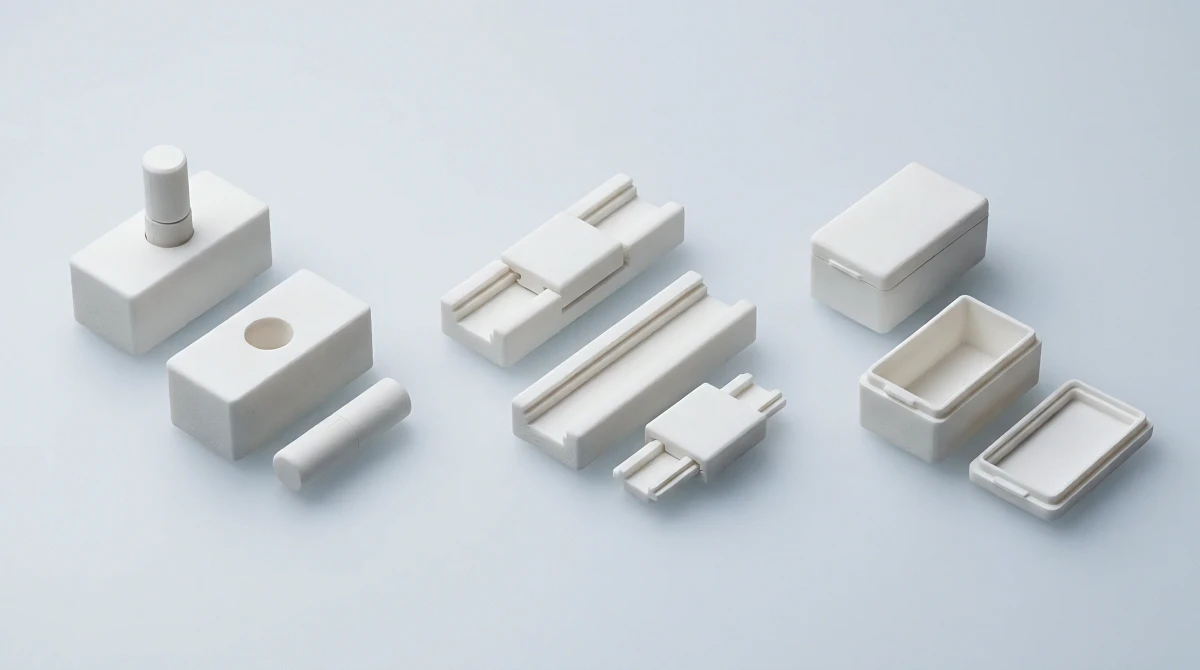
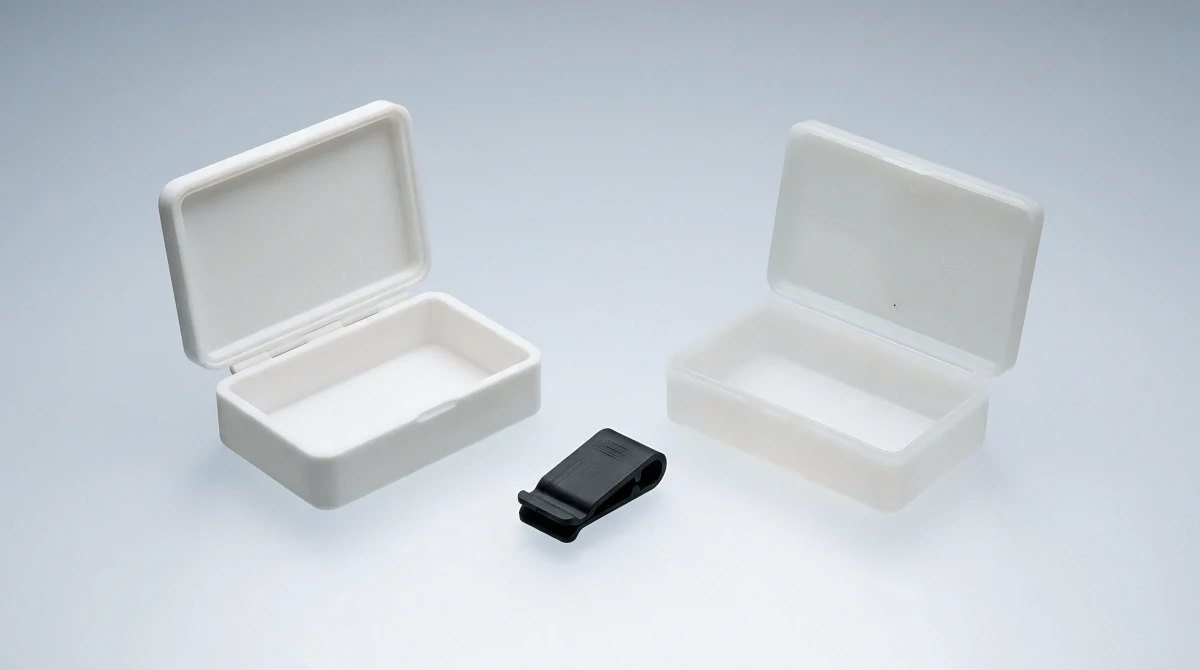
A snap fit is a joint in which a flexible feature deflects during assembly and springs back to lock two parts together.

Every Snap Fit article of the 3D Printing Resources, newest first, each written from published standards, research and makers’ data.

Meaning

A snap fit is a joint in which a flexible feature deflects during assembly and springs back to lock two parts together. In printed parts it depends on the elongation of the material in the direction the arm flexes, on the accuracy of the mating features, and on where supports and layer lines fall.

Materials

The makers’ application lists place snap fits in both polymer families. 3D Systems lists parts with snap fits and living hinges among applications for its SLS 380 nylons, and positions its polypropylene-like Accura 25 resin for snap-fit assemblies. EOS gives PA 2200 an elongation at break of 18 % in X and 4 % in Z, which is why a snap arm in laser-sintered nylon is oriented so it flexes in the layer plane.
Read More

Orientation

Carbon names snap fits among the functional features that need special care when a resin part is oriented, along with press-fit holes and bonded faces. Its guidance is to keep supports off such features where the orientation allows it, and otherwise to use fence supports, which leave smaller nubs. For parts that will be assembled, it recommends orienting each part the same way relative to how they fit together.

Design Limits

HP ties the minimum thickness of cantilevers such as snap arms in Multi Jet Fusion to their aspect ratio, asking for an aspect ratio below 1 for cantilevers under 1 mm (0.039 in) wide. An arm that is too long for its section can break or warp.

Testing

Published clearances and elongations are starting values. A snap fit is proved on printed parts in the orientation, material and process of the run, assembled the way the parts will be assembled.
Orienting and Supporting a Part for SLA Printing

SLA orientation is set for the critical and cosmetic faces first, then checked for overhangs, cross section, trapped resin and support marks before anything is printed.

The Orientation Step in OrderThe order below follows Carbon's published assessment criteria for orientation and supports, with Stratasys's design guide filling in thresholds.

Clearance for Snug and Sliding Fits Between 3D Printed Parts

Printed fits start from a published gap that depends on whether parts are built apart or together, lose clearance to undersized bores, and are settled by a fit coupon.

Starting Clearances for Snug and Sliding Fits in SLS and MJFA snug fit here means two printed parts that assemble with little play and stay together; a sliding fit means two parts that move against each other after assembly. The published values separate them by how the parts were made, more than by how tight the fit is meant to be.

Tough SLA Resins as Stand-Ins for ABS and Polypropylene

Tough SLA resins match ABS on stiffness and strength but not on fracture energy or heat, so a part needs the row that governs its duty.

What a Tough SLA Resin Is Meant to ReplaceA tough SLA resin is a photopolymer that cures under ultraviolet light into a solid that bends before it breaks. Its makers aim it at the parts where earlier SLA resins cracked: snap fits, hinges, housings that are dropped and jigs that get clamped.

Send the 3D File of Your Printed Part

Send the 2D drawing and the 3D file, with the quantity and the stage of the project. An engineer replies within 1 working day.

The quote form, the mutual NDA and the private folder for your files are on Protolis Atelier, with 3D Printing chosen.

Request a Quote