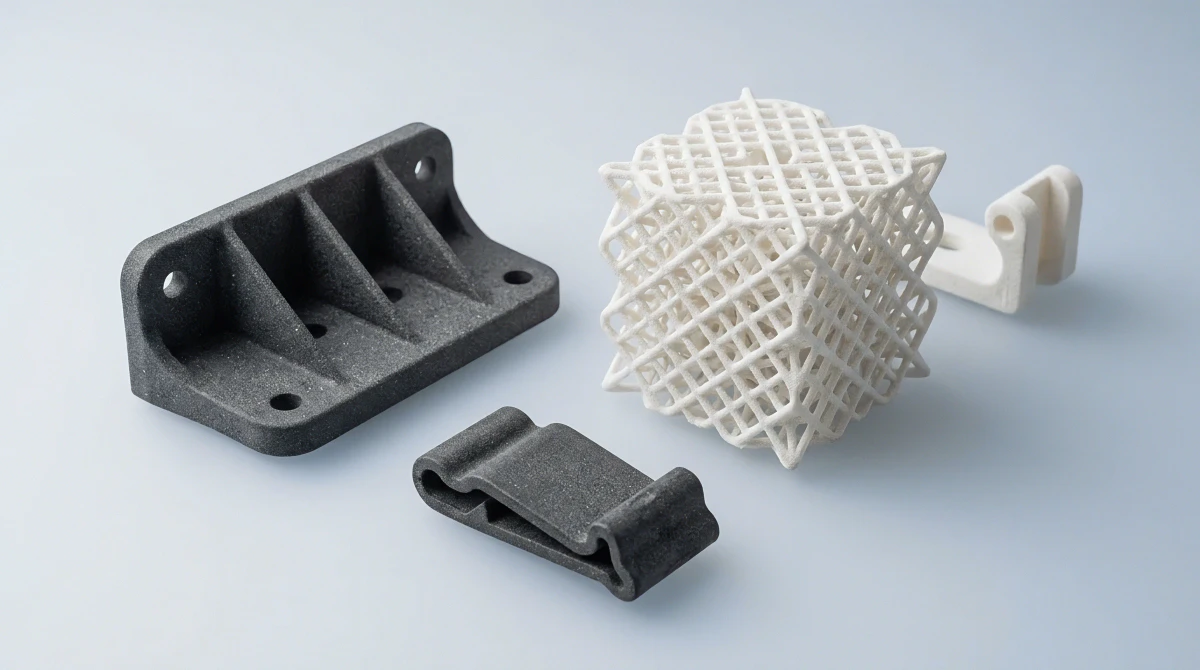
Assembly

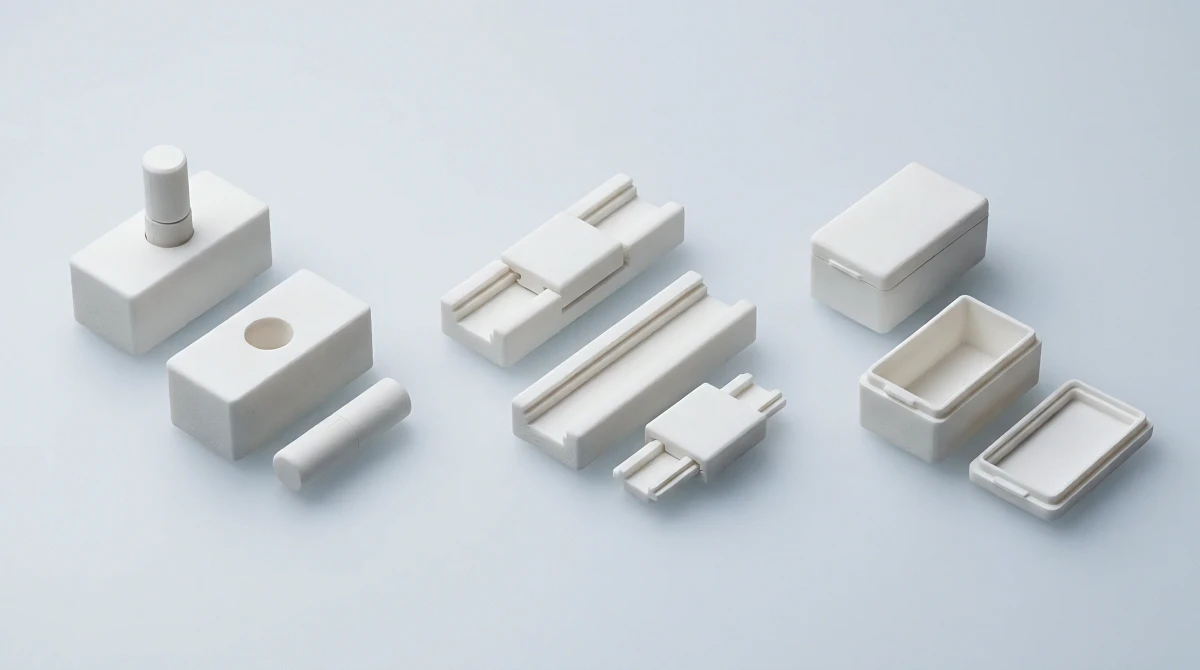
An assembly is a set of printed parts that fit, slide, snap or bond together.

Every Assembly article of the 3D Printing Resources, newest first, each written from published standards, research and makers’ data.

Meaning

An assembly is a set of printed parts that fit, slide, snap or bond together. Printed assemblies can be made as separate parts fitted after printing or built in place as one print, and the two need different clearances.

Printed Apart or Together

HP’s guidance for Multi Jet Fusion asks for a gap of 0.4 mm (0.016 in) between parts printed separately and fitted together, split as 0.2 mm for each part, and at least 0.7 mm (0.028 in) between faces of parts printed as an assembly; walls 30 mm (1.18 in) or thicker need more, and walls under 3 mm can work with as little as 0.3 mm. The University of Zurich SLS guideline gives 0.2 mm for moving parts made separately and 0.5 mm (0.020 in) for parts made inside each other. A gap built in place has to release its powder before it can move.
Read More

Orientation

Carbon recommends orienting every part of an assembly the same way relative to how they fit together, so each axis sees the printing forces in the same manner. It also keeps supports off mating faces where it can, since nubs change the fit.

Finishing

Vapor smoothing can limit the function of moving parts, DyeMansion notes, because the gaps are surfaces too. The Zurich guideline adds that vibratory finishing can take a separately made moving pair to zero designed clearance, and that straight, accessible holes can be reamed.

Checking

A printed bore tends to come out small while a pin holds its size, so an assembly is proved with a fit coupon printed in the orientation, position and material of the run, and the order states whether parts are printed apart or as an assembly and whether the fit is checked before or after finishing.
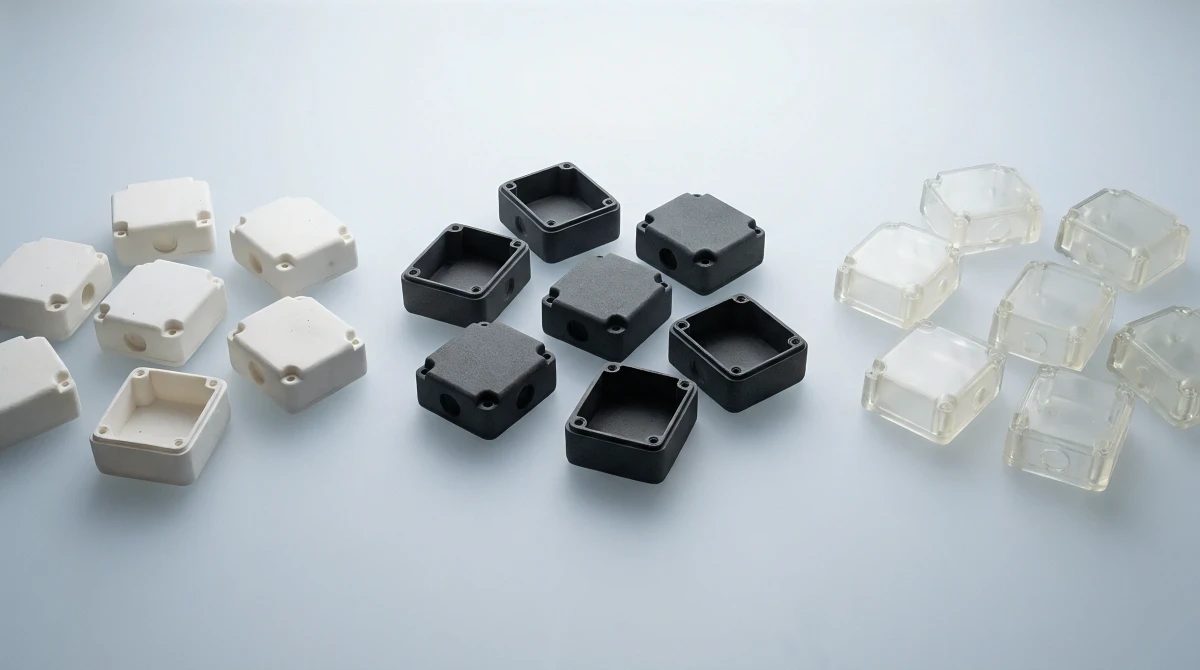
Vapor Smoothing and Bead Blasting SLS Nylon Parts

Powder bed nylon is always bead blasted clean, then optionally shot surfaced for feel and color or vapor smoothed for a sealed glossy skin, and the order names the steps and the faces.

The Finishing Sequence for Powder Bed NylonThe DyeMansion test that opens this piece ran every part through the same steps, and its table of settings is the clearest published version of the sequence.

Clearance for Snug and Sliding Fits Between 3D Printed Parts

Printed fits start from a published gap that depends on whether parts are built apart or together, lose clearance to undersized bores, and are settled by a fit coupon.

Starting Clearances for Snug and Sliding Fits in SLS and MJFA snug fit here means two printed parts that assemble with little play and stay together; a sliding fit means two parts that move against each other after assembly. The published values separate them by how the parts were made, more than by how tight the fit is meant to be.

SLA Dimensional Tolerance by Feature Size

SLA tolerance is published as a percentage of feature size with a small floor, so a drawing writes bands and a post-cure condition and not one general figure.

SLA Tolerance Values Published by Two MakersTable 1 states the two specifications as their makers print them. Neither is a guarantee for a delivered part, and the Formlabs guide notes that the best way to judge a printer is to inspect real parts.

Tough SLA Resins as Stand-Ins for ABS and Polypropylene

Tough SLA resins match ABS on stiffness and strength but not on fracture energy or heat, so a part needs the row that governs its duty.

What a Tough SLA Resin Is Meant to ReplaceA tough SLA resin is a photopolymer that cures under ultraviolet light into a solid that bends before it breaks. Its makers aim it at the parts where earlier SLA resins cracked: snap fits, hinges, housings that are dropped and jigs that get clamped.

PA12 Nylon Properties for SLS and MJF Parts

Powder-bed nylon parts stretch far less along the build axis than in the layer plane, so a drawing needs a build direction, a grade and the test method.

What PA12 Powder Gives a Printed PartPolyamide 12 is the base polymer of the most common powders for laser sintering and for HP Multi Jet Fusion. EOS describes PA 2200, its PA12 powder, as a balanced property profile and "the most proven material on the market" for its machines.

Send the 3D File of Your Printed Part

Send the 2D drawing and the 3D file, with the quantity and the stage of the project. An engineer replies within 1 working day.

The quote form, the mutual NDA and the private folder for your files are on Protolis Atelier, with 3D Printing chosen.

Request a Quote