ISO 3369

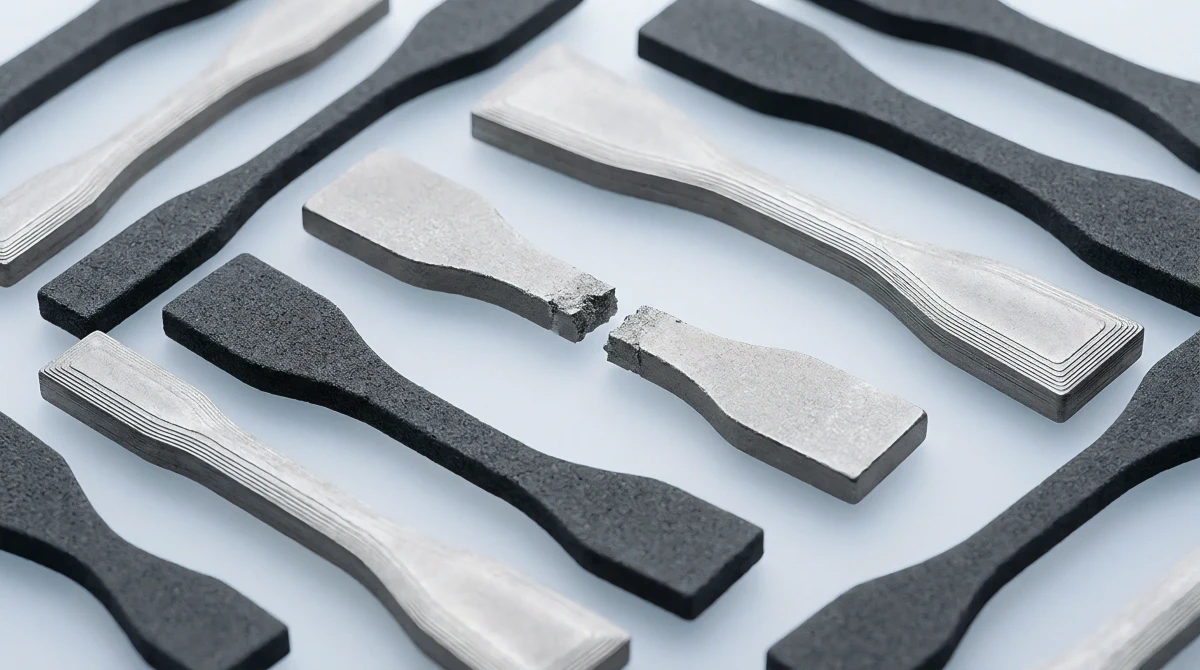
ISO 3369 is the density test EOS cites for printed 316L parts, used to state an average part density with its sample count.

Every ISO 3369 article of the 3D Printing Resources, newest first, each written from published standards, research and makers’ data.

Meaning

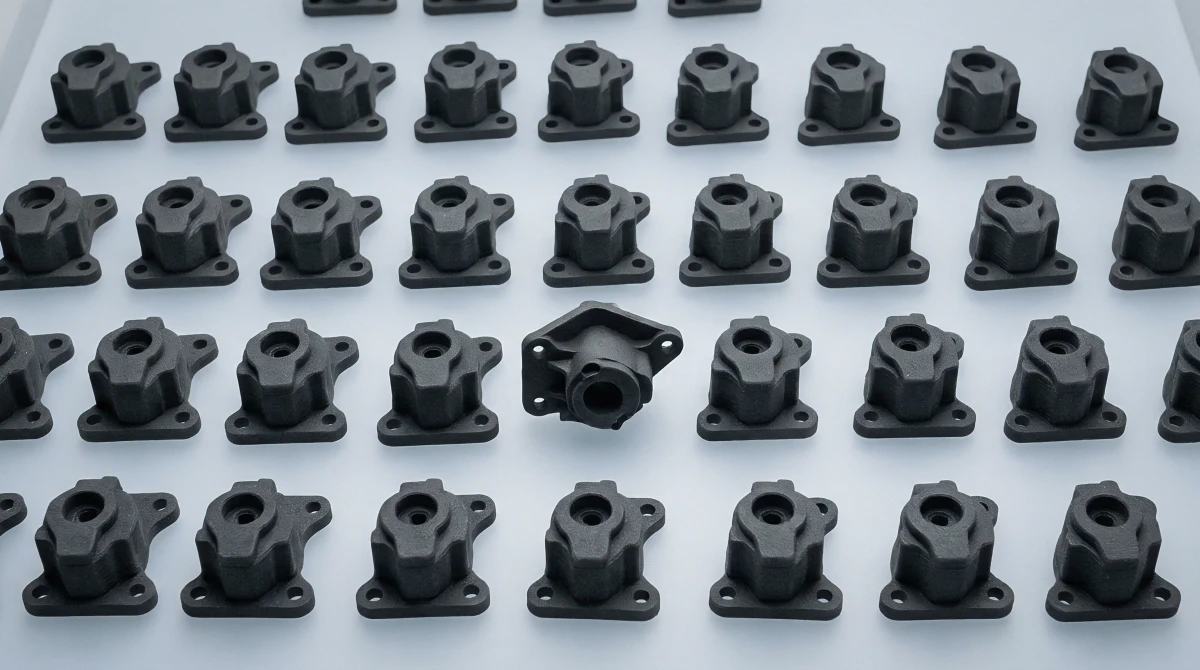
ISO 3369 is the density test EOS cites for printed 316L parts, used to state an average part density with its sample count. The method table read for ISO/ASTM 52927 lists it for metal parts. Polymer parts appear there under an EOS method and, on HP sheets, under ASTM D792. A density figure is comparable only with another taken by the same method.

Density of 316L

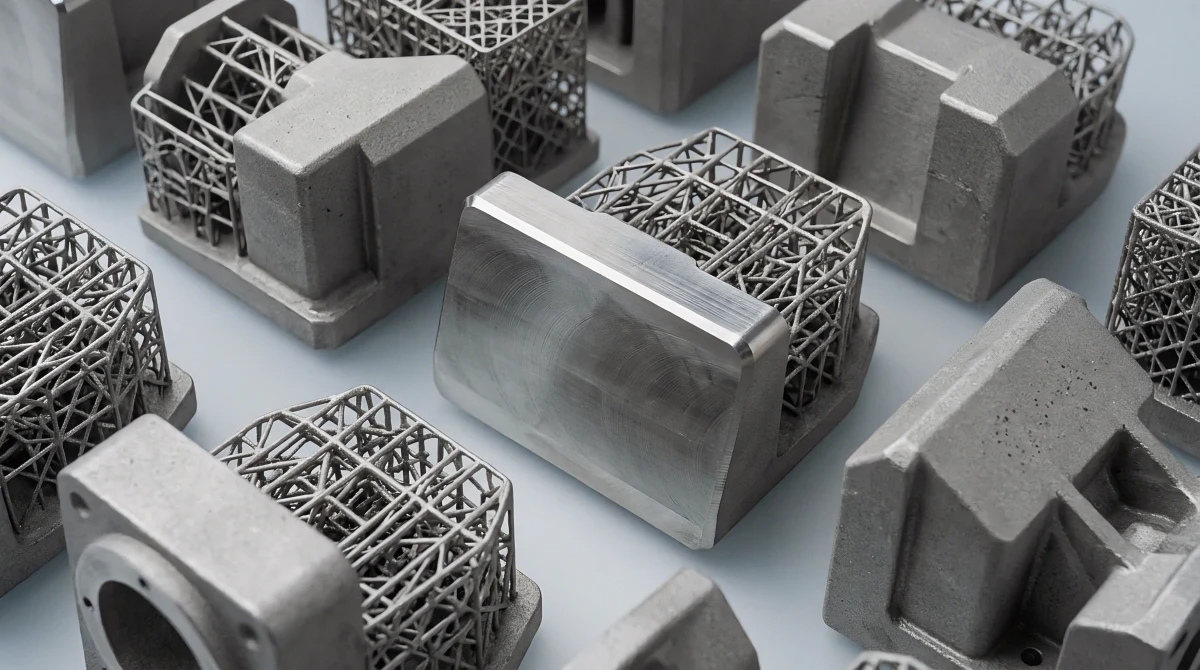
On the EOS M 290, the 20 µm and 40 µm 316L sets both reach an average density of at least 7.97 g/cm³ (0.288 lb/in³). The 40 µm figure rests on 20 samples. The EOS M 400-4 set gives at least 7.9 g/cm³ (0.285 lb/in³). The EOS process data sheet for 316L-4404 at 40 µm also gives at least 7.97 g/cm³.
Read More

Near-Full Density

A density of at least 7.97 g/cm³ with a defect share near 0.02 % describes a part that is nearly fully dense under this test. The Core sets show a defect share several times higher, and EOS gives no density for them. ISO/ASTM 52901 has a heading for part characteristics, under which an order can name density.

Polymer Density Basis

The polymer sheets show why the method travels with the number. EOS gives PA 2200 as 0.93 g/cm³ (0.034 lb/in³) by its own method. HP gives High Reusability PA 12 as 1.01 g/cm³ (0.036 lb/in³) by ASTM D792. Nobody should read the gap as one grade being 8 % lighter.

Density Request

An order asks for density by ISO 3369 on witness specimens from the same build as the parts. It pairs that with the defect percentage and, where internal flaws matter, with computed tomography.
ASTM F3184 Specification for Powder Bed Fusion 316L Stainless Steel

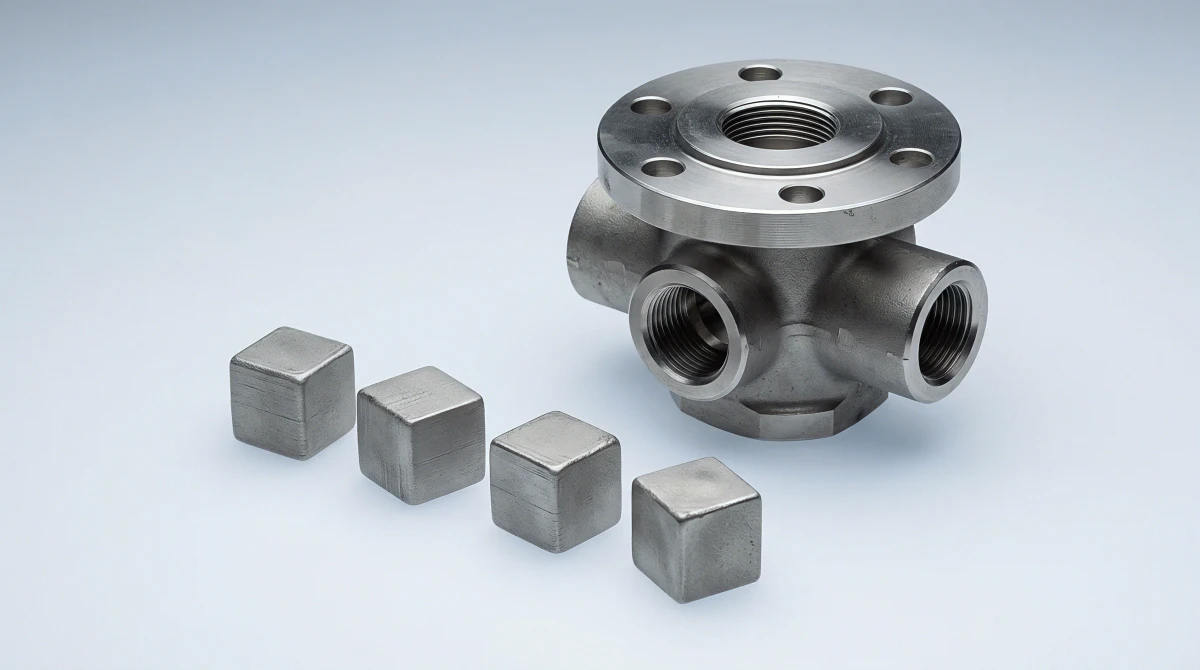
ASTM F3184 fixes the chemistry, the thermal condition and the headings of a 316L order, and leaves the real property, density and inspection requirements for the buyer to write.

What ASTM F3184 Covers and Who It BindsASTM F3184, Standard Specification for Additive Manufacturing Stainless Steel Alloy (UNS S31603) with Powder Bed Fusion, is held by ASTM Committee F42 on additive manufacturing and printed in volume 10.04 of the Annual Book of ASTM Standards. The current edition is F3184-16, reapproved in 2023.

ISO/ASTM 52927 Main Characteristics and Test Methods for AM Parts

The test methods standard links the characteristics of additive feedstock and parts to test procedures, and a buyer fixes the method, specimen, orientation and statistical basis in the order.

What ISO/ASTM 52927 Covers and Who It Is ForThe scope states that the document specifies the principal requirements applied to the testing of parts produced by additive manufacturing processes. It does three things.

ISO/ASTM 52901 Requirements for Purchased Additive Manufactured Parts

The purchased parts standard lists what an additive parts order carries, from tolerances and feedstock to three acceptance stages, and leaves every value to the buyer.

What ISO/ASTM 52901 Asks a Buyer and a Supplier to ExchangeThe scope has three sentences and each one shapes how the standard is used. The first says the document defines and specifies requirements for purchased parts made by additive manufacturing.

316L Stainless Steel Properties in Laser Powder Bed Fusion

Printed stainless steel is stronger along the layers and more ductile across them, and its size and finish depend on the parameter set and the heat treatment you name.

What 316L Is in a Laser Powder Bed Machine316L is a molybdenum-alloyed austenitic stainless steel. EOS markets its powder as a marine-grade steel with enhanced corrosion resistance in chloride environments, and it lists high ductility, high strength and high corrosion resistance as the main characteristics.

Send the 3D File of Your Printed Part

Send the 2D drawing and the 3D file, with the quantity and the stage of the project. An engineer replies within 1 working day.

The quote form, the mutual NDA and the private folder for your files are on Protolis Atelier, with 3D Printing chosen.

Request a Quote