Volume Rate

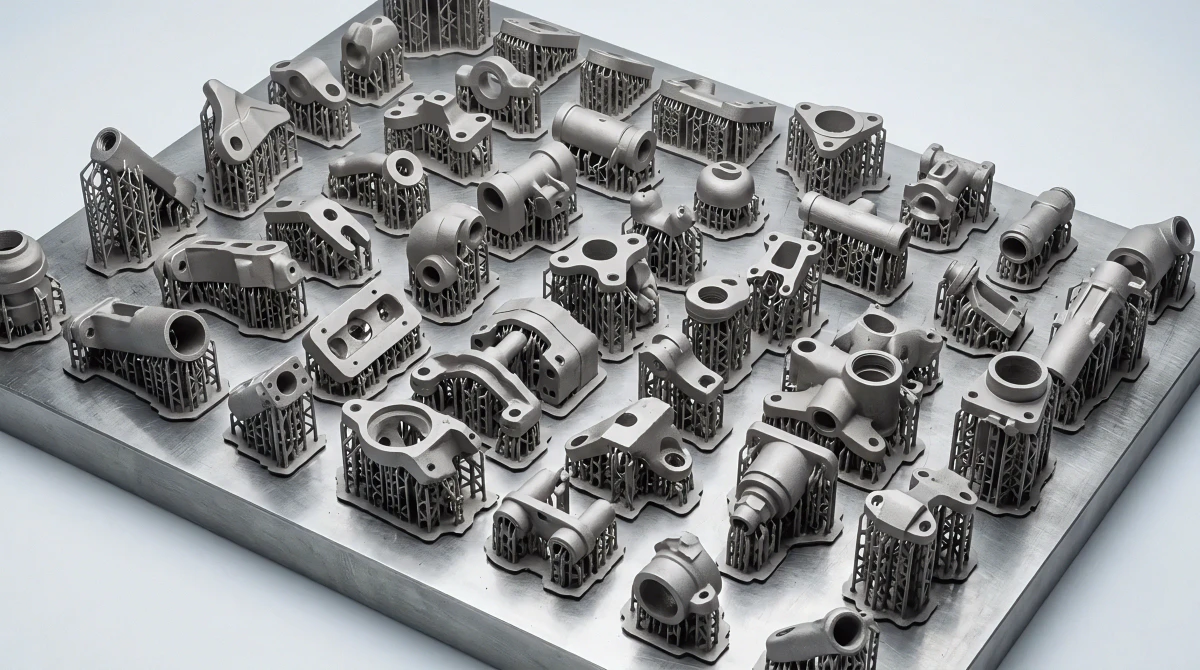
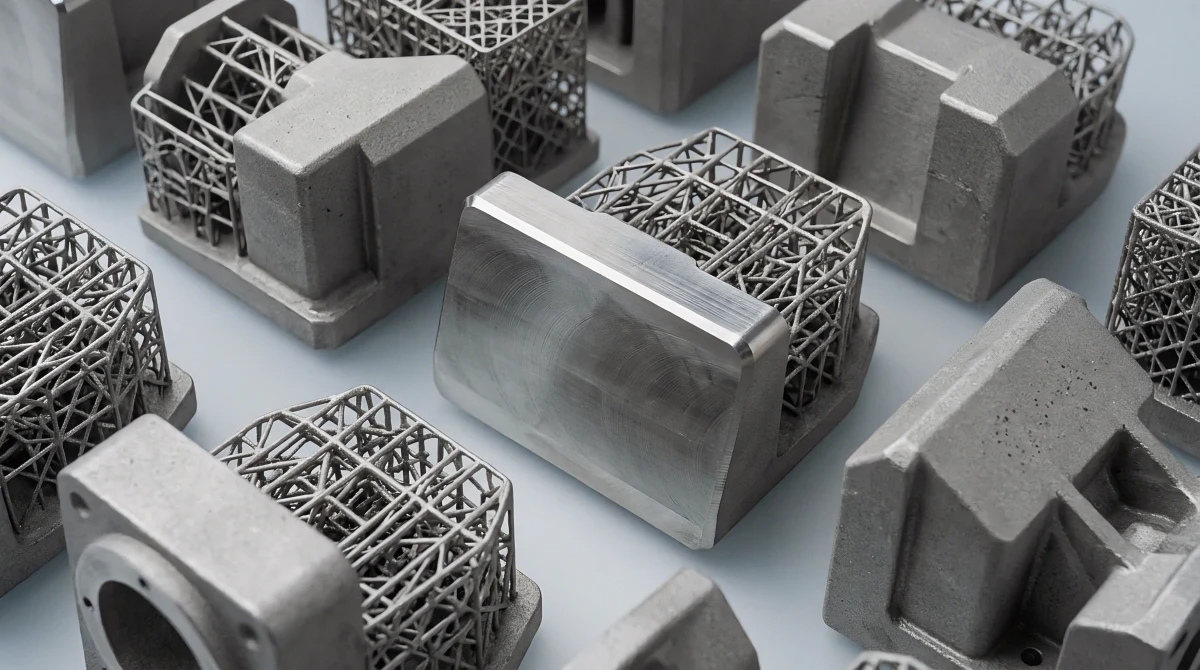
Volume rate is the volume of solid metal a laser powder bed fusion machine builds per second, published by EOS per parameter set in mm³/s.

Every Volume Rate article of the 3D Printing Resources, newest first, each written from published standards, research and makers’ data.

Meaning

Volume rate is the volume of solid metal a laser powder bed fusion machine builds per second, published by EOS per parameter set in mm³/s. It is EOS’s way of stating build speed, in place of the mass rate polymer makers give. EOS notes that it depends on part dimensions and skin thickness. It sizes a build and does not predict one.

Rates per Set

On the EOS M 290, 316L runs at 2.0 mm³/s with 20 µm layers and 3.7 mm³/s with 40 µm layers. The Core set reaches 8.4 mm³/s at 80 µm, and the EOS M 400-4 reaches 14.8 mm³/s at 40 µm. In US units those rates are 0.44, 0.81, 1.85 and 3.25 in³ per hour. EOS calls the 80 µm rate a 100 % productivity increase over its 40 µm FlexLine set.
Read More

Exposure Hours

At 3.7 mm³/s, 1 cm³ (0.061 in³) of solid takes about 270 seconds of exposure. A 100 cm³ (6.1 in³) part then needs about 7.5 hours at 40 µm and about 3.3 hours at 80 µm. That arithmetic leaves out recoating time and the plate’s warm-up. The stress relief that follows adds at least 2 hours at 900 °C (1,652 °F) plus the furnace ramp.

Rate and Detail

The rate trades against detail. The 20 µm set has the lowest rate and the highest readiness level, 9. EOS describes a 40/80 µm skin option that assigns layer thickness by region of the part to cut build time at the same surface quality.

Polymer Contrast

Polymer makers quote a mass rate instead. Formlabs puts the Fuse X1 at 0.33 kg/h (0.73 lb/h) maximum and the HP 5200 series at about 0.11 kg/h (0.24 lb/h). Those are maximum rates and not guarantees for a given job. An order asks which parameter set a quoted build time assumes.
How Long a Batch of 3D Printed Parts Takes From Print to Pack-Out

A printed batch runs on four clocks, build, cooldown, finishing and inspection, and a stated lead time should show each.

Lead Time for a 3D Printed Batch Stage by StageThe calendar of a batch has the same skeleton in every process. Files are prepared and nested, the machine builds, the work cools or cures, parts are separated from what held them, and finishing and inspection follow.

Metal 3D Printing Stress Relief and Build Plate Removal Step by Step

Stress relieve metal parts on the plate, then cut, remove supports, anneal if needed and measure after the heat.

Metal Powder Bed Fusion Post-Build Steps in OrderThe post-build sequence for a part built on a plate has a stable shape across machine makers, because the stresses behave the same way. The sources agree on the order; they differ in how much of the detail they publish.

316L Stainless Steel Properties in Laser Powder Bed Fusion

Printed stainless steel is stronger along the layers and more ductile across them, and its size and finish depend on the parameter set and the heat treatment you name.

What 316L Is in a Laser Powder Bed Machine316L is a molybdenum-alloyed austenitic stainless steel. EOS markets its powder as a marine-grade steel with enhanced corrosion resistance in chloride environments, and it lists high ductility, high strength and high corrosion resistance as the main characteristics.

Send the 3D File of Your Printed Part

Send the 2D drawing and the 3D file, with the quantity and the stage of the project. An engineer replies within 1 working day.

The quote form, the mutual NDA and the private folder for your files are on Protolis Atelier, with 3D Printing chosen.

Request a Quote