Meaning
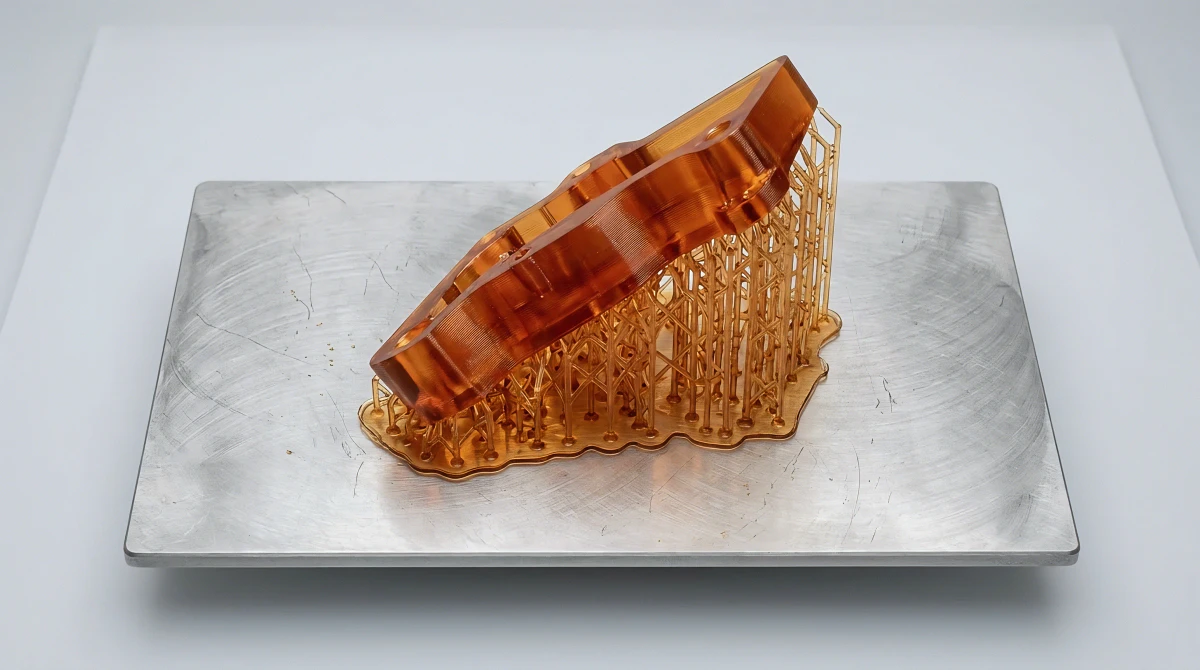
Ultraviolet light is the radiation that cures photopolymer resin, layer by layer in the print and again in post-cure. How it travels through the resin sets the edges of every feature of a vat photopolymerization part.Overcure and Cure-Thru
Carbon explains that resin is not completely opaque to ultraviolet light, so some light passes through the edges of thin features and cures a small amount of extra resin. In the build plane the effect is called overcure and acts equally in every direction; along Z it is called cure-thru, and because the light reaches a vertical feature only from below, that feature comes out marginally oblong. Critical features therefore keep better accuracy when they lie in the build plane. Stratasys adds that overcure can partly fill a small hole, and that holes printed perpendicular to the build head come out most accurate; it gives 0.2 mm (0.008 in) as the smallest through hole on its Origin One.Read More
Exposure and Roughness
A study of masked SLA varied layer thickness from 0.02 to 0.04 mm (0.0008 to 0.0016 in), exposure time from 3 to 5 s and print angle from 0° to 45°. Layer thickness had the largest effect on roughness, then angle, and exposure time had a limited one; the lowest roughness came at 0.02 mm, 3 s and 0°.Post-Cure
The second exposure after washing completes the cure. In the same masked SLA study, post-curing lowered roughness by 8 to 11 % in every group. An Arizona State University study found the strength of SLA bars kept rising for months after printing, from 24 to 54 MPa (3,480 to 7,830 psi) between one week and six months, a reminder that the cure and the age of a resin part both belong beside its test values.