Test Method

A test method is the named procedure by which a property is measured, fixing the specimen, load, speed and conditions behind a figure.

Every Test Method article of the 3D Printing Resources, newest first, each written from published standards, research and makers’ data.

Meaning

A test method is the named procedure by which a property is measured, fixing the specimen, load, speed and conditions behind a figure. The same property measured by two methods gives two numbers that cannot be ranked. ISO/ASTM 52927 links the characteristics of feedstock and parts to test methods. ISO/ASTM 52901 leaves the choice of method to the order.

Two Families

EOS quotes the ISO family on its sheets. It uses ISO 527 for polymer tensile tests and ISO 6892-1 for metal tensile tests. Flexure follows ISO 178, heat deflection ISO 75 and hardness ISO 7619-1. HP and 3D Systems quote the ASTM family, such as ASTM D638, D790, D256, D648, D3418, D2240 and D792. For thermal expansion EOS uses ASTM E228 and 3D Systems ASTM E831.
Read More

Method Differences

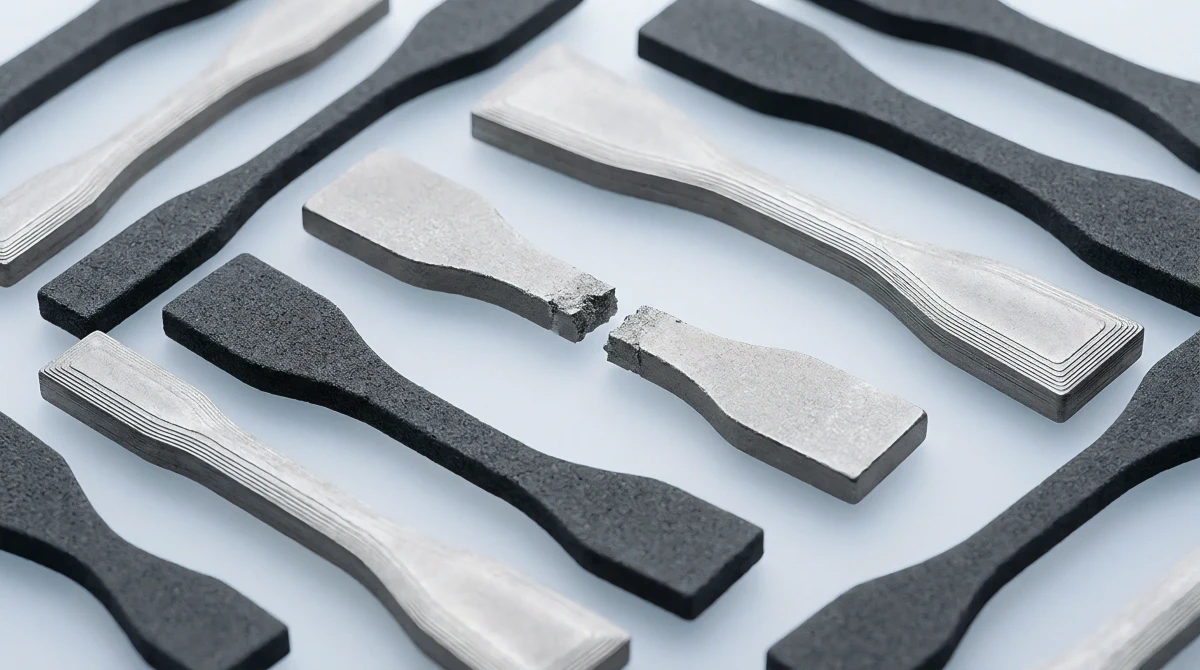
ISO 527 and ASTM D638 on a type V specimen differ in specimen size and test speed. EOS loads its heat deflection bar at 1.80 MPa (261 psi) and HP at 1.82 MPa (264 psi). An EOS footnote shows that one elongation column can hold strain at break or nominal strain at break. A maker’s sheet rarely uses both families, and a metal row and a polymer row use different methods again.

Material Annexes

ISO/ASTM 52927 lists the standards for specimens made by conventional processes and adds the complement for additive specimens. Its normative annexes cover metals in 6 pages, polymers in 4 and ceramics in 4. It replaced ISO 17296-3:2014, merged with ASTM F3122-14. If its annex lists a procedure other than the one on a datasheet, the figure may need to be requested again.

Method Citation

An order names each method with its edition, the load, the speed, the specimen and the orientation, in the reference datasheet’s words. It states whether the acceptance figure is typical or a lower bound. It asks for test data reported in the format of ASTM F2971.
TPU Flexible Powder for SLS and MJF Parts

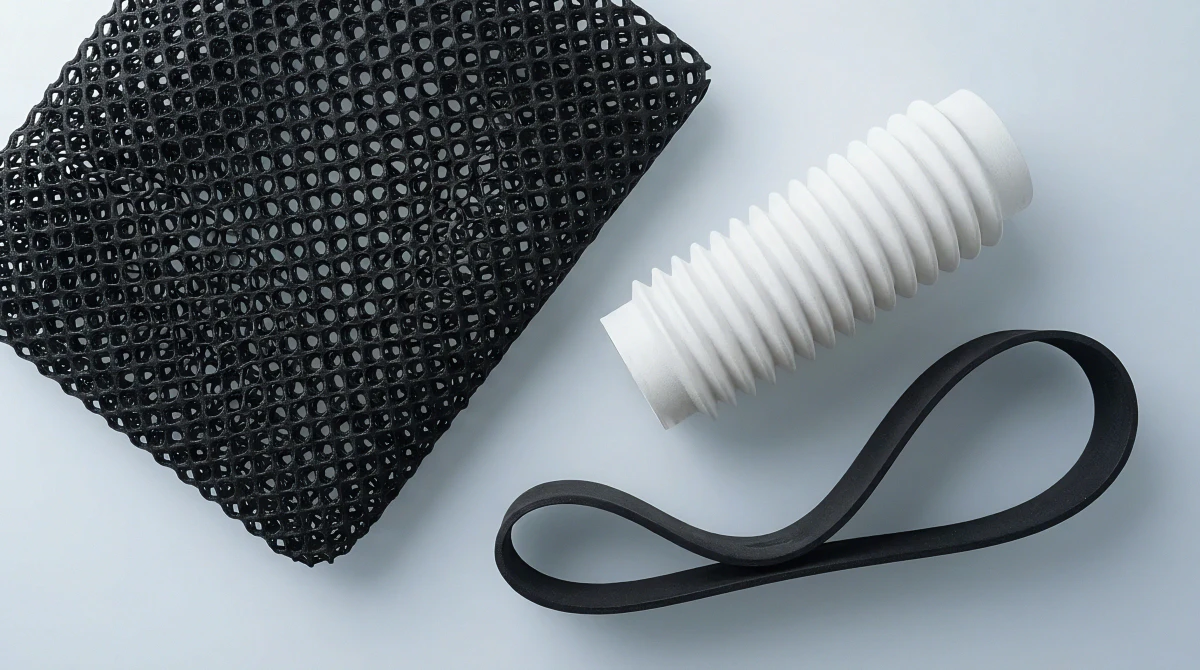
TPU from a powder bed is equally soft in every direction but stretches far less across its layers, so grade, machine, build direction and test method all belong in the order.

TPU Powder Grades and Their Tensile Properties in XY and ZFour makers' sheets give enough to compare. Forward AM, the additive business of BASF, publishes four Ultrasint TPU powders side by side in one brochure, which makes it the cleanest set: the same company, the same tests, four grades.

ISO/ASTM 52927 Main Characteristics and Test Methods for AM Parts

The test methods standard links the characteristics of additive feedstock and parts to test procedures, and a buyer fixes the method, specimen, orientation and statistical basis in the order.

What ISO/ASTM 52927 Covers and Who It Is ForThe scope states that the document specifies the principal requirements applied to the testing of parts produced by additive manufacturing processes. It does three things.

ISO/ASTM 52901 Requirements for Purchased Additive Manufactured Parts

The purchased parts standard lists what an additive parts order carries, from tolerances and feedstock to three acceptance stages, and leaves every value to the buyer.

What ISO/ASTM 52901 Asks a Buyer and a Supplier to ExchangeThe scope has three sentences and each one shapes how the standard is used. The first says the document defines and specifies requirements for purchased parts made by additive manufacturing.

PA12 Nylon Properties for SLS and MJF Parts

Powder-bed nylon parts stretch far less along the build axis than in the layer plane, so a drawing needs a build direction, a grade and the test method.

What PA12 Powder Gives a Printed PartPolyamide 12 is the base polymer of the most common powders for laser sintering and for HP Multi Jet Fusion. EOS describes PA 2200, its PA12 powder, as a balanced property profile and "the most proven material on the market" for its machines.

Send the 3D File of Your Printed Part

Send the 2D drawing and the 3D file, with the quantity and the stage of the project. An engineer replies within 1 working day.

The quote form, the mutual NDA and the private folder for your files are on Protolis Atelier, with 3D Printing chosen.

Request a Quote