Porosity

Porosity is the share and the pattern of voids inside a printed part, left where powder did not fully melt or fuse or where gas was trapped.

Every Porosity article of the 3D Printing Resources, newest first, each written from published standards, research and makers’ data.

Meaning

Porosity is the share and the pattern of voids inside a printed part, left where powder did not fully melt or fuse or where gas was trapped. In metal laser powder bed fusion it is the defect that most often decides strength, ductility and fatigue life; in polymer powder bed parts it grows as reused powder ages.

Types in Metal

The NIST literature review of metal AM defects separates lack-of-fusion porosity, irregular pores along the tracks or between layers from poor processing parameters, and gas porosity, spherical pores from gas in the atomized powder or the shielding gas, which is harder to eliminate and reached 0.7 % in one study it cites. A 2022 review by Mostafaei and co-authors adds keyhole porosity from unstable deep vapor cavities and draws the process window between these boundaries, inside which parts reach more than 99.9 % density.
Read More

Size Over Total

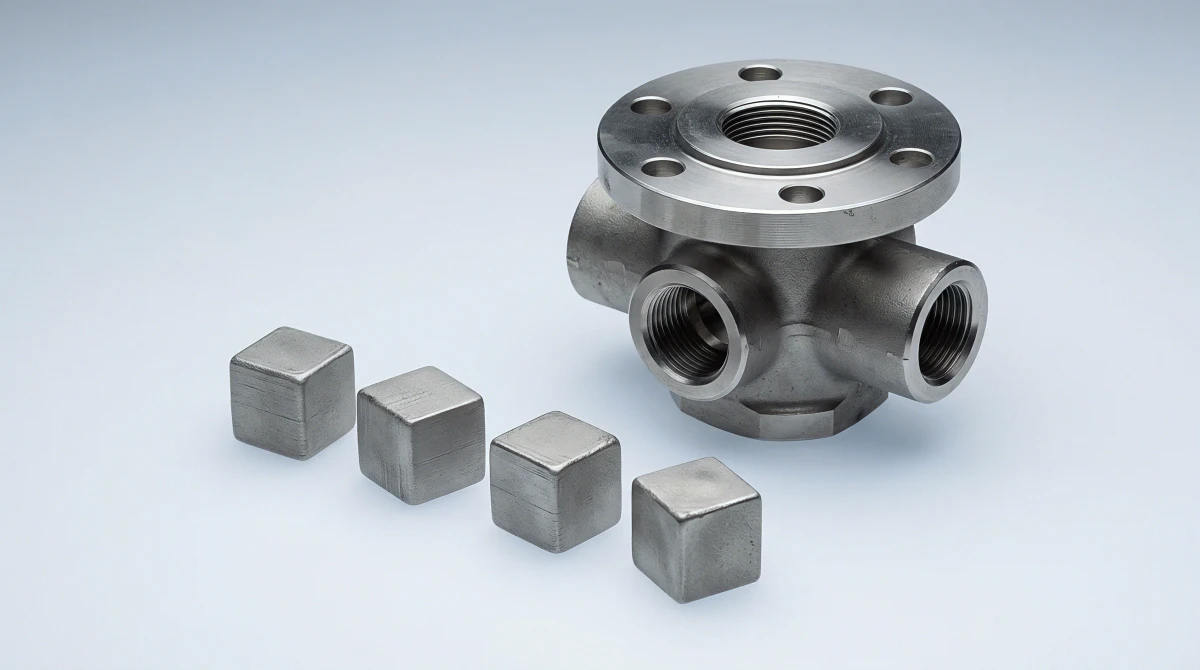
NIST notes that overall porosity of about 1 to 5 % is typical for some materials and that a single large pore can still start a failure; internal defects of 500 µm (0.020 in) or larger sharply cut fatigue life in the tests it cites. A Georgia Tech and Sandia study of 316L found pores above 125 µm (0.005 in) the threshold that best predicted lost ductility. A US Bureau of Reclamation cube in 316L measured 96 to 97 % dense; EOS reports an average defect percentage of 0.018 % for its own process.

Polymer Powder

A University of Birmingham study refreshing PA12 at 30 % over seven laser sintering builds found part porosity up 5.8 % as flowability fell. A University College Dublin study measured porosity under 1 % in HP Multi Jet Fusion PA12 by X-ray CT.

Inspection

Computed tomography is the method NIST calls promising for porosity, while the critical defect criteria by type, size and distribution remain to be agreed per part. Hot isostatic pressing closes internal pores, and the review warns that argon-filled pores can regrow in a later high-temperature treatment.
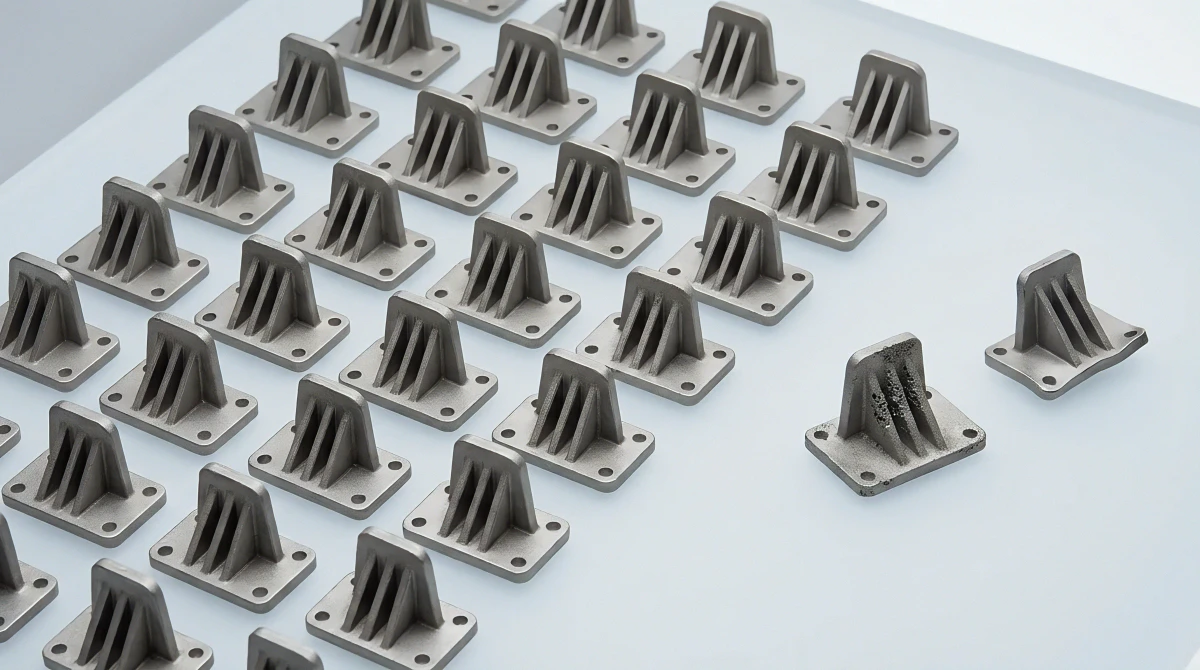
3D Printing Defects in a Production Batch Traced to Their Cause

A defect in a printed batch is traced by its pattern, every part, one zone, one build or a slow trend across builds, and each pattern points to its own cause and evidence.

Reading a Defect by Its Pattern Across the BatchThe 2022 review sorts the sources of metal powder bed defects into three groups: defects transferred from the feedstock powder, defects formed in the interaction of the beam with powder and metal during melting, and defects created in post-processing such as heat treatment. It adds a fourth set of contributors around them: the equipment, powder handling and dispensing, and build preparation, meaning orientation and supports.

Vapor Smoothing and Bead Blasting SLS Nylon Parts

Powder bed nylon is always bead blasted clean, then optionally shot surfaced for feel and color or vapor smoothed for a sealed glossy skin, and the order names the steps and the faces.

The Finishing Sequence for Powder Bed NylonThe DyeMansion test that opens this piece ran every part through the same steps, and its table of settings is the clearest published version of the sequence.

ASTM F3184 Specification for Powder Bed Fusion 316L Stainless Steel

ASTM F3184 fixes the chemistry, the thermal condition and the headings of a 316L order, and leaves the real property, density and inspection requirements for the buyer to write.

What ASTM F3184 Covers and Who It BindsASTM F3184, Standard Specification for Additive Manufacturing Stainless Steel Alloy (UNS S31603) with Powder Bed Fusion, is held by ASTM Committee F42 on additive manufacturing and printed in volume 10.04 of the Annual Book of ASTM Standards. The current edition is F3184-16, reapproved in 2023.

Send the 3D File of Your Printed Part

Send the 2D drawing and the 3D file, with the quantity and the stage of the project. An engineer replies within 1 working day.

The quote form, the mutual NDA and the private folder for your files are on Protolis Atelier, with 3D Printing chosen.

Request a Quote