Bead Blasting

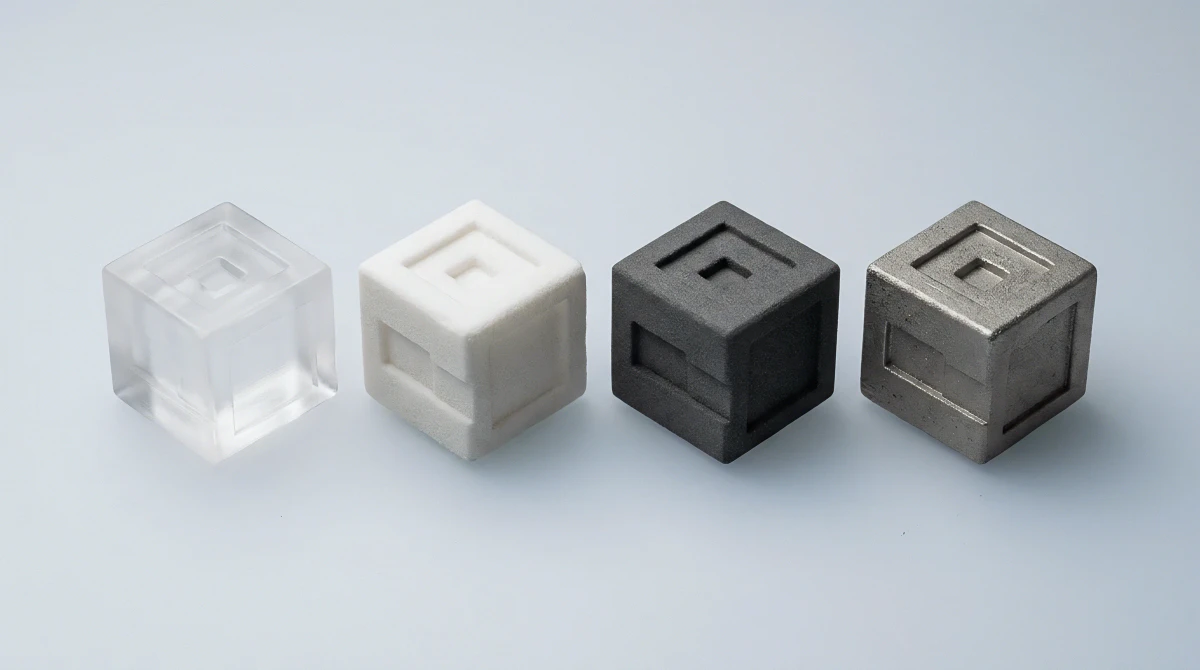
Bead blasting is the finishing step in which glass or plastic beads, carried by compressed air, strike a printed part to clean powder from it or to even out its surface.

Every Bead Blasting article of the 3D Printing Resources, newest first, each written from published standards, research and makers’ data.

Meaning

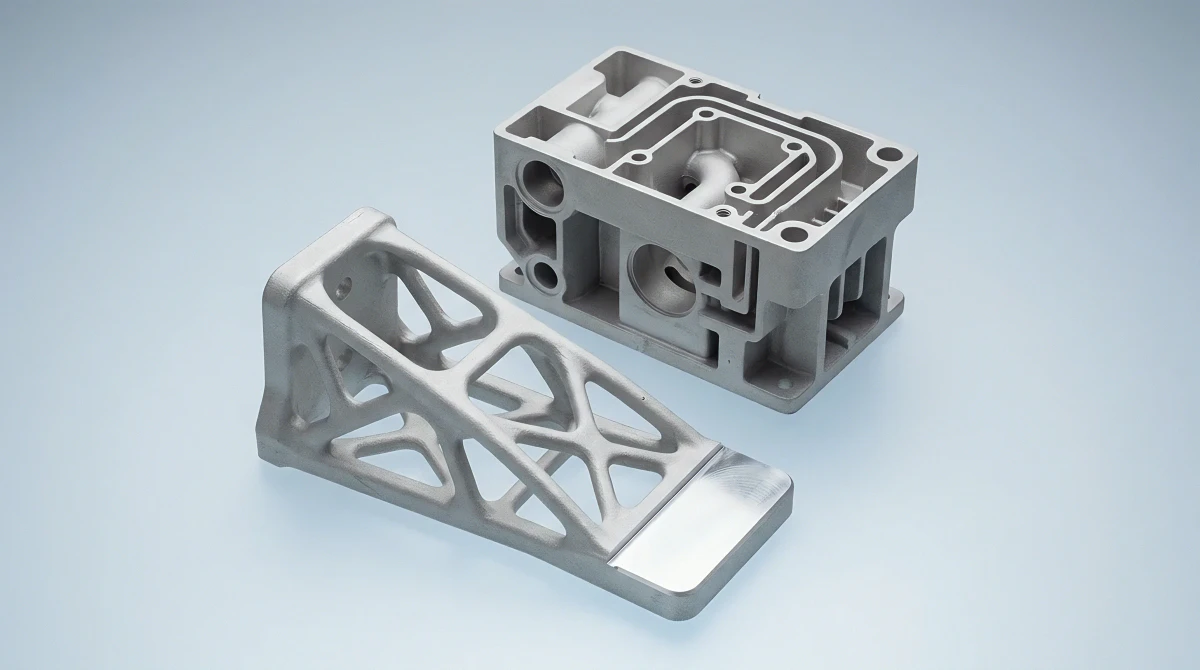
Bead blasting is the finishing step in which glass or plastic beads, carried by compressed air, strike a printed part to clean powder from it or to even out its surface. On powder bed nylon it is the standard depowdering step every part goes through; on metal parts it is a surface treatment that lowers roughness. A study of laser polishing on HP Multi Jet Fusion parts notes that, depending on media, pressure and time, the blast already smooths the surface somewhat.

Settings

DyeMansion’s published test cleaned SLS and MJF nylon parts with glass beads of 200 to 300 µm (0.008 to 0.012 in) at 3 bar (43.5 psi) for 5 minutes, then shot surfaced them with polymer beads at 5 bar (72.5 psi) for 10 minutes. AddUp reports blasting AlSi10Mg with a glass medium at 2 bar (29 psi).
Read More

Effect on Roughness

On nylon, shot surfacing moved Ra only by about a tenth, from 7.67 to 6.86 µm on EOS PA 2200 and from 9.79 to 8.99 µm on HP 3D High Reusability PA 12, while flattening the sharpest peaks, raising gloss and evening out dye uptake. On AlSi10Mg, AddUp gives vertical Ra of 6 to 8 µm (236 to 315 µin) as built and 4 to 7 µm (157 to 276 µin) after blasting. On Ti6Al4V built by laser melting, sandblasting with alumina reduced Ra by 68.3 % at 0°, 44.1 % at 45° and 52.7 % at 90°.

Limits

DyeMansion warns that the finish varies inside thin tubes and labyrinths out of the beads’ line of sight, that heavy parts with fragile pins or antennas can be damaged, and that shot surfacing does not suit flexible TPU, whose elastic response prevents the surface from homogenizing. A drawing that wants the feel of a blasted part names the finish step and a slope or gloss value, since Ra alone barely changes.
Vapor Smoothing and Bead Blasting SLS Nylon Parts

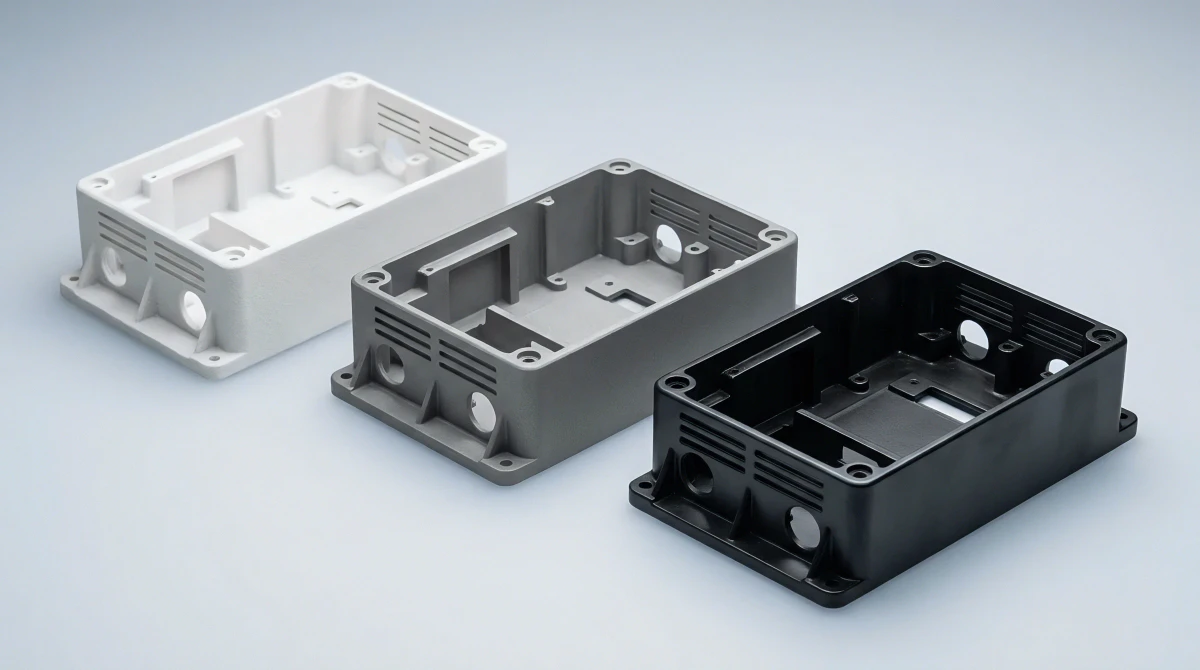
Powder bed nylon is always bead blasted clean, then optionally shot surfaced for feel and color or vapor smoothed for a sealed glossy skin, and the order names the steps and the faces.

The Finishing Sequence for Powder Bed NylonThe DyeMansion test that opens this piece ran every part through the same steps, and its table of settings is the clearest published version of the sequence.

Surface Roughness of 3D Printed Parts by Process and Orientation

Process sets the floor of roughness and orientation moves it face by face, so a printed part's roughness note names the parameter, the face, its build direction and the finish.

Typical Ra and Sa of SLA, SLS, MJF and Metal SurfacesA review of as-printed polymer roughness in the International Journal of Advanced Manufacturing Technology collects dozens of studies by process. Another study printed one test artifact on four processes and measured them all the same way.

AlSi10Mg Aluminum Properties in Laser Powder Bed Fusion

Printed AlSi10Mg is stronger than the cast alloy as built, and the heat treatment named on the order decides how much strength is traded for ductility or conductivity.

AlSi10Mg Tensile and Yield Strength by Heat TreatmentThe first answer a buyer needs is the strength in each state the material is delivered in. Two makers publish it for their own systems and parameters, and their numbers are close enough to read together and different enough to show why the state and the source both travel with a figure.

Send the 3D File of Your Printed Part

Send the 2D drawing and the 3D file, with the quantity and the stage of the project. An engineer replies within 1 working day.

The quote form, the mutual NDA and the private folder for your files are on Protolis Atelier, with 3D Printing chosen.

Request a Quote