ASTM F2971

ASTM F2971 is the ASTM practice for reporting data on test specimens prepared by additive manufacturing.

Every ASTM F2971 article of the 3D Printing Resources, newest first, each written from published standards, research and makers’ data.

Meaning

ASTM F2971 is the ASTM practice for reporting data on test specimens prepared by additive manufacturing. It provides a common format for that data, including preparation, processing and post-processing history. HP’s PA 12 Glass Beads sheet defines its orientations by it. ISO/ASTM 52900 places it, with ISO/ASTM 52921, among the documents that say how orientation and test data are reported.

Reporting Need

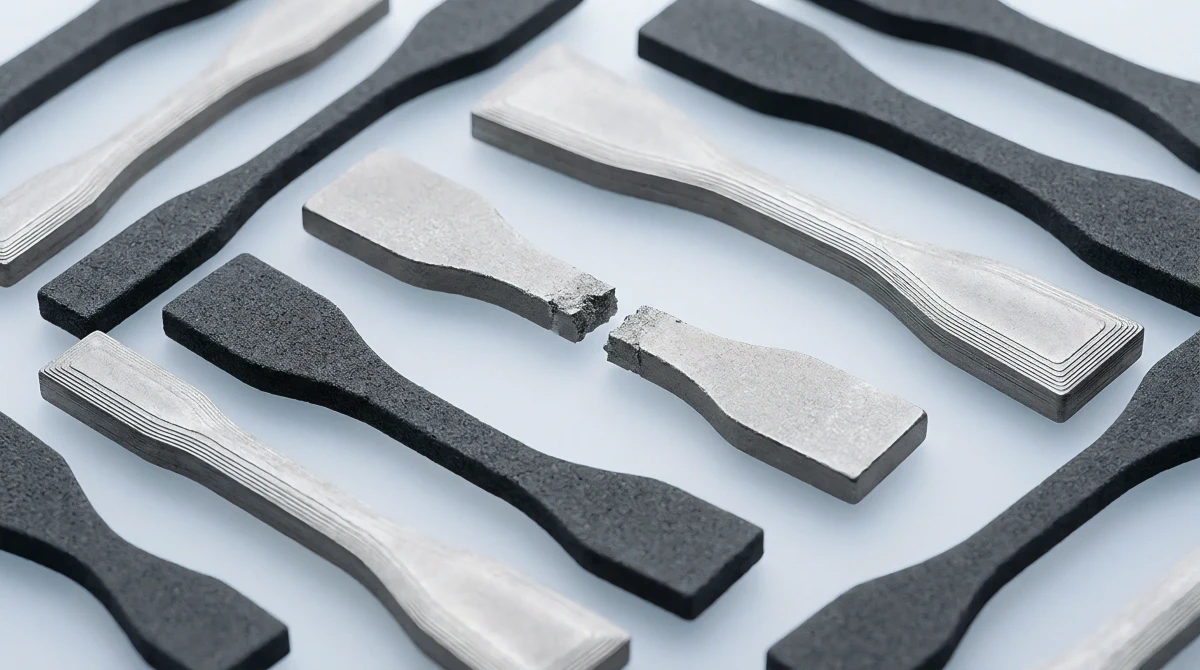
A printed specimen’s result depends on things a bare number does not show. The axis, the test speed, the position in the chamber and the steps after the build all move the figure. On that sheet, HP pulls Z specimens at 1 mm/min (0.04 in/min) and XY specimens at 10 mm/min (0.39 in/min). A specimen from one corner of a chamber does not stand for another corner.
Read More

Place in the Family

A specification uses the family in order. ISO/ASTM 52900 names the process, and ISO/ASTM 52901 lists what the order contains. ISO/ASTM 52921 and ASTM F2971 say how orientation and test data are reported. ISO/ASTM 52927 then chooses the tests. The reporting practice is the link that lets two datasheets, or two lots, be read against each other.

Report Request

An order asks for test data reported in the format of ASTM F2971. The report carries the orientation, the build position and the post-processing history of each specimen. With that record, a figure from lot 4 can be compared with one from lot 1, and a datasheet with the delivered part. Without it, two figures that differ by axis or speed look like two different materials.
ISO/ASTM 52927 Main Characteristics and Test Methods for AM Parts

The test methods standard links the characteristics of additive feedstock and parts to test procedures, and a buyer fixes the method, specimen, orientation and statistical basis in the order.

What ISO/ASTM 52927 Covers and Who It Is ForThe scope states that the document specifies the principal requirements applied to the testing of parts produced by additive manufacturing processes. It does three things.

ISO/ASTM 52900 Additive Manufacturing Terms and the Seven Process Categories

The vocabulary standard fixes the words an additive order is written in, so name the process category beside the brand and let other standards set quality.

What ISO/ASTM 52900 Covers and What It Leaves OutISO/ASTM 52900 establishes and defines the terms used in additive manufacturing (AM), the technology that applies an additive shaping principle and builds physical three-dimensional geometries by successive addition of material. Its scope sentence also states that the terms are classified into specific fields of application.

PA12 Nylon Properties for SLS and MJF Parts

Powder-bed nylon parts stretch far less along the build axis than in the layer plane, so a drawing needs a build direction, a grade and the test method.

What PA12 Powder Gives a Printed PartPolyamide 12 is the base polymer of the most common powders for laser sintering and for HP Multi Jet Fusion. EOS describes PA 2200, its PA12 powder, as a balanced property profile and "the most proven material on the market" for its machines.

Send the 3D File of Your Printed Part

Send the 2D drawing and the 3D file, with the quantity and the stage of the project. An engineer replies within 1 working day.

The quote form, the mutual NDA and the private folder for your files are on Protolis Atelier, with 3D Printing chosen.

Request a Quote